
Supreme Court Makes Health Policy
The Host
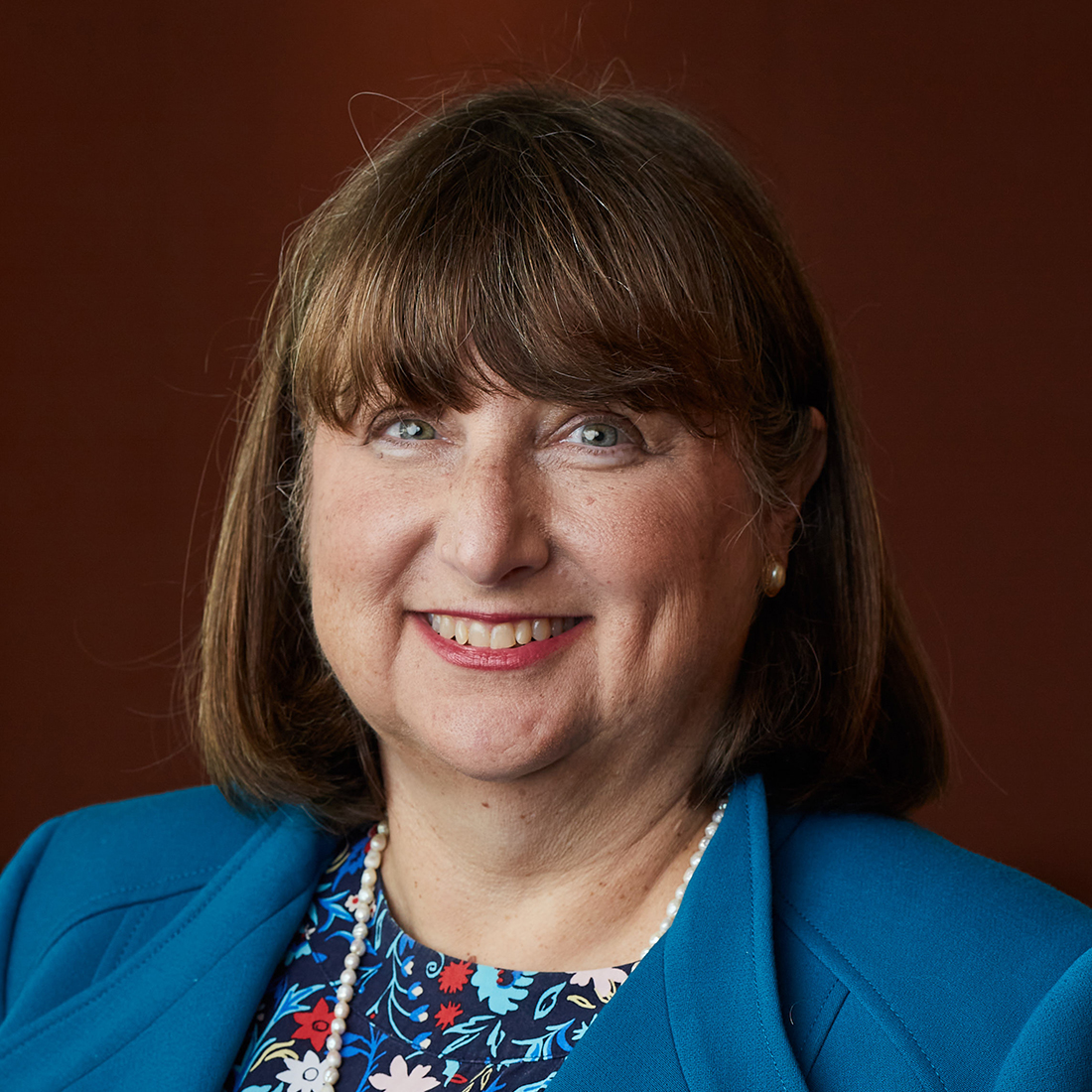
Julie Rovner
KFF Health News
Julie Rovner is chief Washington correspondent and host of KFF Health News’ weekly health policy news podcast, "What the Health?" A noted expert on health policy issues, Julie is the author of the critically praised reference book "Health Care Politics and Policy A to Z," now in its third edition.
The Supreme Court wrapped up its 2025-26 session this week with a spate of decisions, including several affecting health policy. The most significant: an immigration case that could exacerbate a shortage of workers in nursing homes and other long-term care facilities.
Meanwhile, two separate investigations paint in vivid detail how some doctors and hospitals are pocketing huge profits as a result of a federal law intended to shield patients from surprise medical bills.
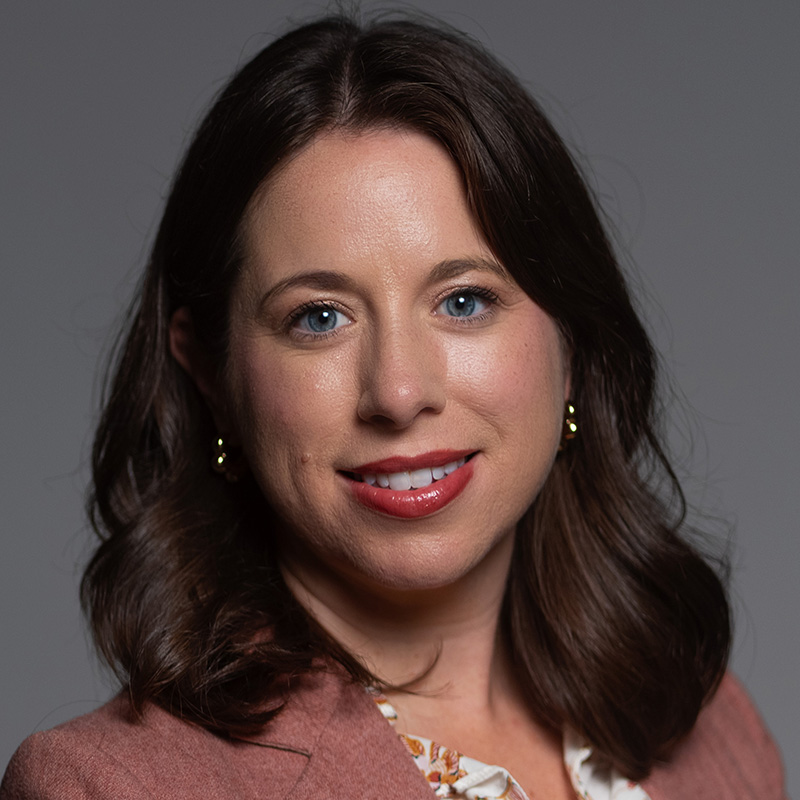
This week’s panelists are Julie Rovner of KFF Health News, Lizzy Lawrence of Stat, Alice Miranda Ollstein of Politico, and Amanda Seitz of KFF Health News.
Panelists


Among the takeaways from this week’s episode:
- The Supreme Court ended its term this week by issuing several decisions with major implications for American health. They included one ruling allowing more leeway for the president to fire members of independent federal agencies, as well as a ruling blocking lawsuits under state laws from those who claim they were harmed by the weedkiller glyphosate. In particular, the court’s decision enabling the president to end temporary protected status for certain immigrants is expected to have serious consequences for the long-term and elder care industries, both of which rely heavily on Haitian migrants and are already experiencing staffing shortages.
- The Department of Health and Human Services reissued the charter for the Advisory Committee on Immunization Practices, upending the precedent that members must have professional expertise in vaccines. The change is expected to allow the panel — which has been tied up in litigation — to move forward with members appointed by HHS Secretary Robert F. Kennedy Jr.
- Sen. Bill Cassidy of Louisiana, the Republican chairman of the Senate’s primary health committee, finally broke his silence about Kennedy’s confirmation promises. The senator, who lost his bid for reelection to a primary challenger endorsed by President Donald Trump, said he believes Kennedy violated the agreements he made to not disrupt vaccine policy in exchange for Cassidy’s vote. Kennedy again denied that charge.

Email Sign-Up
Subscribe to KFF Health News' free Morning Briefing.
Plus, for “extra credit” the panelists suggest health policy stories they read this week that they think you should read, too:
Julie Rovner: Modern Healthcare’s “Carbon Health Settles ‘Corporate Practice of Medicine’ Case,” by Michael McAuliff.
Alice Miranda Ollstein: Stateline’s “Federal Health Agency Cancels Most of its Teen Pregnancy Prevention Grants,” by Kelcie Moseley-Morris.
Lizzy Lawrence: The Wall Street Journal’s “The Baby Formula Probe Produced a Pile of Evidence. Then the DOJ Dropped the Case,” by Dave Michaels, Sadie Gurman, and Liz Essley Whyte.
Amanda Seitz: ProPublica’s “‘Digital Colonialism’: U.S. Demands to Access Africans’ Data Raise Privacy, Sovereignty Concerns,” by Sharon Lerner and Anna Maria Barry-Jester.
Also mentioned in this week’s podcast:
- The New York Times’ “$22,000 Per Hour: Assistants Use a Legislative Loophole to Outearn Surgeons,” by Margot Sanger-Katz and Sarah Kliff.
- Stat’s “The ERs That Can Turn Patients Away — And Are Reaping Millions,” by Tara Bannow.
- The Washington Post’s “White House, RFK Jr. Tried To Push Third-Party Candidates Out of Tight House Races,” by Dan Diamond and Isaac Arnsdorf.
- Stat’s “Longevity, Wellness Physicians Named to Panel Advising FDA on Peptides,” by Lizzy Lawrence and Sarah Todd.
Click to open the transcript Transcript: Supreme Court Makes Health Policy
[Editor’s note: This transcript was generated using transcription software. It has been edited for style and clarity.]
Julie Rovner: Hello from KFF Health News and WAMU Public Radio in Washington, D.C. Welcome to What the Health? I’m Julie Rovner, chief Washington correspondent for KFF Health News, and as always, I’m joined by some of the best and smartest health reporters covering Washington. We’re taping early this week in advance of the holiday on Wednesday, July 1, at 10 a.m. As always, news happens fast and things might have changed by the time you hear this. So, here we go.
Today we are joined via videoconference by Alice Miranda Olstein of Politico.
Alice Miranda Ollstein: Hello there.
Rovner: Lizzy Lawrence of Stat News.
Lizzy Lawrence: Hi.
Rovner: And making her What the Health? debut, my KFF Health News colleague Amanda Seitz. Welcome.
Amanda Seitz: Hello, Julie. Thanks for having me.
Rovner: Tons of health news again this week. So, we will jump right in. We’re going to start at the Supreme Court, where the justices wrapped up the 2025-26 session by deciding that, yes, the 14th Amendment does mean what it says regarding birthright citizenship, which would have been a very big health story if it had gone the other way. Still, in this last crush of cases, there were some that will have more of an impact on health policy than might appear at first blush, and even some impact on health politics. So, policy first: In a decision handed down Monday, the justices said that presidents may fire members of nearly all independent agencies for any reason, not just malfeasance in office. Previously, Congress had written into laws establishing many of these bodies, like the Federal Trade Commission and the Equal Employment Opportunity Commission, that presidents could not dismiss members just because they disagreed with their policy positions. In overturning a case that has stood since 1935, the majority of justices said, nope, the president can fire just about anybody considered part of the executive branch, except maybe not members of the Federal Reserve Board. That one is still TBD. Still, this is likely to have a major impact on agencies that do a lot of health policy, like the Federal Trade Commission, yes?
Lawrence: Yeah, already we’ve seen a lot of the politicization of agencies across government, so this is just even further embolden the administration to enforce political loyalty, fealty, among civil servants.
Rovner: This decision is making my head spin, because I’m so used to seeing a lot of these commissions that have a certain number of members who are appointed by a president of one party and a certain number appointed by a president another party to create, at least in theory, balance, and this basically says: Balance schmalance. It’s what the president wants.
Ollstein: I think it’s especially impactful given how little lawmaking Congress has been able to do recently and how much policy is decided at the agency rulemaking and enforcement level, which is what a lot of these previously independent agencies took on, And so I think delegating even more power to the executive branch in a moment where Congress has already sort of let a lot of that go could be huge down the road. Of course, while this is being cast accurately as a big win for the Trump administration, we should, of course, remind listeners that this cuts both ways and a future Democratic president could do a lot more that conservatives may really hate.
Rovner: Yeah. I — what goes around comes around. I’m just thinking: Wow, what happens when a Democrat gets back in office? Are they going to just completely remake all of these agencies? And maybe Congress will, at some point, say maybe that wasn’t such a great idea. We will see how this one plays out. I imagine it will be over a much longer term.
Well, in a decision that was more about immediate politics than policy, the court last week said that people who claim they got cancer from the pesticide glyphosate cannot sue under state laws, because the federal Environmental Protection Agency, not states, decides whether to label the chemicals, sold under the trade name Roundup, as a carcinogen. Needless to say, members of the Make America Healthy Again movement, for whom pesticides are top concern, are not happy. This is the second loss for MAHA adherence on glyphosate this year. HHS [Health and Human Services] Secretary Robert F. Kennedy Jr. back in February endorsed an executive order from President [Donald] Trump to declare glyphosate important to national security in order to protect the nation’s food supply. How mad are the MAHA folks at this point? Amanda, I know you’ve written about this. Alice, you have, too.
Seitz: Yeah, I think the tension has really been building between this movement and the White House for months, and now it’s, now they’re really mad. And meanwhile, we’re not seeing a lot of action from HHS to appease the MAHA moms. They started the year with this new food pyramid and the Eat Real Food campaign and some rallies that were really promising, but since then things have been a lot quieter. And I think they’re kind of at the point now where a lot of these women who support this movement, they lean conservative, they’re white women, but they’re probably not going to flip their vote, necessarily, but they might sit these midterms out at this point.
Rovner: And that’s really the biggest concern. It’s not so much the people who are part of your base are going to vote for the opponents. It’s that they’re not going to vote, right?
Ollstein: Yeah, and they were already feeling demoralized about some of the other, what they view as setbacks under this administration. They came in with such high hopes that this administration, especially with RFK at HHS, would really be aggressive on both pharmaceuticals and the food industry and, like I said, are very disappointed in what we’ve ended up with. And this administration’s decision to back this corporate shield on the pesticides is really what some people are viewing as a final straw. And we know the White House is worried about the political fallout of this, because they invited a bunch of these activists to the White House to sort of reassure them, make nice. That was several months ago, but the decision, I think, really undermines those charm-offensive efforts.
Seitz: I wanted to add that, to Alice’s point, this is a group that was told that they would see a wholesale shake-up of the food industry from the ground up, literally, starting with pesticides. So they’re just really disappointed at this point. They have not seen a lot of bold action, really, since the food dyes, since the food pyramid, and those policies are months old at this point.
Ollstein: And a lot of those are voluntary. They’re not even binding. They’re just agreements with companies that can be reversed in the future.
Rovner: Well we will get back to RFK Jr. in a few minutes, but first, one more Supreme Court decision, an immigration case that does have huge health implications. As part of the theme of giving the president still more power, a majority of justices said that President Trump could end so-called Temporary Protected Status for certain classes of immigrants who come from countries that are deemed unsafe to return to because of natural disaster or civil unrest. In this current case, the countries in question are Haiti and Syria. This will have an almost immediate impact on healthcare, because there are more than a quarter of a million Haitian immigrants living in the U.S. under TPS, and many of them work in healthcare, often as caregivers and workers in nursing homes and other long-term care facilities. The industry group LeadingAge estimates that long-term care facilities could lose up to 8% of their workforce as a result of this ruling. What happens if 8% of the long-term care workforce gets deported in the next few months?
Seitz: Well, the governor of my home state of Ohio, who’s a Republican through and through, said it would be a job killer for his state, so that tells you how concerned he is.
Ollstein: And the long-term care and elder care sector is so heavily dependent on these workers. Staffing is already a huge concern. The pay is not good. The work is extremely hard. It’s very hard to find people willing to do this work, and in some places foreign workers make up a majority of the workforce. They don’t all come from these specific countries, but a lot of them do. This is already a big blow to all of these assisted living and other kinds of facilities that have already struggled to recruit and retain staff. And as the baby boomer generation gets older, there’s only going to be way more demand, and so it’s increasing demand and decreasing supply at a kind of dangerous time. And we’ve seen all these reports about what happens with understaffing. Injuries go up in these facilities, health problems go unaddressed, and these are people’s grandmas and grandpas. This is real.
Rovner: And people are going to end up taking care of their own grandmas and grandpas, because these facilities aren’t going to have the beds available, because they don’t have the staff there to take care of them. I’ll be interested to follow this, because I think of all the things that we talk about that are going to have sort of long tails, this one’s going to have pretty immediate impact if they really start deporting a lot or even detaining a lot of these people. And even some of them who may not be immediately deported simply can no longer go to work, because if they take away their immigration status, they’ll no longer be here, they’ll no longer be working legally. So this will have probably some impact that we will see fairly quickly.
Well, also impacted by a federal court injunction are students pursuing healthcare careers. Late last week, a federal district court judge here in Washington, D.C., blocked part of a new regulation from the Department of Education that was supposed to take effect today. The regulation limits how much certain graduate students can borrow from the federal student loan program. Under the new rules, those pursuing certain professional degree programs, including doctors, dentists, and veterinarians, can borrow up to $50,000 a year, up to a total of $200,000, while those in what’s deemed nonprofessional programs will be limited to $20,500 a year and $100,000 in total. In both cases, those limits are often lower than what those degrees actually cost. The administration says that’s an effort to get schools to lower tuition. But groups representing nurse practitioners and physician assistants, whose professions didn’t make the, quote, “professional” degree list, sued, and now at least that part of the regulation is on hold. But the overall caps do take effect today. What’s the potential impact here? This is one that, as I said, has probably a longer tail, right? That we won’t see the impact right away?
Seitz: I think on its face this sounds like a very well-intentioned regulation, right? You don’t want people taking out more money than they realistically can make, but $20,000 barely covers preschool tuition in major cities these days, so that’s going to be extremely limiting. And again, we’re talking about professions that are already facing huge shortages. The nursing shortages have gone on for years. They’ve festered. There’s been no real meaningful policy to fix that issue. So these industries need workers, and this is not going to improve this outlook. It’s going to make it much worse.
Rovner: Yeah, I talked to the head of one of the nursing groups, and one of the big concerns here, when you’re talking about shortages, it’s not so much not being able to train nurses but not being able to train the people who are going to train the nurses. It’s nurse educators. The limit is, you can make more as a nurse than you can make teaching people to be nurses, and so it’s really hard to get those nurse educators. And so they have to limit — there’s a lot of people who would like to become nurses. It’s a pretty good career. Pays pretty well. It’s pretty solid. But because they literally don’t have enough teachers, and limiting who can go pursue these careers is not really going to help this. I think that’s part of what got this, at least this part of the regulation, stayed. But it seems implausible that schools are going to say, Well, we’ll just lower our tuition so you guys can afford to come. It’s going to be more that people aren’t going to be able to afford to pursue these careers unless they can afford private loans, or they come from families that are wealthy enough to underwrite their education.
Seitz: Yeah, and high-qualified applicants are already turned away every year from nursing school. So now you’re making your pool even smaller, with an industry that is already struggling to fill roles, paying lots and lots of money to get people into these roles.
Rovner: Yeah, I think this is part of a broader effort that we will see the impact from, but not immediately. All right, we’re going to take a quick break. We will be right back.
Turning to activity at HHS, Secretary Kennedy has been busy the past few weeks. As predicted, the department reissued the charter for the Advisory Committee on Immunization Practices so that it no longer requires members to have vaccine research expertise. The idea here is to get around a court decision that said the anti-vax members that he had installed earlier weren’t qualified. At least that’s the assumption. Right, Lizzy?
Lawrence: Right, I think this is the — ACIP has been on hold for so long now, and they’re trying to find a way to convene this committee without recruiting the traditional types of people that are typically advising on immunization. So, yeah.
Rovner: People with expertise in immunization policy?
Lawrence: Right, so yeah, we’ll see who they come up with. I think this has just been such a mess from the beginning, and I’m curious how they will interpret the courts saying you need to have people with expertise here.
Rovner: I’d say, along those same lines, Lizzy, you have a story on a different advisory committee, this one at FDA on compounding pharmacies. Tell us about that one.
Lawrence: Yeah, so it seems that the peptides committee is the new ACIP. So, in July, FDA will discuss whether to allow, I think, five to seven peptides, allow compounders to manufacture them. And HHS has been very involved. This, Secretary Kennedy went on Joe Rogan and said he would really like to see these peptides added back to the list. The FDA does not agree with this. I’ve been told that HHS was very involved in the planning of this committee, the selection of the members. Most of these members who they added are longevity wellness physicians whose financial interests in making peptides more available to the public, and so they are not impartial. And I know that career staff have raised concerns, but those concerns were ignored. However, interestingly, the FDA has kind of gotten ahead of what could happen at this meeting, because in the meeting materials, the career staff said the agency does not want to add these peptides to the list. We do not think that compounders should be allowed to make them. And so they’re entering the discussion, saying the agency actually doesn’t want to do this. So now we’re going to have to see what HHS does, what some of these advisers do, who clearly would like the FDA to ease restrictions. I think it’ll be very tense. It’s a very bizarre situation.
Rovner: And just to backtrack, peptides are supplements, basically, right? They’re amino acids, and there’s not a lot of good research that suggests whether they are good for you or not. But they’re super popular, right?
Lawrence: Right, right. They are super popular, very much hawked by influencers who make claims that they do anything from reverse aging to boosting energy to helping with chronic pain. And there’s very little clinical data, in humans, at least, about the actual safety and efficacy of a lot of these products.
Rovner: Yet another advisory committee for us to watch. Meanwhile, in one of his first full-length national interviews since losing his primary, Senate Health, Education, Labor, and Pensions Committee Chairman Bill Cassidy went on CBS’ Face the Nation last week and let RFK Jr. have it — rhetorically, at least — saying the secretary violated the agreements that he made with Cassidy in order to win his vote for confirmation. Now, Kennedy, in a separate interview with News Nation, said that’s not true, that he has kept all the promises he made to Cassidy. Amanda, just looking at the vaccine issue alone would suggest that Cassidy kind of has a stronger case here, right?
Seitz: Yes, I’ve had this conversation myself multiple times with HHS. Kennedy has clearly flouted the promises that Cassidy says he extracted from him around ACIP, around vaccinations. They’ve overhauled the nation’s childhood vaccine schedule. They’ve raised repeated doubts about vaccine safety. Period. End of story. You can’t just throw an asterisk right on a webpage that raises doubts about vaccine safety and say that you’ve met the promise. They have not met the promises that Cassidy says that he extracted from him. But at the end of the day, Kennedy gave numerous signs throughout his confirmation hearings that he was never really serious about keeping those promises. He and Cassidy even got in disagreements. Everyone saw these disagreements during the hearings over the safety and efficacy of vaccines, of the research that Kennedy was citing, so I think the only person at the end of the day who thought that Kennedy was going to keep his promises was maybe Cassidy himself.
Rovner: And Cassidy himself said in the interview, I thought this was kind of interesting, that his choice was to vote for Kennedy and have at least some, he would call them, guardrails, or if Kennedy didn’t get confirmed that Trump was going to appoint him as a White House health czar, and then he, Cassidy, would have no impact over what Kennedy would be able to do. So it was better to have some power than no power — that was his justification. Although in neither case does it seem that Cassidy has had any power over what Kennedy has done.
Seitz: Yes, and then even if Kennedy were a White House czar, sure, he would have the ear of Trump, presumably, but he wouldn’t have a microphone over public health as the health secretary, where he gets to broadcast all of his doubts about vaccine safety. So I think that’s a little bit of a disingenuous argument.
Rovner: And not to mention the chance to remake all of these committees that we’ve just been talking about. Well, apparently Kennedy is freelancing in politics, even while he’s trying to run HHS. The Washington Post had a fascinating story last week about RFK Jr. trying to convince a Libertarian candidate in Iowa to drop out of a contested U.S. House race to prevent him from siphoning off votes from the Republican candidate, because, argued Kennedy, if Democrats take over the majority in the House after this next election — and this was on tape — quote, “I don’t want to be fighting subpoenas for the next two years instead of improving America’s health.” Apparently, Kennedy was careful not to spell out that he could make it worth the candidate’s while to drop out, because that would be illegal. But some ethics experts suggest that what he did might have been illegal anyway and was certainly unethical. Are we at the point where nobody even cares about stuff like this? I remember when this would have been a gigantic story. Here’s a Cabinet member basically getting involved in an election and kind of sort of promising a candidate that if he drops out, they could do something to help him.
Ollstein: There was another recent allegation of something like this happening in the race that ousted Cassidy. John Fleming, who was another candidate in the race that was not successful, said that he was getting pressure from the Trump administration to drop out and was being promised various jobs and things, and so I think that we are seeing at least an uptick in allegations of meddling, if not an uptick in meddling itself. And yeah, just a lot of attempts to exert control over the outcome of these races that some conservatives are worried may backfire because it’s resulting in some maybe less palatable people winning primaries and facing tougher races in the general election, not in the ones we just mentioned but in some other places.
Rovner: Yeah, and that’s happening on the left, too, although we will leave that for another day. Well, moving on, and still kind of on the RFK beat, we’re still waiting for the administration to name a new director for the Food and Drug Administration, but we did get a nominee for deputy [HHS] secretary, Chris Klomp. Now, this shouldn’t be much of a surprise. Even though he’s officially at the Centers for Medicare & Medicaid Services, Klomp has been kind of running a lot of day-to-day stuff at HHS already, right Amanda?
Seitz: Yes, he is really well liked, both at HHS and then within the White House, too. He’s seen kind of as this bridge between the two agencies. And I think, too, he’s a really smooth operator in an administration that is not particularly well known for its diplomacy. So if the Trump administration has any chance of getting someone through right now, especially with the clock ticking on how much longer Republicans might be in power, Klomp is going to be you guy. So, he kind of makes friends and allies wherever he goes, and I would imagine that he is going to be maybe making an argument, even to Democrats, saying that he can be the adult in the room right now that HHS really needs, that he’s proven to be that.
Rovner: Yeah, I was at a breakfast with him, and he was very impressive. I will say that. And yes, unlike a lot of the other members of this administration, just in the way he deals with people. He’s very conciliatory and searching for common ground and knows his stuff, clearly. So there’s — I’ll be interested to see what goes on with that. Lizzy, before we leave this, where are we with naming a new FDA commissioner? I’ve seen like a dozen names floated.
Lawrence: I know. They’re all over the place. And some of the names I had actually heard back in 2024. I remember hearing about Heidi Overton and Jeff Vacirca, a cancer doctor, before. Yeah, like Amanda said, time is ticking. There are still, the surgeon general has not, there’s not been a hearing scheduled. Or maybe there has been hearings scheduled, but—
Rovner: I think Cassidy said he wants to go ahead in July with hearings for the surgeon general and the new head of the CDC. We at least have nominees.
Lawrence: Yes, there are at least nominees, but, yeah, no hearings on the calendar. And then, and obviously, a finite number of days that Congress is in session. And I’ve heard that they want to name someone soon, and there are certain other, there’s kind of career FDA officials in the mix. Rick Pazdur’s name has been floated around. I don’t know how real that is, but—
Rovner: Longtime FDA official.
Lawrence: Longtime FDA official. Yeah, so we’ll see. I know that they want to get this done soon, but time is not on their side.
Rovner: We will see. All right, next topic. In his interview with Face the Nation, Sen. Cassidy said one of the things he’s most proud of is passing the No Surprises Act, which spares patients in most cases from those nasty surprise bills when they inadvertently get care outside of their health plan’s network. And while that part of the law does seem to be working pretty well, the part where insurers and healthcare providers battle out how much should be paid is not, and we have two great blockbuster stories this week detailing that in pretty vivid detail. First from our podcast pals Margo Sanger-Katz and Sarah Kliff at The New York Times, a story about how surgical assistants are using the No Surprises Act to win fees from insurance companies that are multiples higher than the surgeons they are assisting, 25 times higher in some cases. Second, from Lizzy’s colleague at Stat, Tara Bannow, the story of hospitals who are getting around the surprise-bill law by declining to take Medicare, which is the federal trigger to get them covered under the rules. Instead, the hospitals are using the same arbitration process that the surgical assistants are using, and, to quote from Tara’s story, “It’s been a gold mine, quadrupling its revenue.” So clearly, the arbitration part of this law is not working as intended. Why aren’t we seeing efforts in Congress to fix this? This would normally be something that Congress would say: OK, this didn’t work. Let’s go back and see what might.
Seitz: Because Congress isn’t doing anything right now? I think it’s really fascinating. These stories are coming out at a really bad time for the hospitals and health systems especially, because they’re always trying to point fingers at insurance companies and pharmaceutical companies for high healthcare prices. But Congress has really been pushing back on the hospitals and scrutinizing them much closer, their role in driving up healthcare costs, and this is just such damning evidence of how these physician groups are outright gaming the system. So while you don’t see Congress maybe taking action, it’s really coming at a bad time for these healthcare systems who are arguing that they’re going to be facing these deep cuts and potential closures because of the actions that Congress has taken with the One Big Beautiful Bill Act. It kind of starts to feel a little like the boy who cried wolf, because at the beginning when the surprise-billing act passed, you did see a lot of hospitals come out and say: This is really horrible for us. We’re not getting the fair deal out of these arbitrations. There were some hospitals that were even suggesting that they could close over this. So you’re kind of, to see how much they’re making off of all of these arbitrations is really just bad timing for these healthcare systems that are saying: We’re not driving up costs. We’re losing money hand over fist because of all these cuts that Congress has made.
Rovner: Yeah, basically it looks like the providers are winning the arbitration way more often than not and getting much higher payments than they would have gotten otherwise, certainly much higher payments than they would have gotten from trying to bill patients who didn’t have the money. Put it this way: It is not saving money, as I believe the CBO [Congressional Budget Office] estimated when the bill was first passed.
Lawrence: It’s a really bad look, and just to shout out Tara’s story, which was fantastic, I think she gets at, too, how this can also affect patient care. She zeroed in on a hospital that is making so much money in this arbitration process and is also still trying to deny people who are entering an emergency, what they think is an emergency room, where under EMTALA [the Emergency Medical Treatment and Labor Act] they’re not supposed to make you pay before treating you, and that’s not happening. And so there’s some very damning details in that.
Rovner: Yeah, because if you don’t take Medicare you don’t have to obey EMTALA either. Kind of handy for them. Well, finally this week, drug prices. And speaking of things that aren’t working as expected, Medicare this week begins temporary coverage of those expensive weight loss drugs, GLP-1s. Originally this coverage was going to be offered through Medicare Part D prescription plans, but insurers balked. They were worried that it would drive up premiums for everybody else, which it probably would have. So CMS officials cut a deal directly with the makers of the main drugs, Novo Nordisk and Eli Lilly, to sell their blockbusters Wegovy and Zepbound at $50 a month each, along with another Lilly drug, Foundayo, but only until the end of 2027. Then what happens? This feels like either the biggest bait and switch of all time or a change to dig Medicare’s financing hole even deeper. Or am I missing something?
Seitz: Or let the next administration pick up the issue, right? That’s kind of what the Biden administration did on this issue—
Rovner: Sure.
Seitz: —before it walked out the door. I think maybe it gives them a chance to sort of see how much, because we are entering into the unknown, how much it will cost. And I’ve talked to people inside of the administration about their approach to coverage, and although Kennedy has historically opposed GLP-1s, I think there’s also this recognition that Medicare is so expensive at this point that the GLP-1s do offer potential to trim down some of those expenses if people, older people, do become healthier from using them. So I would imagine that this is a little bit of a test of that.
Rovner: Yeah, and there’s all this tantalizing evidence that GLP-1s don’t just let people lose weight but they actually do make them healthier. They make it less likely to have heart attacks and strokes and things, or get, Type 2 diabetes, things that do cost Medicare a lot more money. But there is still in law, speaking of Congress, a ban on Medicare paying for drugs simply for weight loss, because, as we’ve said before, back in 2003 when Congress passed this law, there weren’t effective weight loss drugs, and the weight loss drugs that were out there were, in some cases, dangerous. So at the time, it made sense to have this ban. It doesn’t necessarily make sense anymore now that we have the GLP-1s. But another place where Congress could change it and hasn’t yet. So we will have to see how this one plays out.
Well, finally, the Trump administration is still hoping to bring down drug prices in the U.S. by getting other countries to raise theirs. Germany is under a U.S. trade investigation for threatening to pay less for U.S.-made drugs in order to address a budget shortfall of its own, although it appears to be pushing ahead with those plans, despite U.S. threats to impose more tariffs. Can the U.S. really force countries to pay more for their drugs? This seems like a bit of a tilting-at-windmills thing.
Ollstein: They’ve been scrambling for years to do anything other than directly regulate the companies that are here and are charging a lot, because that is more politically challenging. And so they’re twisting themselves into pretzels to do this bank shot via other countries, which have completely different healthcare systems that are much more centralized, much more heavily regulated by the government. And instead of thinking, Well, what can we imitate from some of these countries that have successfully kept prices low?, instead, Let’s try to make them raise them, so ours are less in comparison. So it’s just very interesting to see where the effort is going in this space.
Rovner: Yeah, because we do, it’s the one affordability issue that the president has been all over since his first term. He wants to bring down drug prices. He finds it, as most people do, unfair that the U.S. is basically footing the bill for most pharmaceutical research, because other countries have price controls. But yeah, there does seem to be a lot of trying workarounds, every workaround they possibly can except imposing price controls of our own.
Ollstein: Right, because there are things they could do. They could expand the number of drugs that Medicare negotiates, for instance, now that we have a sort of a toehold in that space established under the Biden administration. But like you said, instead we’re seeing some of these more elaborate workarounds, including importation attempts and all kinds of things.
Rovner: Yeah, well, gives us plenty more to talk about. All right, that is this week’s news. Now it’s time for our extra-credit segment. That’s where we each recognize a story we read this week we think you should read, too. Don’t worry if you miss it. We will post the links in our show notes on your phone or other mobile device. Alice, why don’t you go first this week?
Ollstein: Yeah, so I have a piece on an important issue that has flown kind of under the radar. This is from Stateline by Kelcie Moseley-Morris, and it is called “Federal Health Agency Cancels Most of its Teen Pregnancy Prevention Grants.” And she documents that the agency is canceling 53 out of 67 grants worth a total of about $68 million to different organizations around the country — universities, community groups, city and state health departments, freestanding clinics that have been using this funding for programs to help increase access to contraception for teens, sex education. And these have been very, very successful over the past several decades. The teen pregnancy rates have gone way, way down, in large part thanks to improved sex education and contraception access. And now there is worry about backsliding from experts who spoke for this piece. And it’s worth knowing that the Trump administration tried to do something pretty similar, during the first Trump administration, and there was a lawsuit, and it got successfully blocked, a successful lawsuit that blocked this attempt to defund these programs. So that very well could happen again. At least the lawsuit is very likely. The outcome is unknown.
Rovner: Yeah, again, so much going on, it’s easier to miss some of these things. Lizzy.
Lawrence: Yeah, so my extra credit is from The Wall Street Journal: “The Baby Formula Probe Produced a Pile of Evidence, Then the DOJ Dropped the Case,” by Dave Michaels, Sadie Gurman, and Liz Essley Whyte. This piece really caught my eye because, similar to what we were talking about with pesticides, it’s another area where MAHA HHS is saying one thing and then the other areas of government are doing the complete opposite, where there has been this media blitz initiative, Operation Stork Speed, to improve the baby formula supply, make it safer, look at contaminants. Meanwhile, you have the DOJ [Department of Justice], and the Journal reported that prosecutors really thought they had a good case. They were investigating Abbott, an Abbott facility where potentially deadly bacteria was discovered and caused infant deaths, and so they wanted to criminally charge Abbott. But then, but there is this effort under the Trump administration to not pursue criminal cases against corporations. And so I just thought this was a really telling piece about the differing, conflicting policies and narratives coming out of the administration.
Rovner: Yeah, it raised a lot of questions. Good story. Amanda.
Seitz: My extra credit is “‘Digital Colonialism’: U.S. Demands To Access Africans’ Data Raises Privacy, Sovereignty Concerns,” by Sharon Lerner and Anna Maria Barry-Jester in ProPublica. And this article looked at how the State Department would not release billions of dollars in monetary aid to African countries for lifesaving treatment to address HIV, malaria, tuberculosis, until the countries agreed to share the personal health data of their citizens with the U.S. So, in Uganda, for example, they got a contract, the reporters got a contract that says the U.S. will get, quote, “direct, real-time access to nine of the nation’s health data systems for seven years.” And the privacy and health experts consulted in the story raised concerns about how exposed this could leave a lot of the citizens that are inadvertently sharing their data with the U.S. I thought this was a really interesting article because the Trump administration, we’ve been reporting on how the Trump administration has been very interested in obtaining wide swaths of personal health data of U.S. citizens. But this shows that their interest apparently goes very global, and it raises a lot of questions about why the U.S. is so interested in this data and what exactly they’re doing with it.
Rovner: Yeah, it does. Wow. All right. Well, before I do my extra credit, an update on my extra credit from last week about Tennessee effectively cutting off a program that provides medical aid to undocumented families with children with disabilities. Last Friday, a federal judge ordered the state Department of Health not to share with federal immigration authorities the names and addresses of the families of the 400 children in the program, at least for now. We’ll keep following this story, though.
OK, my extra credit this week is a wonky but really important story from Modern Healthcare called “Carbon Health Settles ‘Corporate Practice of Medicine’ Case.” It’s by Michael McAuliff, and it answers a question I’ve been asking for years about the acquisition of doctors’ practices by private equity and other firms, which is: What happened to all those state “corporate practice of medicine” laws? Just about every state bans what’s known as the corporate practice of medicine, which basically says that medical decisions must be made by licensed medical professionals, not by laypeople with profit as their main motive. Well, it appears that states are beefing up some of those old laws, and California has now penalized the first company under its new statute. So, we’ll see if other states follow suit. We will also watch that space.
OK, that’s this week’s show. Thanks to our editor, Emmarie Huetteman, and our producer-engineer, Francis Ying. A reminder: What the Health? is now available on WAMU platforms, the NPR app, and wherever you get your podcasts, as well as, of course, kffhealthnews.org. Also, as always, you can email us your comments or questions. We’re at whatthehealth@kff.org. Or you can still find me on X, @jrovner, and on Bluesky, @julierovner. Where are you guys hanging about these days? Alice.
Ollstein: On Bluesky, @alicemiranda, and on X, @AliceOllstein.
Rovner: Lizzy.
Lawrence: On Bluesky, @lizzylawrence, and on X, @LizzyLaw_.
Rovner: Amanda.
Seitz: And I’m on X, @AmandaSeitz.
Rovner: We will be back in your feed next week. Until then, be healthy.
Credits
Francis Ying
Audio producer
Emmarie Huetteman
Editor
Click here to find all our podcasts.
And subscribe to “What the Health? From KFF Health News” on Apple Podcasts, Spotify, the NPR app, YouTube, Pocket Casts, or wherever you listen to podcasts.
Related Topics
More from KFF Health News


How To Make a High-Deductible Health Plan Work for You
By Jackie Fortiér and Oona Zenda
April 13, 2026