Dems Push ‘Medicare for More’
The Host
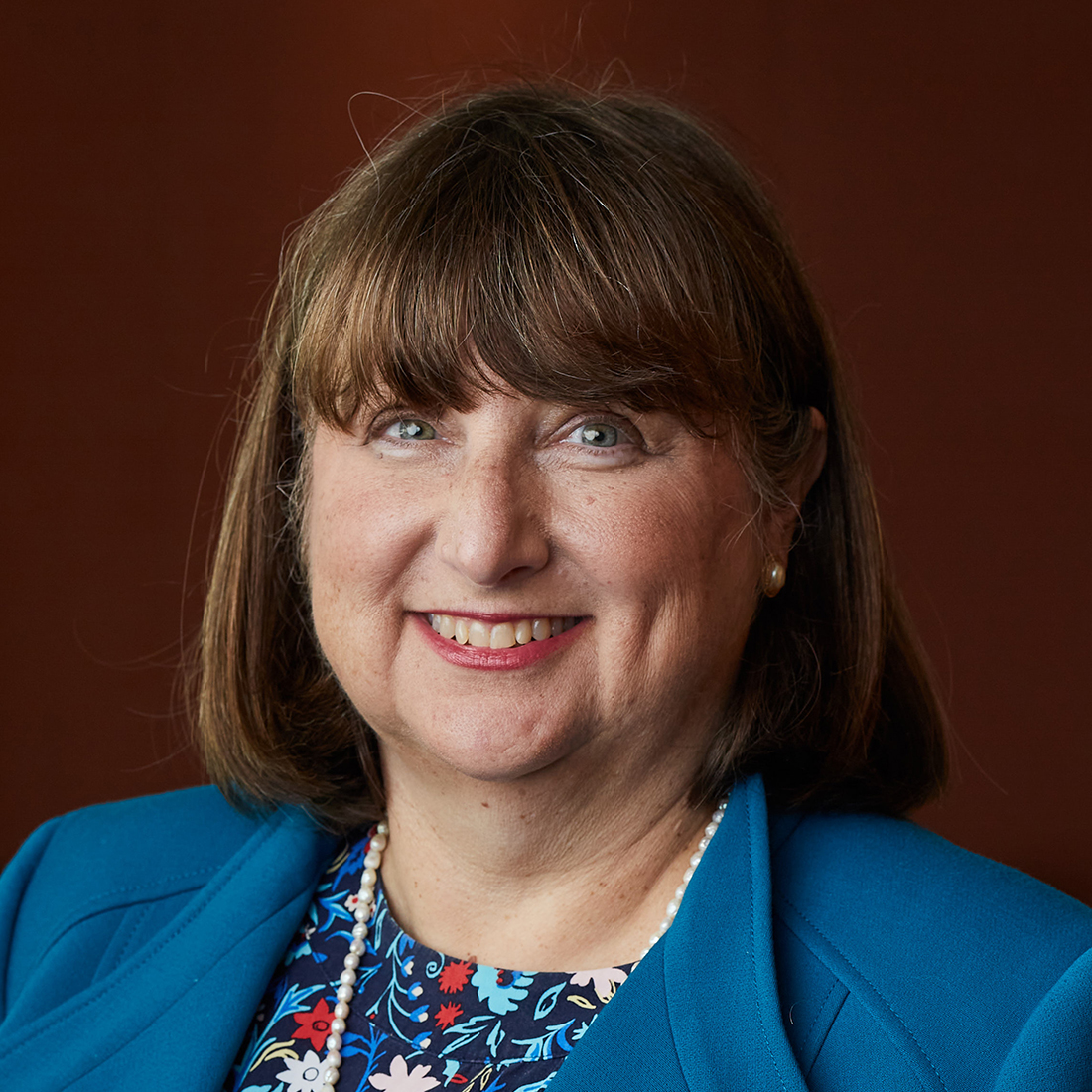
Julie Rovner
KFF Health News
Julie Rovner is chief Washington correspondent and host of KFF Health News’ weekly health policy news podcast, "What the Health?" A noted expert on health policy issues, Julie is the author of the critically praised reference book "Health Care Politics and Policy A to Z," now in its third edition.
Democrats in Congress — and those set to enter Congress in January — are already debating the merits of “Medicare for All” versus a more incremental “Medicare for More” policy, even though any major health policy they pass is unlikely to become law until there is also a Democrat in the White House.
Meanwhile, the midterm elections have shaken up the abortion landscape as outgoing Republican and incoming Democratic officials in Texas — a state at the forefront of anti-abortion advocacy — signal a shift in direction there.
This week’s panelists are Julie Rovner of KFF Health News, Joanne Kenen of the Johns Hopkins Bloomberg School of Public Health, Tami Luhby of CNN, and Alice Miranda Ollstein of Politico.
Panelists



Among the takeaways from this week’s episode:
- More than a month before taking control of Congress, Democrats are debating their healthcare strategy, and eyeing incremental changes as a possible path toward universal coverage. Significant turnover in the legislative body in recent years means many current lawmakers weren’t involved in earlier Medicare for All debates, and it remains unclear what policy, if any, will emerge from the latest discussion.
- Although recent federal changes give states more flexibility in implementing Medicaid work requirements next year, officials seem apprehensive about making a major policy shift on a tight timeline. Nonetheless, a few states have declined to slow-walk implementation and are expected to offer an early look at the GOP-passed policy’s effects on Medicaid enrollees.
- The U.S. Preventive Services Task Force finally met again after lengthy delays, with some members complaining about interference from political appointees. And the outgoing attorney general of Texas, Ken Paxton, has dropped cases against out-of-state doctors for providing abortion pills to Texas residents, in a sign of what’s to come as some Republican-led states hand over control to Democrats who were victorious in the midterms.

Email Sign-Up
Subscribe to KFF Health News' free Morning Briefing.
Plus, for “extra credit,” the panelists suggest health policy stories they read this week that they think you should read, too:
Julie Rovner: ProPublica’s “Delayed Cancer Treatment. Missed Medication. How a Popular Insurance Plan’s Use of Prior Authorization Hurt Patients,” by Max Blau and Brandon Roberts.
Tami Luhby: Reveal podcast’s “When a For-Profit Hospital’s Playbook Turns Fatal,” by Hannah Levintova and Ashley Cleek.
Joanne Kenen: The Atlantic’s “Is There Anything BPC-157 Can’t Cure?” by Tom Bartlett.
Alice Miranda Ollstein: The Washington Post’s “MAHA Champions Promote Dubious Products, Post Investigation Finds,” by Lauren Weber, Drew Harwell, and Jeremy B. Merrill.
Also mentioned in this week’s podcast:
The New York Times’ “How Kennedy Upended a Group Guiding Health Care for All Americans,” by Maggie Astor.
Click to open the transcript Transcript: Dems Push ‘Medicare for More’
[Editor’s note: This transcript was generated using transcription software. It has been edited for style and clarity.]
Julie Rovner: Hello, from KFF Health News and WAMU Public Radio in Washington, D.C. Welcome to What the Health? I’m Julie Rovner, chief Washington correspondent for KFF Health News. And, as always, I’m joined by some of the best and smartest health reporters covering Washington. We’re taping early this holiday week on Tuesday, Nov. 24, at 12:30 p.m. As always, news happens fast, and things might have changed by the time you hear this. So here we go. Today we are joined via video conference by Tami Luhby of CNN.
Tami Luhby: Hello.
Rovner: Joanne Kenen of the Johns Hopkins Bloomberg School of Public Health.
Kenen: Hi, everybody.
Rovner: And Alice Miranda Ollstein of Politico.
Alice Miranda Ollstein: Hi, Julie.
Rovner: No interview this short week, but lots of news, so we’ll get right to it. So the “Medicare for All” debate is definitely on, even though the new Congress doesn’t get seated until January. House and Senate Democrats seem to be papering over their differences when it comes to Medicare for All, despite the fact that some new members of the House and Senate explicitly ran on promises to push for it, and some very much did not. It appears they’re settling on “Medicare for More,” she says with air quotes, as a “pathway,” more air quotes, to Medicare for All. Democratic leaders like House Speaker-designate Hakeem Jeffries are talking up incremental measures, some of which have been kicking around for years, like lowering the Medicare eligibility age; adding hearing, vision, and dental benefits to the program; and covering more kids. The creative part is that Medicare for All backers, starting with Vermont [independent] Sen. Bernie Sanders, kind of the godfather of the whole idea, are at least for now saying: That’s OK, and that it’s a down payment on what they really want, which is — to remind those who haven’t lived through this many times before — a government-funded single-payer insurance program that would cover effectively everyone for everything. The fight between incrementalists and maximalists in the Democratic Party doomed President [Bill] Clinton’s plan in 1994, and almost doomed the Affordable Care Act [of] 2010. Will this little dance work, or will the details blow things up as they almost always do?
Luhby: Well, I guess the question you’re asking is — are you asking whether the Democrats will actually unite on something, or whether we’ll actually see …
Rovner: Yes, I’m asking …
Luhby: But those are different questions, of whether we’ll actually see some legislation make it to the president …
Rovner: Fair point.
Luhby: … or actually make it to reality. So …
Rovner: At the moment, I’m asking …
Luhby: … what, which question are you asking …?
Rovner: At the moment, I’m asking, Will the Democrats unite? Then we’ll get on to the “Even if the Democrats unite, can they get something done?”
Luhby: I mean, it does seem that there’s still a big divide over Medicare for All, you know, going all the way, and there’s still not, you know, a clear definition of Medicare for All. But there definitely does seem, I mean, we did see Jeffries twice, at least twice recently, say that he’s interested in lowering the eligibility age. And, you know, I think — I was on the press call with Sanders, I guess it was last week?
Rovner: Last week, I was there too.
Luhby: Yeah, it was very notable that he seemed, you know, very open to this compromise, where he was — I mean, I wouldn’t say “compromise.” He was very open to this idea of the Democrats accepting … he kept saying it was the first year of his plan, and so, you know, if the godfather of Medicare for All is kind of blessing this initial path, there may still be some of the progressives who were pushing for it on the trail, but if Bernie Sanders seems to be OK with it, I think that goes a long way.
Ollstein: I mean, what you were saying about, you know, for those who haven’t seen this movie before, what really strikes me is there’s been such crazy turnover in Congress that a lot of … these people have not been part of this debate before, and so I think we’re going to have to relive a lot of the exact same debates and a lot of the sort of education that happened. And you know, we’ve had this big debate about: Do we do the incremental step? Public option, this and that. Lowering the eligibility age, expanding the benefits that are covered. All these fights have happened before, but the folks weren’t in Congress, right?
Rovner: Not with this cast.
Ollstein: Exactly, exactly. And so I think it is notable that you are at least seeing some gestures at unity. But I just think so much education needs to happen, because even the term Medicare for All is like a shorthand. They don’t actually mean the existing program Medicare as we know it will enroll everyone. That’s not what they mean. They mean the creation of a new program, and so it’s like this nickname. And so I just think people will really have to get up to speed, and maybe someone like [Sen.-elect] Abdul El-Sayed, who’s a Rhodes scholar and public health official, like, he sort of knows the details here. But not everyone who was just elected has that same health policy background. And so I think there’s going to be a lot of, you know, internal education going on in the coming months.
Luhby: That’s why the Medicare for More might be something that can be taken because, yes, I mean Medicare for All, as we all covered in 2016 and 2020, was very controversial and had a lot of different forms even at the time with the different candidates. But Medicare for More seems to be, you know, somewhat easier to understand. You know, there is the buy-in option versus just lowering the eligibility age. And I’m not saying it’s easy, but it’s not necessarily a full radical transformation of the healthcare system. That is what Bernie Sanders and, you know, the progressives and that movement have been calling for for a decade.
Rovner: I have a column out this week in which I use my new favorite quote from Nick Bagley at the University of Michigan, who said that Medicare for All for most people means “Healthcare — good. We should have more of it.” I’m going to put that on a T-shirt. Yes, Joanne.
Kenen: I think there’s a political dynamic that people are not thinking about. In addition to all the obvious ones, you know, [President Donald] Trump isn’t going to always — well, you never know what Trump is going to do. But you know, at this point, we would expect traditional Republicans to not like this, and also the Republicans who have — you know, under their watch, the federal deficit has just gotten beyond even imaginable. And are they going to just discover fiscal restraint — I wouldn’t think so — and then object to this? This is an expensive thing. But the political thing I’m not hearing talk about is young people turned out to vote in large and enthusiastic numbers for the Democrats, and, particularly, depending what state they lived in, progressive Democrats. And then they’re going to look at this and say, Hold on a minute! We voted because we can’t afford anything. We voted because we wanted you to make our lives … let us become as acquisitional as our parents, and you’re giving them more?! You know, you’re giving my mom free insurance, and I’m still uncovered?! Or struggling to pay my premiums, or, you know, can’t afford a down payment, or having enough trouble finding my rent. I haven’t heard anybody other than members of my own family in a different generation than I am in, say this, and I think it’s a smart observation.
Rovner: Yeah, that is a really good point because if they …
Kenen: You know, I raised my children well.
Rovner: If you combine the incremental things that they’re talking about, who’s it going to help? It’s going to help people on Medicare now; they get more benefits. It’s going to help the near elderly because they’re going to get now, you know, earlier age into Medicare. And it’s going to help kids because the idea is that we start with kids and then we sort of meet in the middle. But you’re right, Joanne. It was the middle that’s having the biggest affordability issues right now. Those are the people that can’t buy houses.
Luhby: But Jeffries will argue that, you know, and returning the ACA subsidies, the enhanced ACA subsidies, and reversing the Medicaid cuts are going to, you know, do something at least to try to help the middle.
Kenen: There’s a difference between something and free.
Luhby: Well, but Medicare for More is not free, either.
Kenen: It depends on whose version you’re looking at. Some people’s it is. It includes long-term care. Like, Medicare currently isn’t free. I think a lot of people who are, you know, people who actually pay attention to the news and are politically engaged but are in their 20s and 30s, I don’t think they realize how expensive it actually is and how much out-of-pocket spending and, you know, multiple deductibles and, you know, Parts A, B, C, D …
Rovner: I don’t think people in their 50s and 60s realize how expensive Medicare is.
Luhby: I was just going to tell you, I’m married to a 65-year-old who did not realize how expensive it is until he started looking into it. So — and how little it actually covers.
Kenen: Right. I think the sort of liking the idea, but everybody has their own definition of what it is. But I do think there’s a political obstacle here because young people sort of feel like, We need help. And if this becomes something, and they’re for the, not every one of them, but there’s a lot of young people who are for the concept of Medicare for All, whatever that means. But like: Not for my mom. I want it for me. She’s got this. She’s had that. She’s had — or my dad or whoever it is. I think there’s an interesting question.
Rovner: So we’ve seen some interesting rhetoric in the past couple of weeks from some Democrats who have very much not been Medicare for All backers, notably former President Barack Obama and incoming Senate Finance Committee Chairman Ron Wyden of Oregon. In a speech to the incoming House Democratic Caucus last week, Obama urged members to go beyond restoring the Trump administration cuts to Medicaid and the Affordable Care Act, and beyond the Affordable Care Act itself, which he reminded the group was only ever supposed to be a starter home that the country has now clearly outgrown. Wyden, whose committee has way more power over what’s going to happen than Sanders’ does, this fall signed on as a co-sponsor of Sanders’ bill for the first time, I believe, and said he’ll work for the, quote, “boldest” bill possible without actually saying that’s Medicare for All. So if Democrats are moving sort of further and further into this Medicare-for-All camp, are they just going to not pay for it? Or are they going to talk about paying for it? I mean, everybody so far gets to say, Well, we don’t know what it is yet, so we don’t have to talk about how we’re going to pay for it. But clearly, that’s where the rubber hits the road.
Kenen: It’s like obscenity!
Luhby: I spoke to Doug Holtz-Eakin, who’s a moderate Republican.
Rovner: And former CBO [Congressional Budget Office] director.
Luhby: And former CBO director. And, you know, and their latest estimate is that just reducing the eligibility age to 62, which is not that low, would cost between $388 billion and $1.8 trillion over a decade, depending on what employers do in terms of covering that group who are still working. So yeah, I mean, you know, he said these are not little numbers. You know, everybody should be worried about the costs. So, yes. And then, of course, remember, even if we’re just talking about the healthcare arena, you’ve got reversing the Medicaid cuts and restoring the enhanced premium subsidies for the ACA. Those are also extremely pricey. So, yes, you’ve got, you know, and that’s just in the healthcare arena. I think Committee for a Responsible Federal Budget was raising alarms about what the Democrats’ first-100-days plan would cost.
Rovner: Yeah, they’re kind of losing their minds over a lot of this stuff.
Kenen: But I think the whole Medicare for All debate is sort of a little bit like the famous Supreme Court description of obscenity: I don’t know, but I recognize it when I see it. And, but I don’t think everybody’s recognizing the same thing here. Is it free? Is it not? Is it a whole new thing that covers everything, including long-term care, which is one of the proposals? Is it just taking the current system and opening it up to anyone who wants it under, up to 50, 55, 60, whatever they do? I mean, I just think we are so far from seeing anything solid to even vote on yet. And then the other thing is they don’t expect to actually — it’s in some ways it’s sort of a free vote between now and 2028 because they don’t really expect whatever they vote for to be more than a first draft of something that may or may not eventually happen. But things have moved so fast. I mean, I don’t feel confident saying it can’t get through the House or the Senate, because it’s people changing, I mean, the whole — and people are really mad at the current healthcare system. People are covered, but the affordability issue — and coverage has slipped in the last year or two, but more people are covered still. Well, before Jan. 1, but we’ll get there later. But it’s both unaffordable for many people and unwieldy and unaccessible for people. There’s just an obstacle after obstacle after obstacle to getting the care you need and can understand and afford.
Rovner: Yeah. Oh, I mean, it’s clearly an issue that’s going to have to be addressed, and clearly the Democratic Congress intends to address it, even if they’re just in messaging bills. I would caution, because we’ve seen this before, too, that it’s easier to pass a messaging bill than when you’re, you know, firing with live bullets, as they like to say. You know, when it’s the real deal, it’s a lot harder than when they say, You know, we’re going to lay down a marker for the next time we have a Democratic president. Well, as both Tami and Joanne have alluded to, before the Democrats get to Medicare for All, there is that pesky problem of the Medicaid cuts from the Republicans’ 2025 budget bill to deal with. As we discussed last week, the administration is sort of delaying the Medicaid work requirements for six months. States still have to start collecting the information about whether or not able-bodied Medicaid recipients are working, volunteering, or going to school for enough hours. But they don’t have to start kicking people off of their coverage until July. Meanwhile, also as we mentioned last week, a federal district court judge has delayed the Trump administration’s much stricter definition of who can be considered medically frail and thus exempt from the work requirements in the two dozen blue states that sued. Now, another dozen and a half states are asking the administration to delay the entire program for six months, complaining that they have tried hard but aren’t ready to roll out on Jan. 1. Tami, you were at the big Medicaid directors national meeting last month. What was it like in the room?
Luhby: There was a lot of tension. I mean, even, you know, even among the red-state Medicaid directors, you know, there’s concern about being able to launch this and, you know, launch this properly. At that point, it was going to be a full launch on Jan. 1. And, you know, Dan Brillman was there, and, you know, he said, I spoke to him afterwards, and he had said that, you know, he’s aware of the state concerns and is, you know …
Rovner: He’s the guy running this, the Medicaid program, for the federal government.
Luhby: Right, the CMS [Centers for Medicare & Medicaid Services] Medicaid director, Center for Medicaid director. But yeah, so, I mean, you know, this is not new, and I guess it is not really surprising that they’re giving states — now remember, it’s also giving states the option to delay enforcement. So we know several states — I know my state of New York has already come out and said that they’re going to do this — but not all states will. So we will see. I mean, you know, we’ve already seen Nebraska and Montana have, you know, implemented it ahead of time. There are other states that are, you know, going to go full force in January. But there’s a lot of concern of what it’s going to mean.
Rovner: Yeah, I know Arkansas said that they’re not going to take the delay in enforcement.
Ollstein: So four have said so far, by my count: Arkansas, Indiana, Kentucky, and Nebraska. Far more have said they will take the delay, and several have said they’re undecided, and they have a couple more weeks to inform the federal government what they plan to do. It is just notable to me that even as you have so many state and federal lawmakers who see the entire program as super harsh, a lot of states are choosing to implement it in even harsher ways. There are all these levers they can pull. They can reject the six-month delay. They can not have hardship exemptions for people, you know, in areas where there are natural disasters or high unemployment. They can make people provide more months of proof that they were working versus fewer months, you know, an even higher paperwork burden. And so there are all these levers that very conservative states are pulling to make the implementation even harsher than the federal government is requiring. And so that will be interesting as sort of a natural experiment to compare between states, how many people lose insurance because of all of these policy differences.
Rovner: Yeah, it’s important to remember that the states save money when these people come off. They don’t save a lot of money, because remember this is the population for which the federal government is paying 90%. But the states save that 10%, and, you know, every person that comes off the rolls is a saving to the state. Joanne, you want to say something?
Kenen: Yeah, I mean, also this Dec. 11 deadline when states have to say, Am I going to do this six-month hold harmless or not? I mean, CMS can’t really push it much beyond that, because Jan. 1 is the start date under the law. However, a lot of states who have Republican governors come January are going to have Democratic governors, and in several states the legislature is flipping, or at least one house is flipping, or some of them they’re trifectas where everything is flipping. So, like, whatever anyone is deciding now isn’t necessarily what the people indirectly voted for come January. And I don’t know if there’s, as of now, I do not believe there’s any option to opt into the hold harmless later. There is a waiver. I mean, CMS, in the law, has the power to give waivers. They’ve never sounded like they were going to. They’ve wanted this to go ahead. They didn’t give states a lot of time to prepare. Two years isn’t a lot, right? But — 2½ years. But this is really messy politically too, because it’s messy technically. It’s messy in messaging because Medicaid is — and things have changed constantly over the last few months. States are told this, and then they’re told that, and then they’re told this. I’ve talked, I’ve worked on stories or prepared for, you know, panels and events where I’ve talked to two people in the same office and gotten two different explanations. I was at a dinner with two people last week who the prior week had given me completely different answers to the same question. So even people who are expert and well-meaning and hardworking, it is really confusing.
Rovner: This reminds me a lot of the launch of the marketplaces in 2013 that did not go well.
Kenen: With a more vulnerable population.
Rovner: And, frankly, the launch of the Medicare drug benefit in 2006. Doing stuff like this is really hard.
Ollstein: Just to one thing Joanne said, you know, I did reach out to CMS and ask them about: Can incoming governors change what the outgoing governor decided? And they indicated there will be some, I mean, they didn’t give a definitive answer, but they indicated there will be some, you know, ability to make updates as things go along. And so it doesn’t sound like it’s, you know, the door is slammed and you’re locked in. Although, as you mentioned, some of these policy choices are baked into state law, and so the incoming legislature would have to overturn that in order to change the implementation. So, a big mess.
Luhby: And all of this changes, you know, the states’ timeline and, you know, execution of their implementation. But what I was just going to say is that, you know, there was an effort under the ACA to kind of more unify state healthcare availability and access, and this is just going in the opposite direction. Where, you know, they always say if you’ve seen one Medicaid, one state Medicaid plan, you’ve seen one state Medicaid plan, but now it’s even more so going to be just so different from state to state.
Rovner: So I know some Democrats in Congress think that the administration’s delay and, you know, the optional delay in jettisoning people from the program, suggests they and Republicans more broadly are having doubts about the political impact of the work requirements specifically and the cuts in general. Might Democrats get Republicans to vote with them to further delay or cancel the cuts? Remember, they’re, you know, they have to keep the government running, which runs out conveniently, Joanne, Dec. 11, that same day that states have to expand. Is there going to be maybe another run at trying to get Republicans to say, Maybe we should put at least a temporary halt to this stuff?
Luhby: I mean, I think you’re seeing potential for the provider taxes, and you know maybe the — because that is really affecting both. If you look at also the SNAP [Supplemental Nutrition Assistance Program], if you look at what happened with SNAP and the HR 1 cuts in SNAP, you know the effort is to delay the penalty for the error rates, the payment error rates, because that, again, is also affecting red and blue states, and governors and state legislatures from red and blue states are voicing a lot of concerns about that provision. So you know you still have that. You have the same sort of dynamic happening in Medicaid with the provider taxes. But I think it’s very questionable. From what I’ve been hearing from folks, I don’t think the work requirements are going to get rolled back.
Ollstein: Under Republican control. Of course, there could be another run at it next year.
Rovner: There probably will be another run at it next year.
Ollstein: And, but then it would run into a potential White House veto. Although, and again, the How do you pay for it? The work requirements, because they will cause a lot of people to lose their insurance, were a huge payfor in the One Big Beautiful Bill, and so …
Rovner: A pay-for-the-tax-cuts.
Ollstein: Yeah, exactly, exactly. And so repealing them, you know, even if that’s what most people want, would cost a lot of money, and so they would have to, especially under a reconciliation framework, would have to find that somewhere.
Rovner: Or there would have to be a budget that said they don’t have to find it somewhere. But we will see.
Kenen: The trillion dollars of projected Medicaid savings by CBO, approximately, in round numbers, is one-third of it is the work requirements. It’s a lot of money.
Rovner: All right, we’re going to take a quick break. We’ll be right back.
So the U.S. preventive health services task force — remember them? — managed to meet last week for the first time since March of 2025. For those of you new to this, the USPSTF [U.S. Preventive Services Task Force] is a group of outside doctors and scientists who advise the secretary of Health and Human Services about what preventive services are shown to work and thus should be covered by insurance. They’re supposed to meet three times a year, but HHS Secretary Robert F. Kennedy Jr. fired most of the members last year and replaced them with people with industry ties, and it’s been kind of a mess. At last week’s meeting, some holdover members of the panel complained that political appointees had been meddling in the panel’s workflows, something that previous Democratic and Republican administrations had refrained from. Remember, this is supposed to be an independent advisory board. Is there any chance that the recommendations themselves that will emerge from this new panel are going to be accepted as unbiased? Or is this sort of task force kind of, you know, irrevocably tainted now?
Ollstein: I looked up my article that I wrote when the Supreme Court upheld the existence of the task force, and they upheld it specifically saying that this is constitutional because the HHS secretary has all of this power over it and he can, you know, reject the recommendations they make. He can replace the members. He can sort of remake it in his image. And I had legal experts tell me at the time because every, you know, all the public health folks were celebrating, and, Oh, the task force is saved, you know, lives to fight another day. And I had other legal experts being like: I don’t know. I’m worried about the basis of this and what it could foreshadow, especially with Kennedy in that role. And I think that has really played out in terms, you know, based on this reporting, in terms of, you know, putting people on the panel who have reported conflicts of interest, rejecting recommendations, burying recommendations. There’s some interesting reporting by The New York Times about just how the anti-DEI [diversity, inclusion, and equity] focus has really scrambled — because you need to be able to talk about which different populations are impacted differently by health conditions and diseases, and there’s different approaches and different recommendations, and that has all been scrambled because they aren’t allowed to say “Black” or “trans” anymore.
Rovner: Or “women”!
Luhby: I spoke to two former chairs before the panel. I didn’t actually, I wasn’t able to actually listen to the two-day recommendations. But they were very concerned about changes. You know, they noted that on the second day, on the Friday meeting, there were these, like, experts that were going to be presenting, and, you know, sort of outside experts, and that had not happened before. But one thing they even pointed out was that they were questioning whether some of the recommendations — because the panel hadn’t met for, you know …
Rovner: A year and a half.
Luhby: … more than a year and a half. Right. Some of the research that was done, if it’s just being held over, is, you know, potentially outdated now. So sort of a lot of the, they were concerned that a lot of the best practices, you know, may not be held up going forward. And you know, that will bring some question into the future recommendations and their basis on, you know, pure, sort of what they’ll argue is pure, you know, scientific evidence and not any kind of personal or professional bias. No, I was just going to say. And then there’s the you know the addition of the specialists, which Kennedy did. So there were 16 members on the panel. There were eight vacancies, and Kennedy filled several of the vacancies a couple of months ago with, for the first time ever, specialists, and you know that is concerning to the former task force chairs.
Rovner: Right, because this is supposed to be able to look broadly rather than have sort of a specialist and, you know, one specialty say, Well, we should have this preventive care because it’s important to people, to the people who do what I do.
Luhby: Well, most of the specialists are experts in treating, not necessarily preventing.
Rovner: Preventing, that too, yeah. I guess sort of the end of this is that the panel remains, but it’s probably now going to be seen as having a political tilt towards whoever is basically the secretary. Is that where we’ve ended up?
Luhby: We’ll see. I mean, the recommendations haven’t been released, you know, the votes haven’t been released yet, so we don’t quite know. But there are a lot of concerns floating around.
Rovner: We’ll watch that space, and I will link to that really good New York Times backgrounder story on this because I found it really helpful. All right, turning to reproductive health. Wow, what a difference an election makes. Outgoing Texas attorney general Ken Paxton, who lost his race to become a U.S. senator, on Friday dropped two lawsuits he had filed against doctors from other states who prescribed abortion pills to Texans, and his incoming Democratic successor, Nathan Johnson, has vowed not to continue Paxton’s crusade against doctors in shield law states who prescribe abortion pills to Texas residents. Alice, Texas has been one of the top agitators for the anti-abortion cause. Does this take it off the playing field? And what does it mean for the broader fight?
Ollstein: So I would say that the general conflict between states that have passed laws allowing doctors to prescribe abortion pills and mail them across state lines into states where abortion is banned, that clash is not over. I think it will continue in some form. There are several states that are also part of that that did not flip as dramatically as Texas. Louisiana comes to mind, among a few others, and those states are still planning to pursue lawsuits against individual doctors, against the FDA [Food and Drug Administration], you know, targeting all of these different entities to pursue the goal of cutting off access to abortion pills for their residents and, honestly, for everyone in the country. And so that bigger fight is going to continue. But this is major. I don’t mean to downplay what has transpired as a result of this. And I will also throw in there that Democrats flipped the AG seat in Kansas as well. They were part of some of these multistate abortion pill lawsuits, so that’s another one to watch. I think we’ve seen the most action in Texas so far, but it’ll be really interesting to see these other states where Democrats flipped the governor’s seat, the AG seat, the legislature, what changes come on the abortion front. And I will say, changing the position in a case like this can be done a lot faster and easier than passing a bill, and so those will be likely among the biggest changes we will see most quickly. And then there could be a lot of, you know, arm-twisting behind the scenes about actual legislation that will take a lot longer.
Rovner: Right, and Texas still has its bounty hunter bill, right? Where basically anybody …
Kenen: Right. And it still has — its state Senate is still quite Republican.
Rovner: And the state Senate.
Kenen: And the state House flipped, but the state — when I first looked up the balance, because I was curious about Medicaid expansion, all the votes weren’t in, and at that point it was like a one-vote margin. I thought, OK, you could peel off one Republican on rural health issues on Medicaid expansion. But then the final count came in. It was like — it was large. I think it’s 19. And it’s not one or two votes, so, you know, many of these things can be done by the AG or the governor, but not everything.
Rovner: Well, speaking of Texas, the 5th Circuit Court of Appeals, which covers Texas, along with Louisiana and Mississippi, on Friday ruled that the 2022 Pregnant Workers Fairness Act is unconstitutional because it passed the U.S. House using proxy voting, which was in effect due to the pandemic. This is a law that helps pregnant women. It requires employers to provide accommodations related to pregnancy and childbirth. A group that backed the law says it will appeal to the Supreme Court. But in the meantime, this could presumably put a lot of laws in limbo. Right? Anything that passed the House during the pandemic era.
Kenen: Yes, it’s, like, totally topsy-turvy. But also, this particular move is — if Republicans want women to have more babies, it is just pretty wild. Of all the things that we have to read twice to make sure we didn’t read it wrong the first time, or read three or four or five times, this one really floored me. I mean that you don’t …
Luhby: Well, but when this one passed — or when the rules were being promulgated in the Biden administration — there were a gazillion comments because one of the things you have to do is also provide time off for potential abortion. And you don’t have to agree with abortion, you don’t have to fund it, you don’t, you know, your insurance doesn’t have to cover it, but it’s an accommodation. And this sparked a huge number of comments and controversy.
Rovner: Yeah, although it would be easier to change that part than to strike down the entire law.
Luhby: Right.
Rovner: But, anyway, you never know. This is gonna, this is another thing that we will add to our list of things that we will be watching.
Kenen: As someone who had basically, not every pregnancy complication, but a very, very long list of pregnancy complications, you know, pretty encyclopedic, this one just blew my mind. That it just, it’s not family-friendly.
Rovner: Yeah, it is definitely, and it is not part of the sort of agenda of what we thought the Republicans were about, which is that we should, you know, women should be having more babies. All right.
Kenen: And no abortions, right?
Rovner: And no abortions.
Kenen: Go to work and stay there, right?
Luhby: That’s the issue.
Rovner: Finally, this week, I want to mark the passing of former West Virginia Democratic Sen. Jay Rockefeller. He was never a spotlight-grabber, but he was a quiet and effective advocate for a wide range of health-related programs, most notably the Children’s Health Insurance Program (CHIP), as well as lifetime health coverage for coal miners. Out of the ashes of a failed commission in the early 1990s, which wanted to do long-term care as well as universal coverage and didn’t, he helped found the bipartisan Alliance for Health Policy, which today still helps educate Capitol Hill staffers and others on the intricacies of our healthcare system. Sen. Rockefeller was also one of my favorite senators to cover. He was serious and policy-minded and also extremely friendly and gracious. And he always had one of the smartest staffs on Capitol Hill. He will be very much missed. Joanne, I know you covered him too. Did you want to add something?
Kenen: I think one of my favorite stories ever of my whole career was when I went to West Virginia with Sen. Rockefeller, and everywhere we got, Rush Limbaugh had been there first. It was really quite a lesson in how people ended up opposing something. This was during the Clinton years. You know, people ended up opposing something that was actually in their own interests. And my favorite thing about this story was the dateline, and I’ve never had such a good dateline, which was: Lost Creek, West Virginia.
Rovner: All right, that is this week’s news. Now it’s time for our extra-credit segment. That’s where we each recognize a story we read this week we think you should read, too. Don’t worry if you miss it. We will post the links in our show notes on your phone or other mobile device. Tami, why don’t you go first this week?
Luhby: Sure. I’m doing an audio piece this week, and, although it’s based on a print story. So it’s titled “When a For-Profit Hospital’s Playbook Turns Fatal.” And it was, it’s by Hannah Levintova and Ashley Cleek. It aired on Reveal. I listened to it over the weekend, and the piece is based on an in-depth story that they wrote for Mother Jones. It’s about American Healthcare Systems, a for-profit company that took over the troubled Vista Medical Center East in Waukegan, Illinois. And the company, AHS, is one of the largest for-profit hospital operators in the country. It runs 18 facilities in six different states. So, as the title alludes, the story starts with a powerful anecdote of the problems at Vista: the death of a young patient who was found, a young woman who was found lying face down in the snow on the second-floor rooftop of the hospital. And it’s noted in the story that AHS had just furloughed 78 employees, including many positions called “sitters,” who stay with patients who are agitated or, you know, at risk of leaving their rooms, like this young woman was. So this audio story looked at how Vista’s financial situation worsened under AHS. Also, it talked about other hospitals and their financial situations, but at Vista, it now faces possible foreclosure as soon as this year. The company did not pay many of Vista’s bills. It downsized or closed several departments and delayed paying doctors and nurses, who then, some of whom then canceled surgeries. And at one point, the hospital owed $1.2 million in unpaid county property taxes and $29 million in unpaid provider taxes. There were several whistleblowers, who tried to raise awareness among the board and others, and, you know, there was little that was done. Levintova and Cleek also revealed that AHS executives have mismanaged the finances of other hospitals while enriching themselves. And it really is the latest example of the deep problems, and, you know, sadly, the human costs of when private equity companies or institutional investors get involved in healthcare. You know, we’ve seen this in the hospital space, in the hospice space, in the nursing home space, in the specialty doctors space …
Rovner: In the emergency room doctors space.
Luhby: In the emergency room, yes, that very much so. So, you know, it’s really become a, you know, place for profits. Healthcare has become a place for profits for a lot of these private equity and Wall Street-type firms. And you know, as this story shows, there’s a real human cost to it. So it’s definitely worth a read in Mother Jones, and a listen to on Reveal.
Rovner: I put it in my queue to listen to while I’m cooking. Alice.
Luhby: Great.
Ollstein: I have a piece from a friend of the pod, Lauren Weber at The Washington Post, joined by Drew Harwell and Jeremy [B.] Merrill, and it is called “MAHA Champions Promote Dubious Products, Post Investigation Finds.” And this is a great deep dive into folks in the Make America Healthy Again movement who have leveraged their connections with high-level officials in the administration to massively grow their online followings, and then used that new massive online following to promote a bunch of alternative health and wellness and nutrition products, many of which have, you know, there’s evidence in here that some of them were found to be contaminated with lead. Others were companies that were sued for basically encouraging people to forgo traditional cancer treatment in favor of, you know, juice cleanses and other alternatives. And, you know, that led to people dying. And there’s just a lot in here. And my favorite part of the article was when they reached out to Del Bigtree, who is a major ally of RFK Jr., and were asking him about products he’s promoted, and he said, I don’t promote products. I only promote the truth. And then they, you know, said, Well, what about these posts of yours that promoted products? And he’s basically like, Oh, you mean these products? So great stuff there. Good accountability work.
Rovner: Yes, talk about making money in healthcare. Joanne.
Kenen: Well, following right on what Alice just talked about, there is a piece in the December edition of The Atlantic by Tom Bartlett. Great read. It’s a fun read about a serious story, and the headline [was] “Mister Peptide: The Indefatigable Croatian Who Made the World Amino-Acid Curious” [revised to: “Is There Anything BPC-157 Can’t Cure?”]. It’s about this professor of pharmacology emeritus in Croatia, whose name I’m going to mangle probably: Predrag Sikirić. He’s in his 70s. He’s in Zagreb. When Tom Bartlett emailed him, he called him within four minutes and said, “How fast can you get on a plane?” So Bartlett went to Croatia. This guy is the leading cheerleader or evangelical promoter, I suppose, of a peptide called BPC-157. It’s sort of the peptide of all peptides. It turns out this single person is like the lead author or the co-author or PI [principal investigator] or assistant collaborator on just about study after study after study in legitimate but not top-tier journals, and they never really prove they … it suggests, it enhances it. You know the wording in these studies. People are taking this BPC-157 all over the place for absolutely everything, and this guy believes it cures everything, but his own research falls short of that. It’s just a very wild read.
Rovner: I also can’t wait to read that one.
Kenen: And a great headline.
Rovner: Yeah. My extra credit this week is the latest in a ProPublica series on insurance company denials. It’s called “Delayed Cancer Treatment. Missed Medication. How a Popular Insurance Plan’s Use of Prior Authorization Hurt Patients,” by Max Blau and Brandon Roberts. And it’s a great look at a major outlier in delaying or denying treatment: the insurance company Ambetter, whose plans are among the most popular on the Affordable Care Act marketplace in several states. Apparently, the denials are so baked in that in a conversation with a patient who complained, even the CEO of the company said he didn’t have the power to approve payment for her care. I expect this is going to be the focus of a lot of congressional attention next year.
OK, that’s this week’s show. Thanks to our editor, Emmarie Huetteman, and our producer-engineer, Francis Ying. A reminder: What the Health? is now available on WAMU platforms, the NPR app, and wherever you get your podcasts — as well as, of course, kffhealthnews.org. Also, as always, you can email us your comments or questions. We’re at whatthehealth@kff.org. Or you can still find me on X @jrovner, and on Bluesky @julierovner. Where are you guys hanging on the socials these days? Tami?
Luhby: Not so much on the socials but on CNN.com.
Rovner: Alice.
Ollstein: @AliceOllstein on X and @alicemiranda on Bluesky.
Rovner: Joanne.
Kenen: I’m @joannekenen on Bluesky and on LinkedIn mostly.
Rovner: We’ll be back in your feed next week. Until then, be healthy.
Credits
Francis Ying
Audio producer
Emmarie Huetteman
Editor
Click here to find all our podcasts.
And subscribe to “What the Health? From KFF Health News” on Apple Podcasts, Spotify, the NPR app, YouTube, Pocket Casts, or wherever you listen to podcasts.
Related Topics
More from KFF Health News