California Eyes Prison Heat Protections That Fall Short of Workplace Standards
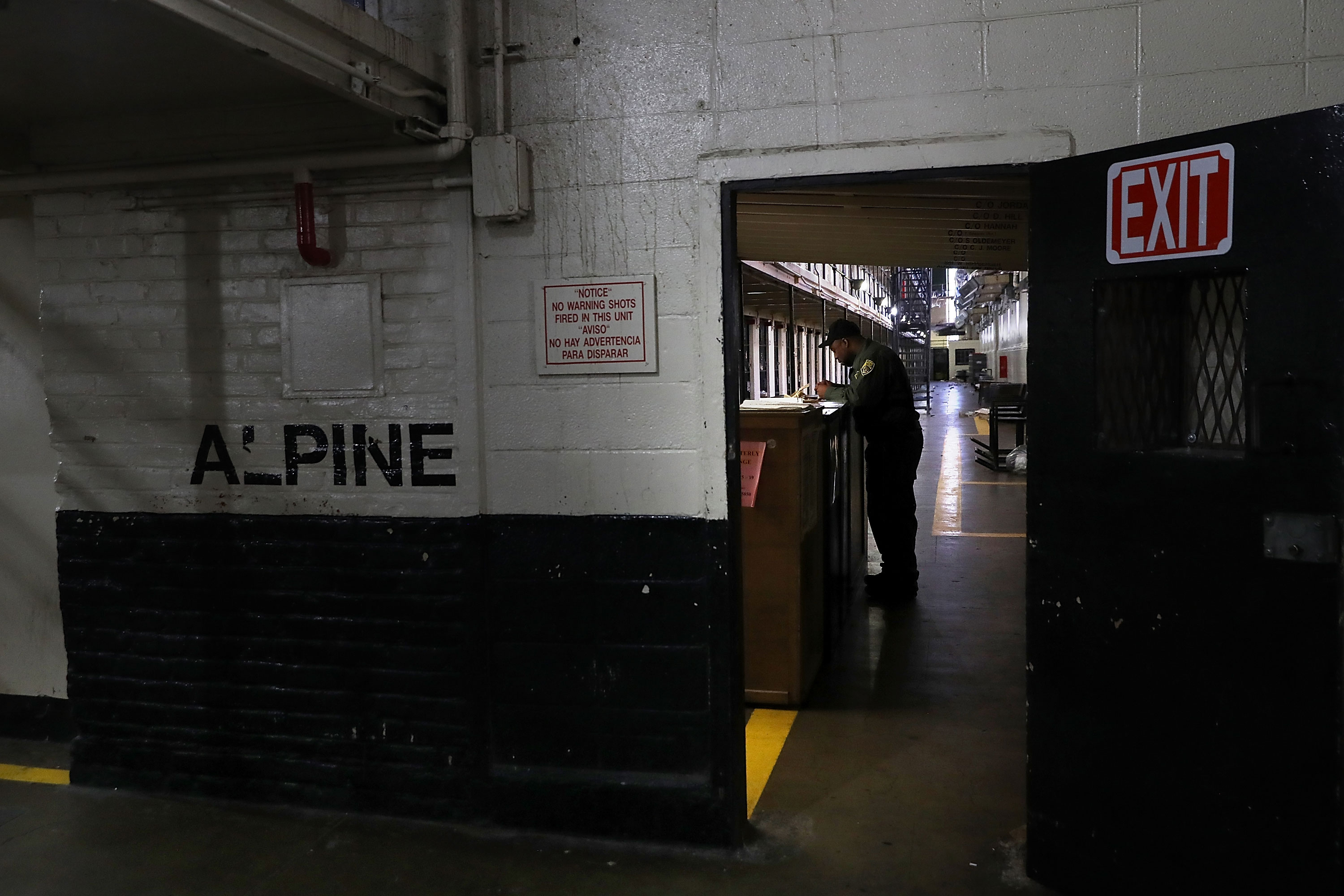
A California Department of Corrections and Rehabilitation officer stands guard in a housing block at San Quentin State Prison, since renamed San Quentin Rehabilitation Center, in August 2016. (Justin Sullivan/Getty Images)
As Californians have weathered relentless heat waves, state workplace safety regulators have repeatedly reminded employers to protect employees from heat illness by providing water, shade, cooldown areas, and additional rest breaks when temperatures climb.
But there’s a notable exception in the state’s heat safety rules: Not covered are the nurses, guards, staff, and tens of thousands of incarcerated people who work in California’s aging correctional facilities, which are largely not air-conditioned.
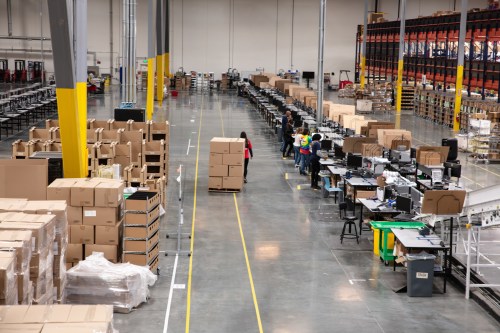
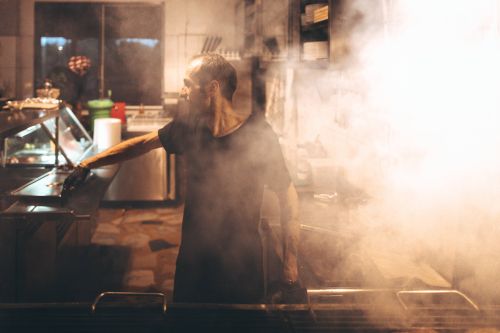
In 2024, California adopted landmark rules intended to protect more than 1 million workers who toil in sweltering warehouses, kitchens, factories, and other indoor workplaces. But the state Occupational Safety and Health Standards Board exempted prisons and local government detention and juvenile facilities after Democratic Gov. Gavin Newsom’s administration warned the rules could cost the state billions.
Two years later, the Newsom administration has put forward weaker indoor heat standards for California’s correctional facilities, alarming worker advocates and public health experts who argue they would provide inadequate protections from extreme heat as the risks worsen due to climate change. Regulators with the state’s Division of Occupational Safety and Health, or Cal/OSHA, have proposed protections that wouldn’t kick in until temperatures reach 87 degrees — 5 degrees higher than for other indoor workplaces, according to draft rules released in May.
“It’s basically a second-class standard, and we don’t accept that correction workers get weaker protections than everybody else, with no scientific or medical basis,” said Stephen Knight, co-executive director of Worksafe, a California nonprofit that pushes for workplace health and safety protections. “The human body doesn’t handle heat differently in a prison than, you know, an Amazon warehouse.”
Extreme heat is the No. 1 weather-related killer in the U.S., with heat-related deaths and illness spiking during heat waves as elevated temperatures exacerbate other health problems, including cardiovascular and respiratory diseases. Even among people without preexisting conditions, prolonged exposure to heat without the opportunity to cool off can cause heat exhaustion and heat stroke, which can lead to death.
State agencies have estimated the price tag to cool California’s prisons could run from $900,000 to $6 billion in upfront costs, although the Newsom administration has refused to provide detailed information and declined interview requests.
“These facilities were exempted from the indoor heat standard due to the unique challenges in the correctional institutions with complying,” Eric Berg, Cal/OSHA’s deputy chief of health, research, and standards, told stakeholders at a recent meeting. He added that “we’re creating a separate standard to kind of address their unique conditions they have in those facilities.”
Heat Health Risks
California’s average temperature across an entire year is about 2.5 degrees warmer than it was in 1895. At least nine of the 10 warmest years on record have occurred since 2014, and scientists project 2026 could be the hottest yet.
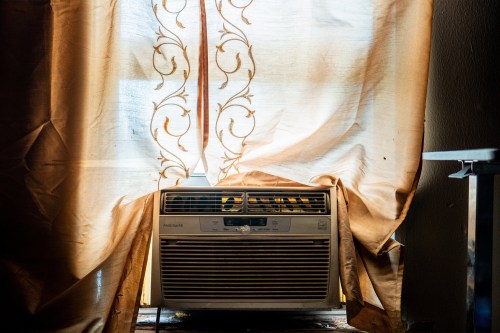
That warming, driven by the burning of fossil fuels, has accelerated in the decades since many of California’s 31 adult state prisons were built. Many of those facilities are located in some of the state’s hottest areas, including the Central Valley and inland areas of Southern California, where temperatures can soar into the triple digits. Fewer than a quarter of the prison system’s 791 housing units have any type of mechanical cooling such as air conditioning, according to a January report on air cooling measures released by the California Department of Corrections and Rehabilitation. Instead, institutions rely on fans and swamp coolers, but the uninsulated concrete walls mean these ad hoc solutions often face a losing battle.
“The best way to describe it is like someone turned on the microwave, and then they put you in it,” said Leonard Brown, a community organizer with Worksafe who spent over 30 years incarcerated in 10 state prisons, including in Lancaster and at the now-closed Chuckawalla Valley State Prison in Blythe, communities where triple-digit outdoor temperatures are common.

The lack of insulation in buildings makes it difficult to keep temperatures below 89 degrees even in facilities with air conditioning, according to California’s corrections department. The aging institutions, which average 52 years old, were mostly built when “comfort level of the incarcerated population and staff was not a consideration or a priority,” according to a June 2025 memo. In 2024, the department tallied 86 days when indoor temperatures reached 90 degrees or above in at least one institution, and 46 days when indoor temperatures reached 95 degrees or more.
Health experts say people are particularly vulnerable to heat while at work because they’re not in control of their surrounding environment. They can’t always leave work for a cooling center, crank up the air conditioning, or jump in the shower, and their ability to protect themselves from heat depends on their type of job, income, and an array of other factors.
“Say you’re working in a warehouse or an agricultural field. It can be really hard to walk away because you need the money for yourself or for your family. But you can, right? It’s an option,” said Bharat Venkat, director of the UCLA Heat Lab, which studies the unequal effects of extreme heat. “If you’re incarcerated, you can’t really say no.”
And because incarcerated workers often make less than 50 cents an hour, it could take weeks to make enough to purchase a personal fan or a cooling towel, a June 2026 analysis from Venkat’s lab found.
Separate Standards
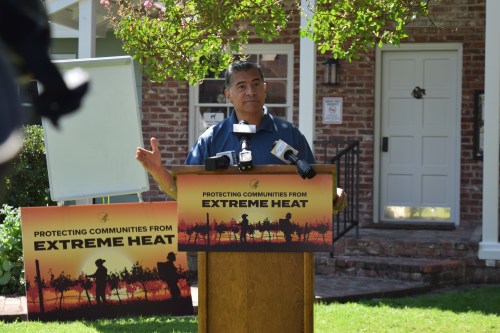
Newsom, who has been exploring a presidential run, has sought to position himself as a climate leader and in August released an extreme-heat action plan, which touted the state’s 2024 indoor worker heat protections and noted that rules for correctional workers were in development.
“Californians are feeling the impacts of extreme heat earlier, longer, and more intensely than ever before,” Newsom said in a statement when he released the plan. He added: “We’re setting the path for the next chapter of our hotter, drier future.”
California is among a handful of states that have sought to protect indoor and outdoor workers from extreme heat over the past two decades. After multiple farmworkers died of heat-related causes in 2005, California adopted emergency standards for outdoor workers and made them permanent the following year. In 2024, the Biden administration proposed nationwide heat protections for indoor and outdoor workers, but the Trump administration has not finalized them.
Still, Newsom has faced criticism from worker advocates and public health experts for his administration’s slow embrace of indoor heat protections, which took roughly eight years to develop and approve. And protections for prison workers are still years away, with the timeline “still being determined,” Cal/OSHA spokesperson MariCarmen Estudillo said in an email.
The 2024 rules require employers to provide cooldown areas and take other protective steps once indoor temperatures reach 82 degrees. They also require employers to keep both the indoor temperature and heat index, which factors in humidity, below 87 degrees, or below 82 degrees when employees are wearing heat-restrictive clothing or working near a heat source like an oven.
Under the proposed rules for prisons, safety standards wouldn’t kick in until temperatures reach 87 degrees. And employers would not be required to factor in the heat index, radiant heat, and humidity — all of which can make the temperature feel even hotter.
“Temperature alone does not accurately measure how dangerous working conditions are in these facilities,” said Janice O’Malley, a legislative advocate with the American Federation of State, County & Municipal Employees, which represents many of the medical and mental health staff within CDCR, as well as employees at local detention centers and juvenile facilities across the state.
“The heat index accounts for humidity and reflects how hot conditions actually feel to the human body, and it’s incredibly difficult to cool down through sweating in the correctional facilities where our folks work,” O’Malley said, adding that CDCR employees work in buildings with poor ventilation, often while wearing protective clothing that traps heat.
CDCR declined requests for an interview, but at a meeting in May, Alex Norring, assistant secretary for legislative affairs, said the unique staffing needs of state prisons would make it difficult to comply. For example, guards would need to be relieved by additional personnel to get their cooldown breaks.
“The biggest challenge is the direct fiscal impact because staff provide guarding for the incarcerated population, and we need to ensure that there is appropriate staffing in order to cover that and comply with providing the relief,” Norring said.
The Chief Probation Officers of California also warned that establishing cooldown areas at some juvenile halls “may require system redesign, supplemental cooling equipment, and portable AC units which come with security risks.”
Unclear Costs
The state’s cost estimates to cool state prisons have varied widely since the worker safety board received its first assessment in 2023 and the price tag hovered at about $900,000 in the first year and less than $500,000 each year after. A year later, the sticker price skyrocketed to “billions of dollars” after the state Department of Finance said it had received revised estimates from the corrections department.
The state has provided few details and little clarity since. The Department of Finance and CDCR have denied Capital & Main’s requests for the details of the cost estimate under the California Public Records Act.
Labor unions and safety advocates, meanwhile, say workers in California prisons have waited too long for protections — while the state further defers the costs.
“You’re leaving a very important population uncovered. That’s very unjust. There’s no argument for that,” said Laura Stock, whom Newsom removed from the Occupational Safety & Health Standards Board after she publicly criticized his administration for delaying protections to prison workers.
This article was produced in collaboration with Capital & Main, an independent, California-based nonprofit investigative news publication that reports on inequality, climate change, and other issues.