Sen. Cassidy Unleashed
The Host
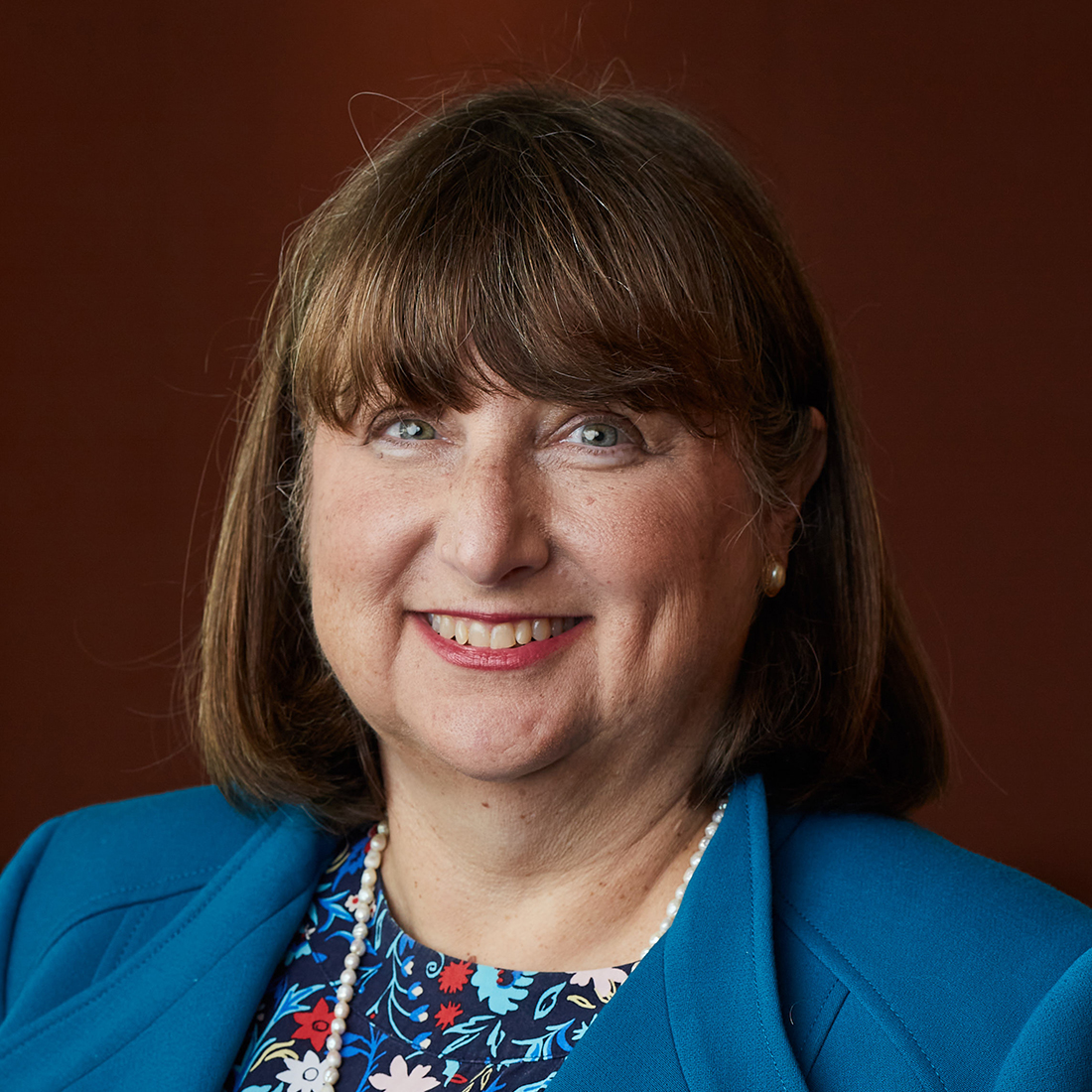
Julie Rovner
KFF Health News
Julie Rovner is chief Washington correspondent and host of KFF Health News’ weekly health policy news podcast, "What the Health?" A noted expert on health policy issues, Julie is the author of the critically praised reference book "Health Care Politics and Policy A to Z," now in its third edition.
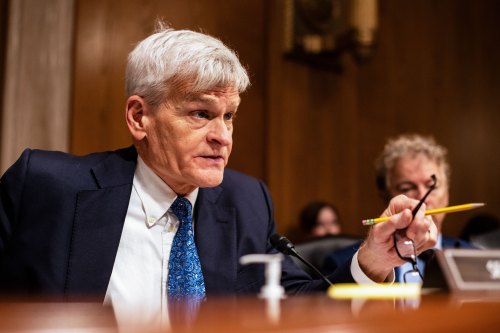
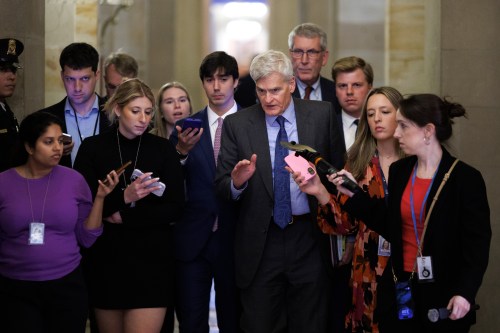
Just days after Sen. Bill Cassidy (R-La.), who is also a doctor, was ousted in a primary election, he has already begun to separate himself from the agenda of President Donald Trump, who endorsed one of his opponents. Cassidy has half a year left in office and could, in that time, reshape health policy in an administration from which he’s now effectively freed.
Meanwhile, a potentially serious Ebola outbreak in central Africa has experts worried that the U.S.’ dismantling of much of the nation’s public health infrastructure leaves it more vulnerable than in earlier outbreaks.
This week’s panelists are Julie Rovner of KFF Health News, Joanne Kenen of the Johns Hopkins Bloomberg School of Public Health and Politico Magazine, Sheryl Gay Stolberg of The New York Times, and Alice Miranda Ollstein of Politico.
Panelists

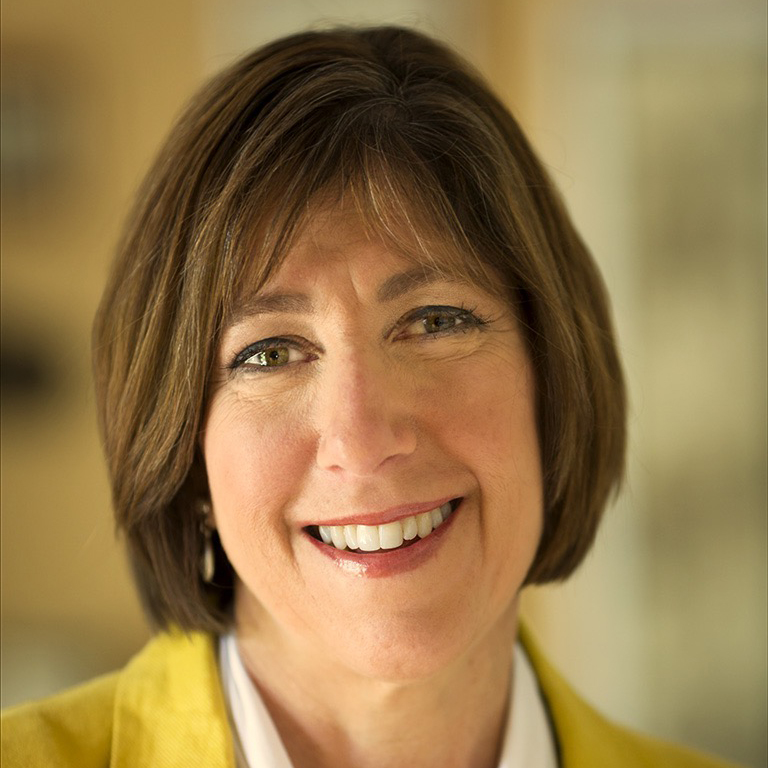
Joanne Kenen
Johns Hopkins University and Politico

Among the takeaways from this week’s episode:
- Cassidy, the chairman of the Senate Health, Education, Labor and Pensions Committee, is still in charge of nominations for some major vacancies at the Department of Health and Human Services, including commissioner of the Food and Drug Administration, director of the Centers for Disease Control and Prevention, and surgeon general. Now that he’s no longer tied to pleasing Trump or HHS Secretary Robert F. Kennedy Jr., Cassidy will have more independence when it comes to who could get confirmed to fill some of these key health posts.
- Kyle Diamantas, the acting head of the FDA, is trying to mend fences with anti-abortion activists concerned because he represented Planned Parenthood in his private law practice. Meanwhile, the promised safety study looking at the abortion pill mifepristone has apparently not yet begun — not because the FDA was delaying it but because officials have been unable to get access to a needed database.
- Kennedy, having reshaped the Advisory Committee on Immunization Practices, is now taking aim at another key group of health advisers, the U.S. Preventive Services Task Force, which helps determine which preventive services are valuable enough to merit insurance coverage.
- A new analysis from KFF shows that many more enrollees in Affordable Care Act plans now have much higher deductibles to pay before coverage kicks in, potentially leading to cases in which, even with insurance, patients will be unable to afford care. At the same time, the Trump administration is proposing new rules for 2027 that would encourage health plans with still higher deductibles.
Also this week, Rovner interviews health policy professor Miranda Yaver, the author of the new book Coverage Denied: How Health Insurers Drive Inequality in the United States.

Email Sign-Up
Subscribe to KFF Health News' free Morning Briefing.
Plus, for “extra credit” the panelists suggest health policy stories they read this week they think you should read, too:
Julie Rovner: The Wall Street Journal’s “How Zyn Became All the Rage Inside Trump World — Including With RFK Jr.,” by Liz Essley Whyte, Josh Dawsey and C. Ryan Barber.
Alice Miranda Ollstein: Stat’s “1 in 8 Women Drink During Pregnancy. Experts Dread the Consequences,” by Isabella Cueto.
Joanne Kenen: The Associated Press’ “A Crisis of Conscience Spurred This Christian IVF Doctor’s Career Pivot,” by Tiffany Stanley.
Sheryl Gay Stolberg: KFF Health News’ “Religious Anti-Abortion Center Finds Opportunity in Town Without OB-GYNs,” by Jazmin Orozco Rodriguez.
Also mentioned in this week’s podcast:
- The New York Times’ “As Abortion Laws Drive Obstetricians From Red States, Maternity Care Suffers,” by Sheryl Gay Stolberg.
- Politico’s “Abortion Clinic Protesters Eligible for Payouts From New Trump ‘Anti-Weaponization’ Fund,” by Alice Miranda Ollstein.
- KFF’s “What We Know So Far About 2026 ACA Marketplace Enrollment, Premiums, and Deductibles,” by Matt McGough, Jared Ortaliza, Justin Lo, and Cynthia Cox.
click to open the transcript Transcript: Sen. Cassidy Unleashed
[Editor’s note: This transcript was generated using both transcription software and a human’s light touch. It has been edited for style and clarity.]
Julie Rovner: Hello, from KFF Health News and WAMU Public Radio in Washington, D.C. Welcome to What the Health? I’m Julie Rovner, chief Washington correspondent for KFF Health News. And, as always, I’m joined by some of the best and smartest health reporters covering Washington. We’re taping this week on Thursday, May 21, at 10 a.m. As always, news happens fast, and things might have changed by the time you hear this. So, here we go. Today, we are joined via video conference by Sheryl Gay Stolberg of The New York Times.
Sheryl Gay Stolberg: Hi, Julie.
Rovner: Alice Miranda Ollstein of Politico.
Alice Miranda Ollstein: Hello.
Rovner: And Joanne Kenen of the Johns Hopkins Bloomberg School of Public Health and Politico Magazine.
Joanne Kenen: Hi, everybody.
Rovner: Later in this episode, we’ll have my interview with Miranda Yaver, a health policy professor at the University of Pittsburgh and author of a cool new book all about insurance denials. But first, this week’s news.
So, the biggest health policy news in Washington this week is the primary defeat of Senate Health, Education, Labor, and Pensions Committee Chairman Bill Cassidy, who finished third in a three-way Republican primary in Louisiana Saturday — not just to congresswoman Julia Letlow, the candidate endorsed by President [Donald] Trump, but to state treasurer and former representative John Fleming, who, like Cassidy, is also a medical doctor. Fleming and Letlow will now advance to a runoff next month to see who will make the general election ballot in November and likely advance to the Senate from very red Louisiana.
Meanwhile, though, Cassidy still has the rest of this year at the helm of the HELP Committee, where he is still in charge of filling Trump administration vacancies for surgeon general, Food and Drug Administration commissioner, and director of the Centers for Disease Control and Prevention. And, just judging from the last few days, Cassidy appears to feel liberated from his former fealty to President Trump. He switched sides and voted with Democrats to limit Trump’s war powers. He questioned the legality of a $1.8 billion fund to pay people who claimed they were victims of unfair federal prosecutions, and he defended his vote to convict Trump in the impeachment trial after Jan. 6, which is what got him in hot water with the president in the first place. What does this portend for what might happen at the HELP Committee going forward the rest of this year?
Stolberg: Well, I think we see Cassidy, as you said, “liberated,” unfettered. You know, Cassidy agonized over whether or not to confirm Bobby Kennedy. I recently reread his testimony, and at the end, he delivered this soliloquy, and he said, Man, you know, I don’t know, can a 71-year-old man, you know, change his tune after all this time? He said, I’m 71; Kennedy’s 71, and he wondered if Kennedy could, you know, really do the things that he promised Cassidy he would do. And in the end, Kennedy did not, and Cassidy was kind of humiliated in Washington. He may have been defeated by forces in Louisiana other than what he did in Washington, but at least here in Washington, Cassidy, you know, still has his perch. He was never comfortable with Bobby Kennedy. There’s nothing holding him back now. When I asked him before his primary, I said, Will we see a vote on Casey Means? She was still the nominee then, and he said, We’ll talk about that later. And I have a feeling that Cassidy will talk about a few things later.
Rovner: I feel like two things happen when senators are, you know, become lame ducks like this, is they can either go rogue and do everything they always wanted to do and say everything they always wanted to say — which we’re kind of seeing with Sen. Thom Tillis from North Carolina — or they can actually hunker down because they’re worried about what they might do when their term is over, and they want to get a job, and they want to be able to lobby their former colleagues. Do we have a feel for which way Cassidy is going?
Stolberg: Cassidy already gave us a feel. In 2021, he voted to convict Trump on a charge of incitement of insurrection. He said at the time I voted to convict Trump because he’s guilty. Now it is true that Trump is still in office now; Cassidy probably never expected him to come back, but I don’t know. Cassidy tried containing or constraining himself, and it didn’t work out. He lost, so no, why not let it rip now?
Kenen: I was always sort of struck that once he cast that impeachment vote, which was a really defining vote, even, as Sheryl just pointed out, not expecting Trump to — I mean, [Sen. Mitch] McConnell didn’t expect him to, a lot of people didn’t expect him to — come back after that. But he had done it, and he can’t erase it once Trump did come back. So once you have that, sort of, you know, what for Trump is a mark of Cain on your forehead, then why … like, we saw it was so visible, you could see Cassidy wrestling with the Kennedy nomination, you could see it. It was so visible, it was like [unintelligible] …
Stolberg: It was like Hamlet.
Kenen: And then vote against his conscience, probably, none of us are in his head or his heart, but you know it was not a vote he was completely comfortable with. And it wasn’t going to save him. Like, at that point, the politically smarter thing might have just gone, OK, I’m going to be an independent-minded guy, and if I lose, I’m going to lose if I do this, and take a gamble on doing that. I don’t think anyone expected him to come out ahead in this primary, although maybe he did. I never understood the Kennedy vote. I never …
Rovner: I understood the Kennedy vote. What I never understood was what happened afterwards, when Kennedy did not keep all the promises that he made to Cassidy, that he would come and testify that he wasn’t going to change the vaccine schedule, all the things that he then did. And Cassidy sort of — you could see that he was disapproving of it, but he never really did anything about it. I think that was the part that surprised me much more than the actual vote.
Ollstein: Cassidy also, throughout the course of his campaign, really tried to align himself with Trump and sort of tried to argue that, you know, forget about the impeachment vote a few years ago, you know, more recently we align on X policy and Y policy, and we both believe in border security, and we both believe in stopping fentanyl, and X, Y, and Z. And so, honestly, the entire primary was just about Trump. All three candidates tried to argue that they were the most aligned with Trump. Obviously, that was easiest for Letlow, who was endorsed by Trump, but all three tried to argue that they were carrying the MAGA [Make America Great Again] banner, including Cassidy, despite that impeachment vote, which was, I think, interesting. The RFK vote did not come up quite as much. It was really overshadowed by Trump.
Stolberg: But you know what’s interesting? Cassidy did grow a little more vocal along the way. When I asked him in the early days how he thought Kennedy was responding to the measles outbreak, he said, Oh, it was, you know, OK. Like, he encouraged people to get vaccinated. And I said, No, he didn’t. He said … vaccination was a personal choice. And Cassidy said, Well, it’s the gestalt of the thing. And then he slowly, you know, did speak out more. But what I found very striking was the way Kennedy spoke out against Cassidy right after Trump withdrew the Casey Means nomination. And he accused Cassidy of doing the bidding of, you know, the pharmaceutical industry and of forces that would thwart MAHA [Make America Healthy Again], which really tells you that the relationship was and is broken.
Rovner: Well, to push the segue a little bit, one of the things that Cassidy has, the freed Cassidy, has done this week, as I mentioned, is criticized that $1.8 billion potential fund out there for people to collect who say that they’ve been unfairly taken to court and possibly convicted by the federal government. Alice, it looks like that could include people who broke into and blocked patients from abortion clinics. That would be something that Cassidy would presumably like, because he’s so anti-abortion. But is that really true?
Ollstein: Yes. So the text of this settlement that was released, it was extremely broad. Really, it’s saying that anyone who feels they’ve been victimized by any administration, past or present, can apply for money from this fund. There really aren’t a lot of guardrails on it, but it did give a few specific examples of people who could apply for this money. And one of those examples was people convicted under the FACE Act, the Freedom of Access to Clinic Entrances Act, which is a law, since the 1990s, that is aimed at protecting abortion clinics but also anti-abortion crisis pregnancy centers and houses of worship. And it has these additional federal penalties. And so these are folks who the Trump administration pardoned last year, people who are serving felony sentences in many cases for breaking into abortion clinics, blocking the entrances of it, of them. And so I talked to folks who are concerned, who have been documenting a rise in threats to clinics over the last couple years, since the pardons that came in 2025, at the beginning of Trump’s second term. And now they’re worried that this potential payout to these folks could serve as an increased incentive for that kind of behavior.
Rovner: Yeah. Well, we will see if Sen. Cassidy, and maybe Sen. Tillis, and maybe some others who’ve expressed some doubts about this fund, manage to block it. Whatever happens for the rest of this year, though, come 2027, there will be a new chairman at the Senate Health, Education, Labor, and Pensions Committee. If the Republicans maintain control of the Senate, it’s likely to be one of the two other doctors currently on the committee, Roger Marshall of Kansas or Rand Paul of Kentucky. What could we expect from either of them? They have very different outlooks.
Ollstein: Yeah, Roger Marshall is a big cheerleader of RFK Jr. and the MAHA movement. He is the head of a MAHA caucus in Congress, and so it would be a complete reversal of the criticisms we have been getting from Cassidy of the administration’s actions on that front — so, really, replacing one of the HHS secretary’s biggest critics with one of its biggest cheerleaders.
Stolberg: I think Rand Paul wants to keep [his chairmanship of the ] Homeland Security [and Governmental Affairs Committee], I really do. Because I’m pretty sure he could have been — could he have been chairman this time around?
Rovner: I think he, I think — no, Joanne is shaking her head no.
Kenen: I might be wrong, but I think not.
Rovner: But he definitely … could be chairman, I think, if he wanted it. I think he’s senior to Marshall.
Stolberg: But I do think he wants to keep Homeland Security. But I think if we saw a Rand Paul chairmanship, we would see a lot of going after the NIH [National Institutes of Health] and investigating [Anthony] Fauci. Rand Paul has repeatedly said he thinks Fauci should be in prison. And … I think he’s kind of like a dog with a bone there. I don’t think he’s going to let that go.
Rovner: No, he’s sort of the biggest iconoclast, I think, on that committee.
Kenen: But there’s also two quite moderate, among the most moderate, Republicans on that committee, which [is] Susan Collins, who obviously has a tough race, and we’re not sure if she’ll be there next year, and Lisa Murkowski. Both of them have other committee assignments on Approps [Appropriations], they’re not being talked about so much in the in the mix for succeeding Cassidy. But it’s an odd committee. It’s always been an interesting committee for years to watch because of the mix of who wants to be on it and what they can do. But the speculation right now is Marshall.
Stolberg: And if they lose, Bernie Sanders will be the chair, and we’re going to hear a lot about drug prices.
Rovner: Yes, I think that’s fair. Well, meanwhile, this year, there are still more vacancies happening at a Department of Health and Human Services that never seems to get settled, in the wake of the departure of FDA Commissioner Marty Makary last week. Was it really just last week? Also out is Tracy Beth Høeg, who was running FDA’s drug center and was a vaccine critic and a favorite of the MAHA movement. But, meanwhile, the acting FDA chief, Kyle Diamantes, did some “kiss and make up” with anti-abortion activists who helped lead to Makary’s ouster. Alice, did this work?
Ollstein: Depends what you mean by “work.” So we reported this a couple weeks ago, and it was really notable that he spent his first couple days in power making personal phone calls to several anti-abortion groups, trying to reassure them that he is on their side, that he has been personally anti-abortion for a while. He was trying to calm a storm that had been brewing when court records came to light showing that he had, as a private attorney a decade ago, represented Planned Parenthood in a legal case in Florida.
Rovner: It was a real estate case. It had nothing to do with abortion.
Ollstein: Sort of. It sort of had to do with abortion. It was about what is a surgery, and can a building at this site, you know, be approved for surgery, and is abortion a surgery or just a procedure? So it sort of had to do with abortion. But obviously defending Planned Parenthood in any capacity is verboten in the anti-abortion community, and so that was seen as sort of a black mark on his record that he was rushing to reassure these groups that he did that against his will, that he tried to leave the case, etc. I will say that blitz of outreach did not completely alleviate concerns. We heard from both anti-abortion folks on Capitol Hill and in the advocacy community that they remain concerned. But since he is rumored to not be in the running to be the leader of the agency on a more long-term basis, I think that those concerns are sort of just simmering for now.
Kenen: Didn’t he represent Planned Parenthood for three full years?
Ollstein: His name …
Kenen: I mean, the case might not have been active, but his name was on there for three …
Ollstein: Right. His name was on the documents.
Kenen: It’s hard to talk about three years and say, Well, I withdrew because I’m morally opposed to abortion. You know, if his name was on there for a week, it would be a more easier case to make, but three years is a lot of days.
Ollstein: Yeah, and that’s what some folks told us. They said they still have questions, basically, that it’s not clear when he asked to be removed from the case, what his involvement was, etc. And so, yes, people do remain concerned. But because he seems to not be in consideration to be the FDA leader more permanently, then it’s sort of a moot point.
Rovner: But the immediate concern is this purported study of the safety of mifepristone, which was one of the things that the anti-abortion movement said Makary was sitting on and not doing. Sheryl, I see you nodding — you guys had some reporting [on] this. What the heck is the status of this study?
Stolberg: So this is what we reported this week, my colleague Christina Jewett and I. First of all, this study hasn’t even started.
Rovner: Surprise!
Stolberg: The basic issue here: There’s a court case going on. The FDA left intact a Biden policy that broadened access to mifepristone, an abortion pill. The state of Louisiana is suing, saying that that policy undermines its ability to enforce its abortion restrictions, which are some of the strictest in the nation, no exceptions for rape or incest. So the FDA has been saying, We will study this issue, we’re studying it, and when we have a determination about the safety of mifepristone, we will reconsider this policy. And they’ve been saying this for months, since last fall. But the fact of the matter is, as we reported, this study has not even begun. And the reason it hasn’t begun, at least according to our sources, is not that Marty Makary was sitting on it. Makary is actually anti-abortion. It is because the FDA wanted to use this database, called the Sentinel Initiative, which is [a] vast database of medical records and insurance billing claims, but they needed an updated version, and it’s been caught up in the bureaucracy by the higher-ups at the somewhat dysfunctional headquarters of the Department of Health and Human Services. So, absent having this database, our sources said the FDA couldn’t begin the study.
Now, it is true that the delay conveniently coincides with pushing this study past the midterm elections. And Trump and his White House, and Republicans more generally, really want this issue of abortion to go away by the time of the midterms, because they saw what happened in 2022 right after Dobbs. In those midterms, nobody thought abortion was going to be an issue in 2022. Then Dobbs came along, and it really benefited Democrats, and they regained control of the Senate, and they only lost a few seats in the House, where they were supposed to, you know, get slaughtered. So Trump does not want a repeat of that, and they just want this whole thing to go away.
Rovner: We will keep watching that space. So it’s not just the FDA where the Department of Health and Human Services is seeing changes. Secretary Kennedy has now fired the two leaders of the U.S. Preventive Services Task Force, which is in charge of determining what preventive services are covered by health insurance. The deadline to nominate new members is this Saturday. It’s unclear as of this morning what will happen. But this is an important group that’s now headless and looks likely to remain that way for some time. And this is not Kennedy’s first strike at the USPSTF. He canceled the panel’s last several meetings and appears to be looking to sideline it completely? I mean, this could create havoc in a lot of other places … there’s 150 million Americans who are in plans that are covered basically by USPSTF recommendations.
Kenen: Right, I mean, we should make clear that, in addition to saying, certifying this is a good thing to do for preventive care, it’s also … creates what certain health plans have to cover legally.
Rovner: Right, under the Affordable Care Act.
Stolberg: Such as mammograms, right?
Kenen: Right, so it’s not just like a recommendation, it’s whether people really do have coverage to follow through on these recommendations. So it’s incredibly important. It hasn’t been, like, compared to a lot of things that are always controversial, and they flip back and forth in different administrations, and they come and go. There’s been controversy sometimes about a specific recommendation changing or causing confusion, but sort of … there hasn’t been an existential crisis before about it, at least that I remember.
Rovner: Right. What age should mammograms start, I think, has been the biggest controversy.
Kenen: That one, yeah, there’s like, and prostate cancer. There are things that like that, which there’s scientific debate, and things change, and … but that’s different. Like, the fact that this agency that most Americans don’t know exists, but benefit from, it has never been a hot potato, the way you know various other alphabet soup things that people may not be familiar with, but have constantly been, you know, in Congress, you know, AARP, for instance, or … but this one has just sort of been, Oh yeah, you know, it’s how I get my shots free.
Rovner: Do we know why Kennedy has had knives out for this? Is it because of the vaccine recommendations?
Kenen: Probably a factor, but also he does have a lot of control over this agency, and it does shape what he regards as preventive care. I mean, some things are not controversial, some things we would all agree are preventive care, and there’s some things that, you know, we’ve said before that there are things that he’s, he believes … certain things that there’s broad consensus about. But I think that the whole shift in how he thinks about health and the health industry, or the health industrial complex, as he might call it, and maybe has called it. This is one of the sort of obscure to normal people, but it’s one of the battlegrounds for what is preventive care? Who pays for it, and who gets access? So, I think it’s potentially … recommending coverage of some unproven supplements, or something like that.
Stolberg: Right. That’s exactly what I was gonna say. I …
Kenen: Peptides.
Stolberg: Kennedy is fixated on prevention, right? He’s always saying that America has a sick care system, not a healthcare system. We need to focus on prevention. It’s kind of curious to me, then, why he is decimating the CDC, which has the word “prevention” in its name. But I do wonder if he wants to reshape this committee in a way that will cover other things that he sees as prevention — like supplements, like wearables, like peptides, or all of these other things that are unproven, but that are part of what public health people would call the wellness industrial complex. You know, he rails against the medical industrial complex, but public health people complain about the wellness industry. That’s the only thing that I can think about as to why he might have done this, but I confess I don’t have direct insight into his thinking about this, and just talking about it kind of makes me want to know more.
Rovner: Well, we will keep watching this space.
Stolberg: So stay tuned. Maybe Alice knows.
Rovner: Alice, you have … you would like to add something?
Ollstein: Yeah, so we got some foreshadowing that this was coming more than a year ago, because this issue was before the Supreme Court, and the administration surprised some people by technically defending the Affordable Care Act. But, in its argument in defense of this panel, said that it is legal and its folks were legally appointed because they really stressed that the HHS secretary has the power to fire and replace these people or ignore their recommendations or override them. And so the fact that they wanted to make it clear to the court that they had the power to do this — and, lo and behold, now they’re doing it — should surprise no one. But, like Sheryl said, exactly why they want to do it and what they plan to do next, we still don’t know.
Rovner: Well, there could still be even more big personnel changes to come. Department of Health and Human Services last Friday announced that it is moving hundreds of senior career staff to a new civil service classification that strips them of many protections and makes it easier to fire them. This is a new version of the so-called Schedule F that the president floated at the end of his first term, and then was included in Project 2025. Now, if this really happens, and apparently it still requires a separate executive order from the president, it would give Kennedy power to oust even more career HHS workers than have already either been pushed out or forced to retire, or, you know, whatever. I mean, really remake the department in his image, right?
Stolberg: I’m hearing from a lot of HHS employees who are really worried about this. They’re worried that it’s a de facto system of expanding political appointees — that, basically, once you serve at will, you’re not really a career servant anymore, you’re serving the whims of your boss, maybe the NIH director or the CDC director, or whomever. And there’s a lot of fear that this will diminish independence at these agencies, especially in the scientific agencies: the NIH, the FDA, and the CDC.
Rovner: And also just, I mean, discourage people from speaking out, many of them, as scientists, to talk about what the evidence shows, not what a political appointee might desire.
All right, we’re going to take a quick break. We will be right back.
OK, we are back. Moving on to public health, the hantavirus outbreak from that cruise ship was apparently just our warm-up. Now we have an outbreak of Ebola in Africa that seems to have all those public health experts who said not to worry about hantavirus, now they’re really worried about Ebola. What’s different about this Ebola outbreak? We’ve had them before, and it’s never really affected us here.
Stolberg: It’s a novel strain, and, Joanne, you should talk in a minute, but what I think is different, frankly, is that the Trump administration has really injured the public health infrastructure around the world to prevent and track and respond to infectious disease outbreaks. So we’ve withdrawn from the World Health Organization, we’ve dismantled USAID [the United States Agency for International Development], which I noticed was founded in 1961 under President John F. Kennedy, in part to combat the spread of disease. And funding is withering, and people in [the Democratic Republic of] Congo, public health people in Congo, are saying, like, this outbreak got out of hand before they even knew it was happening. And the question is, did all of these cuts hinder our response?
Rovner: Yeah, which, I mean, if we’d had people on the ground, we probably would have known about it sooner.
Kenen: Yeah, I agree with everything Sheryl said. The other thing is, I mean, this is one of the poorest countries in the world, and yet they’ve had a bunch of Ebola outbreaks, and they’re actually pretty good at handling them, for a low-resource country. This is much worse for where it broke out. There’s conflict in parts of the country. There’s refugee camps, where sanitation and people are very close. And it’s just a worst-case scenario. And because it is the rare strain, the standard, most commonly used tests don’t pick it up. So it’s not like they didn’t notice something bad was going on, but when they tested, the locally available tests came out negative, because it was not the most common Zaire strain they were most used to seeing, and that were best at fighting. So this is already spread undetected. It wasn’t like they thought, Oh, this couldn’t be Ebola, and then it had already spread before they knew it, not just in that country, but in, at least, to Uganda. And the real bad thing is the vaccine doesn’t work, as far as they know. And most of the treatments that have been developed for Ebola, which is not an easily treatable or curable disease, even with the advances that have been made, they don’t work for this one, or at least they’re not believed to work very well. Every time I look it up, the number’s gone up by like another 100. I think there’s 600 confirmed cases now, something in that range. And by tomorrow, as the disease spreads and as they detect more, we’re looking at a really terrible scenario of late detection and a hard-to-treat, really lethal version of this disease that’s already in a geopolitical bad place for a bad disease.
Rovner: And possible spread.
Kenen: Yes, and plus, as Sheryl said, you know, the global public health infrastructure — combination of the cutting of … the wood chipping of AID, plus the U.S.’s intent of leaving WHO, and we’re a big source of funding — and it’s just really a diminished capacity.
Rovner: We will clearly have more on this next week. Moving on to news about the Affordable Care Act, my colleagues here at KFF have a new analysis out projecting that marketplace enrollment could fall by 5 million by the end of the year. And that even those who have managed to hang on to coverage have much higher deductibles, with the average of nearly $4,000 before their insurance kicks in for most things. That’s up $1,000 from the year before, and the biggest increase in the history of the program. And in its final rule for 2027, the Trump administration is proposing even more big changes to the ACA, including making it easier for people to sign up for those so-called catastrophic plans with even bigger deductibles, and to sign up for something called non-network plans, which, as far as I can tell, basically say we, the insurance company, will pay a set fee for services, and if you can’t find a healthcare provider to accept that fee, that’s too bad for you. Am I misreading this? Is that how these plans seem to work?
Kenen: Your guess is as good as mine, Julie. We haven’t seen this before, and we don’t know … like many things this administration proposes, and we don’t always know exactly what they mean at the beginning, and then when it becomes … presumably it will become somewhat clearer. But I’d never heard of this before.
Stolberg: I would just say this is … not what Congress intended when it passed the ACA, and Obama signed it into law in 2010.
Rovner: I think that is definitely fair. I will say, when the ACA passed, I spent a lot of time reading it, and all the places that it gave, quote-unquote, “secretarial discretion,” I thought to myself, The secretary isn’t always going to be somebody who supports this. I think this is a good example of it, that the secretary of HHS has a lot of discretion to do stuff like this, and they seem to be doing it. And you know, unlike some of the other things that they’re doing, this does not seem to be against the rules. … It seems fairly clear that they can. Alice, did you want to add something?
Ollstein: Yeah, I mean, I think it just helps us to keep in mind that, you know, while there’s always a lot of attention on the numbers of uninsured and the recent numbers of people dropping their insurance because they can’t afford it anymore, there’s a whole other category of people who are newly becoming underinsured, who are moving from comprehensive plans that’ll be there for them when they need them, when they get sick, when they have facing a major health crisis, and plans that are very skimpy and won’t really cover what they need, or they’ll be facing such a huge deductible that they can’t afford to pay that either, and so I think it helps us keep a broader scope in terms of assessing, you know, the health of the marketplace. The uninsured numbers aren’t the only thing to pay attention to.
Rovner: Yeah, and I think it’s important that … the KFF analysis said that the numbers of people losing insurance were smaller than had originally been predicted, because so many people moved from affordable deductible plans to basically unaffordable deductible plans. So they still have insurance, sort of in name, even if most people don’t have $10,000 hanging around that they can use to pay their deductible if something happens.
Kenen: The first Trump administration, obviously, you know, he got elected on “repeal and replace,” which was a failure. Spent a lot of political capital and didn’t repeal … or certainly didn’t replace it. But from the very beginning, from like the very, very beginning, they were always trying to undermine the ACA, and in a variety of ways. And uninsurance — those numbers did rise after the first few years of the ACA. There was a steady increase in coverage and in comprehensive coverage. It deteriorated in the Trump administration the first time around, but what we’re seeing this time is much, much larger projections of lost coverage. And that’s not even counting — that’s just in the ACA. That doesn’t count what’s going to happen with Medicaid and the private insurance market in general, and whatever they’re going to do with discussions about changes in Medicare. People aren’t going to lose Medicare completely, but there could be — no one’s talking about repealing Medicare, but there are a lot of levers to change how people get care. So this is a pretty aggressive approach without using the politically difficult traumatic memories of repeal and replace.
Rovner: Yeah, we’re just gonna go in and change it a lot.
Stolberg: I was gonna say it suggests that we need to start tracking people who have catastrophic plans, because to call them insured is really not the case. And you know, this really plays out in people’s lives. I actually know someone who fell and injured both legs, and the doctors wanted to do MRIs on each, and this person said, “No, I can only afford one.” And you know, you think about the choices that people are forced to make.
Rovner: And that they’re not forced to make in any other industrialized country. I think that’s sort of the thing that people miss. It’s like we are the only country where you can fall down the stairs and go broke. You will get care, we … have EMTALA [the Emergency Medical Treatment and Active Labor Act], we have other laws. You will be taken to a medical facility, and care will be delivered, and then you will be broke. I mean, that’s kind of where we are in the United States right now.
Kenen: But we should also point out a version of catastrophic plans, or bronze plans, has existed. It’s always been options for people who truly want that option, right? For some individuals, that might be the best choice, and the original version of ACA had it. But it’s being changed because the end of the enhanced subsidies and other factors, the other options are less affordable for many people. There’s a lot of nudges in capital letters pushing people into these flimsier plans. So it’s been around for a while in various forms. Some people want them. But they’re looming now as like a big part of coverage, as opposed to an option that some people might want to choose.
Rovner: And originally catastrophic plans were supposed to be accompanied by medical savings accounts — they were originally called, now they’re called health savings accounts. The idea is that you would, you, the consumer, would be given some money, so that you would be able to pay for these things before you got to your deductible, and that’s kind of going away. I mean, rich people now have health savings accounts because they’re a good tax shelter. But most people with high-deductible plans don’t. They’re just expected to be able to come up with this money on their own. That was not even the original conservative idea: Give people more control over their money. This is simply, We’re going to give you cheaper insurance by saying that we’re not going to pay for the first however many thousands dollars’ worth of care that you need.
Kenen: We’re going to give you great cheap insurance as long as you don’t get sick or injured.
Rovner: Exactly. All right. Well, that is this week’s news. Now we will play my interview with Miranda Yaver. Then we will come back and do our extra credits.
I am pleased to welcome to the podcast Miranda Yaver, who I have followed for some years now. She’s an assistant professor of health policy and management at the University of Pittsburgh, and the author of a timely new book called Coverage Denied: How Health Insurers Drive Inequality in the United States. Miranda Yaver, welcome to What the Health?
Miranda Yaver: Thanks so much for having me. I appreciate it.
Rovner: So, you came to health policy less because of initial academic interest than because of need, right? How did you end up here [rolling] in the muck with us other health policy nerds?
Yaver: Yeah, we’d been really interested in health policy, and I’d been writing on the ACA repeal efforts, but my work had been pretty separate. And then I ran into some health issues, and the great American experience is running into health issues often means running into insurance issues. And I just kept sort of stepping back and realizing I have so much privilege in terms of health literacy, job flexibility. If I’m struggling, what do other people who don’t have the education and the stamina to be able to do it, how did they navigate healthcare access? And so I just really wanted to take this opportunity to bring my social science skills to this health policy space that felt rather understudied.
Rovner: So, there are a lot of things that are wrong with our healthcare system. How did you come to focus on insurance company denials, and what does that tell us about the greater dysfunction of the U.S. healthcare system?
Yaver: Yeah, so one of the things that I was really struck by as I was experiencing denials of my own, was that KFF had done such great work to catalog the number of claim denials and the infrequency of appeals. But no one had really gotten under the hood to get a feel for who these people are, and how does this reshape lives? And so people can get denied in a couple of different ways, it can be prior to treatment — or, which is to say prior authorization, or required health insurer preapproval — or it can happen on the other end. And those are going to have very different experiences for the patient, where prior authorization may mean that healthcare is going to be out of reach for a while in a country where healthcare is exceedingly expensive. Whereas with claim denials, where we will have received the care, but then we’re dealing with the financial repercussions of the insurer not picking up at least part of the tab. And so thinking about this through the lens of burden and equity felt like a really important story here. So I really look at this insurance complexity through this lens of administrative burden, because these are these really big bureaucracies that we often have to navigate when we’re not having our best day.
Rovner: I mean, it’s not just education, often it’s just time. I mean, one of the things that insurers love to do is make you sit on hold forever. If you have not a desk job, basically you can’t do that.
Yaver: Yeah, absolutely. I’m fortunate — in academia, I work a lot, but it is sufficiently flexible that I can be on hold between 2 and 4 on a Tuesday and make up my work later, and that isn’t something that everyone can do. And so Annie Lowrey has this great piece in The Atlantic called “The Time Tax,” which I cite in this book. And it really is laborious, and it becomes easy once you’ve started to navigate this oneself to realize why so many appeals are ultimately abandoned by patients.
Rovner: So, in many cases, insurers deny coverage because healthcare providers have incentives to provide too much care, often care that’s not necessary, or maybe more expensive than necessary, in order to pad their own pocketbooks, or serve their own private equity owners, or whatever. Doesn’t some of the blame for this problem fall on providers?
Yaver: Yeah, these tools didn’t originate without any underlying purpose. So we see prior authorization come up amid concerns about greater healthcare spending, health inflation, but also overutilization — overtesting and overtreatment. And so my book doesn’t so much aim to dispel that argument so much as raise the question of: Do we address this with a hammer or a scalpel? And essentially thinking about, yes, there is overutilization, and there’s a really great book called Unhealthy Politics that also really dives into what accounts for this. Some of it is financial incentive, some of it is just practices get really entrenched, and we don’t update our beliefs very quickly, based on, you know, a latest study, potentially, and a lot of other factors. And so there is this overutilization. There’s some question about exactly how much there is. And then, you know, medical malpractice raises defensive medicine concerns on top of all of that. And so there are a lot of reasons why we have overutilization, but then there’s this question that I raise, which is essentially: Is the answer to this utilization to impose broad-based barriers to care and administrative burdens that are borne by both patients as well as their physicians, as opposed to going after the overprescribers?
Rovner: So what surprised you most in researching and writing this book?
Yaver: So I was really initially coming at this book from the patient perspective. So I did a survey, I did interviews, and I wasn’t actually thinking about the physician side quite as much when I was writing this. And I realized I was wrong, that even though we do have these challenges of overprescribing prior auth works to mitigate, I also really got a better appreciation of the immense staffing support and broader burdens that this causes for physicians, which I’ve also argued elsewhere can contribute to inequities among physicians’ experience of this. Because Black and Hispanic physicians are more likely to work in smaller solo practices, where we can’t have all that staffing support. And mental health providers are more likely to operate in small and solo practices, where it’s just harder to shift that burden to administrative support. And so I really enjoyed getting to dive into that side of things. And then, you know, I was just really felt grateful that so many patients just trusted me with their stories. And some of them were infuriating, some were heartbreaking, and some really just highlighted that there’s also administrative error that can be costly to both patients and their physicians.
Rovner: So is there a way to address this without tearing the entire system down and rebuilding it all at once, which I know we’re probably moving towards at some point.
Yaver: So one of the ways that I argue that this can be addressed … is through a shift to an audit-based model. So if overprescribing is an issue, and it is an issue to some extent, why not target those who are prescribing outliers? And then maybe do random audits of everyone else with the idea that prior authorization could potentially be a penalty for overprescribing — a watchful eye when someone seems to be ordering a tremendous number of lower lumbar spine MRIs, which is a sign of overprescribing. And then for people who seem to be doing appropriate prescribing, allow them to have the greater professional autonomy in doing so. And so I think that this would bring prior authorization closer to its original purpose of an appropriate guardrail, whereas right now I think a lot of the pain and frustration that my book works to illuminate is that it has just seeped into every corner of healthcare delivery, even areas where there isn’t evidence of abuse. I mean, PrEP can have prior authorization — we’re not taking that for fun. Insulin is a huge source of frustration to get covered.
Rovner: One would think that doctors are not prescribing insulin for profit.
Yaver: No, exactly. And especially in a country where insulin is so expensive, this is not something that people are taking for a rainy day. So I think that that is a real illustration of how prior auth has evolved. And I think that then, when I was really diving into insulin in the book, I kept wondering, like, if you don’t give someone a continuous glucose monitor, aren’t they going to get sicker and costlier to treat? And I think that the surprising factor that I hadn’t really appreciated until writing this was the fact that people changing insurance companies can often reshape the incentives to cover these things.
Rovner: Well, dare I say it, this sounds like something that Congress would actually have to address.
Yaver: Yeah, I mean that’s one of the challenging things is that this big gnarly law called ERISA [the Employee Retirement Income Security Act of 1974] — which I’m now writing a book about, because I have some masochistic tendencies, it turns out — really limits what states can do with respect to the majority of employer-sponsored health insurance. And so in so many areas of health policy, we’re pretty accustomed to saying, OK, well, D.C. is really gridlocked, but at least California and Massachusetts — and take your pick of other states — can move the needle. And ERISA, preempting state policymaking that relates to so much of health insurance, really limits that. And so this really is an area where national reform is needed, but, of course, politics is pretty fraught right now, to say the least.
Rovner: We will come back when maybe politics is a little bit less fraught. But Miranda Yaver, thank you. Thank you for contributing to the knowledge base here, and thanks for coming on.
Yaver: Thanks so much. It’s been a real pleasure.
Rovner: OK, we are back. It’s time for our extra-credit segment. That’s where we each recognize a story we read this week we think you should read, too. Don’t worry if you miss it. We will post the links in our show notes on your phone or other mobile device. Alice, why don’t you start us off this week?
Ollstein: Yes, so I have a very grim story that is part of Stat’s ongoing series on alcohol and its many healthcare consequences. And this latest installment is by Isabella Cueto [“1 in 8 Women Drink During Pregnancy. Experts Dread the Consequences”], and it is about drinking during pregnancy, which is unfortunately, despite decades of public health efforts to stop it, is still fairly prevalent and really damaging. It has lots of physical and neurological impacts on developing fetuses. It got worse during the pandemic, and there is a lot of misinformation. And so, to be clear, this article stresses that the medical evidence is that no amount of drinking in pregnancy is considered safe. And that comes as people are getting mixed messages, even from doctors, about whether that’s the case. So, definitely something I recommend reading.
Rovner: Yeah, the whole series is really good. Joanne.
Kenen: This is a story from The Associated Press by Tiffany Stanley: “A Crisis of Conscience Spurred This Christian IVF Doctor’s Career Pivot.” It was interesting because this is — he’s a reproductive endocrinologist working on IVF [in vitro fertilization], and he’s anti-abortion, deeply religious, and has been wrestling, you know, with the destruction of the excess embryos, or the perpetual storage of them. But he also believed, you know, he found value in helping couples have babies, and his — I don’t want to use the word “compromised” in any kind of negative way, I mean — his solution for him was to start a sort of a Christian-guided IVF practice, where they’re basically using fewer embryos. Now that makes some of the religious couples more comfortable. It can raise the cost, because IVF is not 100% certain by any means, so if you have fewer embryos, you might have to go through even more cycles. It also made me think, and I’m not an expert on this, and one of you might know, I mean, there is such things as egg freezing now. The technology is not fabulous yet. It is better than it was a few years ago. I mean, I’m sort of wondering, do we get — IVF technology is much better. Success rates are better. There are fewer multiple births. There’s … they were able to bring the embryos out to six or seven days after fertilization. It’s very different than it was 20 or 30 years ago. But if you got to the point where egg freezing was really viable and that they really worked well, it would eliminate this whole issue of the stored embryos. But I just thought it was interesting in that this was a man with two competing sets of values, right? He was against the destruction of embryos, and he was for the creation of embryos, and as a doctor, he had the power to address both in a way that probably some Christians would still find ethically problematic, but it does give religious couples some new choices too.
Rovner: Yeah, it was a really interesting story. Sheryl, you also have a reproductive health story. Oh, go ahead.
Stolberg: I do, but I just want to say about Joanne’s story, that is so interesting to me because 25 years ago, when George W. Bush was considering stem cells, I wrote about an adoption agency, a Nightlight Christian Adoptions that …
Rovner: Snowflake babies!
Stolberg: … had these quote-unquote “snowflake babies,” right. And they were adopting out frozen embryos with the argument was that, see, we don’t have to destroy these embryos for stem cells, we can adopt them out to religious couples.
Kenen: That’s mentioned in this story too, that is … but it’s never … I wrote about them too, and Julie did, but it’s never really caught on on a super — and we all know people have gone through IVF, and even people who aren’t deeply religious, or the whole thing of those leftover frozen embryos does bother people. And the science is changing, and … you don’t need as many embryos as you might have, or they freeze better, you could have one IVF cycle, and two kids. But I just thought it was a thoughtful article about an interesting phenomenon.
Rovner: It was. OK, Sheryl, your extra credit.
Stolberg: My extra credit is KFF Health News by Jazmin Orozco Rodriguez. It’s called “Religious Anti-Abortion Center Finds Opportunity in Town Without OB-GYNs.” And the story is set in Idaho, where crisis pregnancy centers are flourishing, as they are across the country in the wake of Dobbs. And one reason I really like this was because, in 2023, I traveled to Idaho and I wrote about how abortion laws were driving obstetricians from the state and other red states, and maternity care was suffering as a result. And this story really shows what’s happening three years on, which is that local hospitals are shuttering their maternity wards and their labor and delivery units. And in towns with very limited maternity care, these crisis pregnancy centers, often run by religious organizations, are basically the replacement. But in this particular case, this center that they focused on was not medically licensed, not required to meet regulatory standards for medical facilities, and has an agenda that discourages pregnant women from terminating their pregnancies. And there have been a lot of investigations of these kind of centers saying that they mislead patients by drawing them in with offers that, you know, you’ll get free pregnancy care, etc., etc. And so this is really kind of the upshot of Dobbs and how it’s playing out and in small towns and rural places across America.
Rovner: Yeah, it is. All right, my extra credit this week is from The Wall Street Journal. It’s called “How Zyn Became All the Rage Inside Trump World — Including With RFK Jr.” It’s by Josh Dawsey, C. Ryan Barber, and Liz Essley Whyte, who, by the way, will be joining our podcast panel soon. It’s quite the eye-opener to follow on our tobacco discussion of the past few weeks about how yet another source of nicotine, in addition to cigarettes and vapes, nicotine pouches have become hugely popular in Trump administration circles as a way to get that nicotine buzz without inhaling stuff into your lungs. Now, these are not harmless products. Nicotine is addictive, and scientific evidence on the pouch’s safety is relatively thin, although they’ve been growing rapidly in popularity, particularly among young men, pushed by some of the biggest tobacco companies. It’s yet another piece of the puzzle of why this administration, which purports to be so health-conscious, seems to have kind of a blind spot when it comes to tobacco-related substances.
All right, that is this week’s show. As always, thanks to our editor this week, Stephanie Stapleton, and our producer-engineer, Francis Ying. A reminder: What the Health? is now available on WAMU platforms, the NPR app, and wherever you get your podcasts — as well as, of course, kffhealthnews.org. Also, as always, you can email us your comments or questions. We’re at whatthehealth@kff.org. Or you can still find me on X @jrovner, or on Bluesky @julierovner. Where are you folks hanging these days? Alice?
Ollstein: @alicemiranda on Bluesky and @AliceOllstein on X.
Rovner: Joanne.
Kenen: I’m Joanne Kenen on Bluesky and I’m on LinkedIn.
Rovner: Sheryl.
Stolberg: And I’m at @SherylNYT on Bluesky and also on X. That’s Sheryl with an S.
Rovner: We will be back in your feed next week. Until then, be healthy.
Credits
Francis Ying
Audio producer
Stephanie Stapleton
Editor
Click here to find all our podcasts.
And subscribe to “What the Health? From KFF Health News” on Apple Podcasts, Spotify, the NPR app, YouTube, Pocket Casts, or wherever you listen to podcasts.
Related Topics
More from KFF Health News