More Kids Without Coverage
The Host
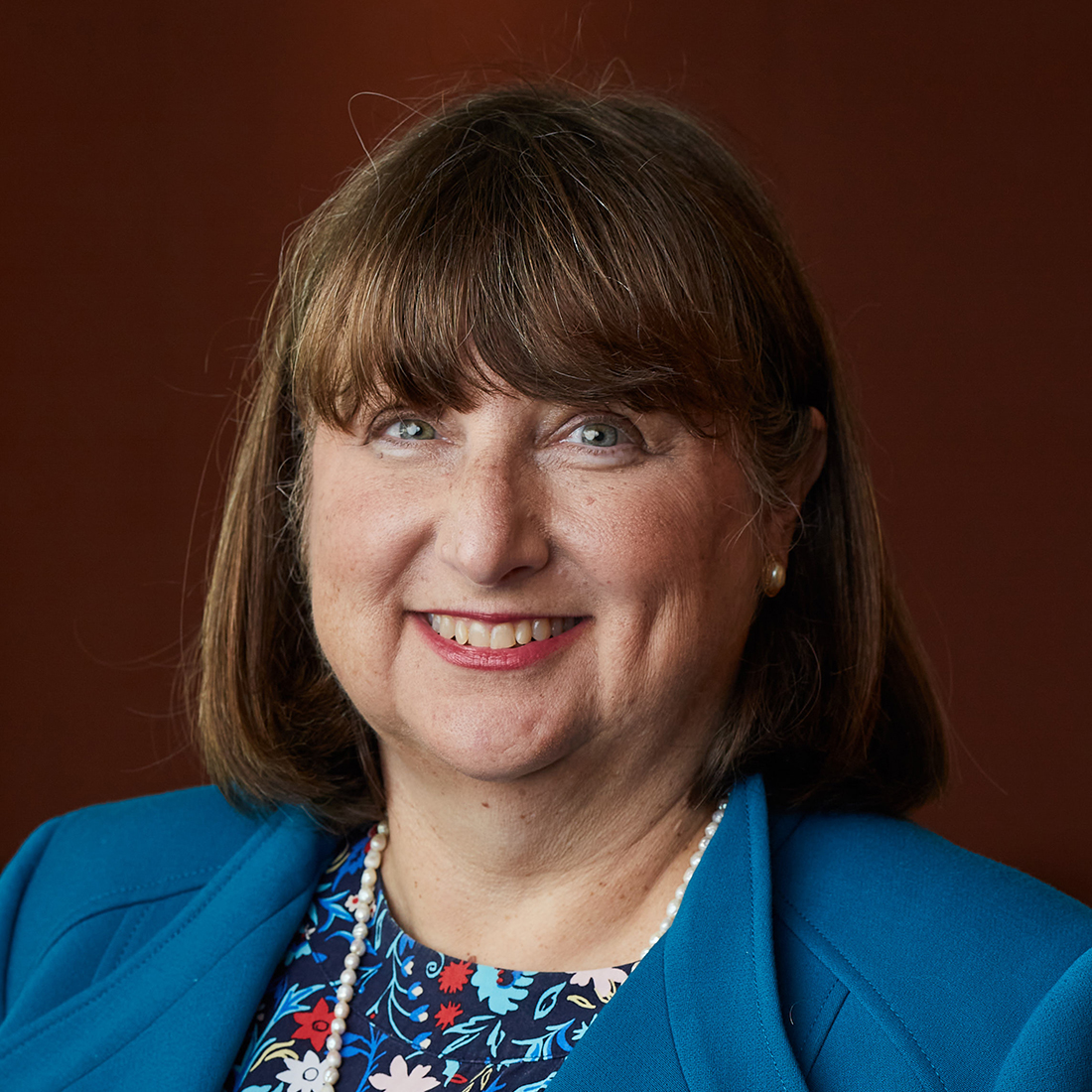
Julie Rovner
KFF Health News
Julie Rovner is chief Washington correspondent and host of KFF Health News’ weekly health policy news podcast, "What the Health?" A noted expert on health policy issues, Julie is the author of the critically praised reference book "Health Care Politics and Policy A to Z," now in its third edition.
The One Big Beautiful Bill Act, passed by congressional Republicans in 2025, was supposed to backload cuts to health programs so they wouldn’t take effect until after the 2026 midterm elections. That’s not how things are working out, with numerous analyses showing insurance coverage is already starting to drop.
Meanwhile, the Trump administration claims that the coverage reductions prove its anti-fraud efforts are working. But those efforts are likely to affect far more people than just those who commit fraud against federal health programs.
This week’s panelists are Julie Rovner of KFF Health News, Maya Goldman of Axios, Shefali Luthra of The 19th, and Lauren Weber of The Washington Post.
Panelists


Among the takeaways from this week’s episode:
- Amid a recent decline in the number of Americans with health insurance, one affected group in particular stands out: children. Many kids are falling off the Medicaid rolls, largely because of the chilling effects of the Trump administration’s immigration crackdown and broader confusion about eligibility requirements.
- Meanwhile, the high cost of health insurance is pressing people to seek alternatives, many of which offer few or no protections against large medical bills. On the campaign trail, high-profile Democrats are sounding the alarm about a problematic health ecosystem, even framing issues such as reproductive health in terms of affordability.
- The Trump administration is raising eyebrows with its response to the emerging Ebola crisis as it works to keep American citizens exposed to the disease out of the country entirely. Countering previous government approaches, which prioritized not only public safety but also offering the best care available to Americans, this approach also stands in stark contrast with President Donald Trump’s dismissal of masks, isolation, and other measures during the covid pandemic.
- And Trump declared himself healthy this week after undergoing his third physical exam in 13 months at Walter Reed National Military Medical Center. Trump’s resistance to answering specific questions, despite visible issues such as bruising and swelling, raises the point that a president’s health can be a public matter — especially for a president who is about to turn 80.
Also this week, Rovner interviews KFF Health News’ editor-at-large for public health, Céline Gounder, to discuss the Ebola outbreak in central Africa.

Email Sign-Up
Subscribe to KFF Health News' free Morning Briefing.
Plus, for “extra credit” the panelists suggest health policy stories they read this week that they think you should read, too:
Julie Rovner: ProPublica’s “She Faced a Life-Threatening Miscarriage. Under Arkansas’ Abortion Ban, Even Calls to the Governor’s Office Didn’t Help,” by Kavitha Surana.
Lauren Weber: The New York Times’ “Short Naps, Long Hours: How Autism Clinics Squeeze Medicaid Dollars Out of Preschoolers,” by Sarah Kliff and Margot Sanger-Katz.
Shefali Luthra: The New York Times’ “Nine Months of Medical Attention. Then Almost Nothing,” by Sejal Hathi.
Maya Goldman: The Texas Tribune’s “Texas Children’s Hospital Must Create Country’s First ‘Detransition Clinic’ Under Legal Settlement With State,” by Terri Langford and Colleen DeGuzman.
Also mentioned in this week’s podcast:
- Axios’ “Why Kids’ Medicaid Enrollment Keeps Falling,” by Maya Goldman.
- The Georgetown University Center for Children and Families’ “Drop in Child Medicaid and CHIP Enrollment Even Before HR 1 Policies Take Full Effect Is Troubling Sign,” by Joan Alker.
- KFF Health News’ “Cheaper, Alternative Health Plans Are Having a Moment, but Critics Urge Caution,” by Sarah Kwon.
- NPR’s “As Voters Prioritize Cost of Living, Focus on Abortion Evolves in Midterm Elections,” by Elena Moore.
- The Washington Post’s “Doctor Evacuated From Congo Feels ‘Helpless’ Watching Colleagues Die of Ebola,” by Lauren Weber.
- KFF Health News’ “Trump Bought Stock in Drugmaker as His Government Boosted Its Obesity Drugs,” by Darius Tahir.
- The Atlantic’s “A Different Kind of Fading President,” by Jonathan Lemire.
- What I Can & Can’t Say on TV’s “The Harder You Push, the Harder They Push Back,” by Céline Gounder.
Click to open the transcript Transcript: More Kids Without Coverage
[Editor’s note: This transcript was generated using transcription software and a human’s light touch. It has been edited for style and clarity.]
Julie Rovner: Hello, from KFF Health News and WAMU Public Radio in Washington, D.C. Welcome to What the Health? I’m Julie Rovner, chief Washington correspondent for KFF Health News. And, as always, I’m joined by some of the best and smartest health reporters covering Washington. We’re taping this week on Thursday, May 28, at 10 a.m. As always, news happens fast, and things might have changed by the time you hear this. So, here we go. Today, we are joined via video conference by Lauren Weber of The Washington Post.
Lauren Weber: Hello, hello.
Rovner: Maya Goldman of Axios News.
Maya Goldman: Great to be here.
Rovner: And Shefali Luthra of The 19th.
Shefali Luthra: Hello.
Rovner: Later in this episode, we’ll have my interview about the ongoing Ebola outbreak with Céline Gounder, KFF Health News’ public health editor-at-large and, conveniently for us, an infectious disease specialist. But first, this week’s news. I want to start this week with more of a trend than actual news, and that is the continued decline in health insurance coverage in the U.S. Maya, you reported on the number of children falling off the Medicaid rolls. It’s down about 1.75 million from the beginning of Trump 2.0 through this past January. Now, I thought we were told that none of the Medicaid cuts that Congress made last year would affect the core Medicaid constituencies: pregnant women, children, seniors, and people with disabilities. What’s happening here?
Goldman: So, the law does exempt kids and parents of young kids from the eligibility and enrollment changes, work requirements, more frequent eligibility checks. That doesn’t mean that there aren’t going to be spillover effects, and we’re seeing that already, Absolutely, even though most of these provisions haven’t gone into effect. And there are a couple of reasons for that, including chilling effects from immigration enforcement and people who are in mixed-status households maybe not feeling comfortable enrolling their children in public benefits, even though their children would qualify, or also just confusion around who’s eligible for what. Often kids are eligible for Medicaid and Children’s Health Insurance Program — its sister program, CHIP — at a much higher income level than their parents, and that’s not communicated well to parents very often. And so one theory … is that this year, when a lot of parents maybe saw how much their ACA [Affordable Care Act] premiums were going up and decided that they couldn’t afford health coverage anymore, they were just pulling their whole family out of health insurance, even though their kids might still actually be eligible for Medicaid. And … there are a lot of other trends percolating in this, but I think it’s concerning to see this, these figures, even before this has really started.
Rovner: Yeah, it’s funny, when you’re applying for health insurance, they’ve set it up so that you get funneled to the right place for which you’re eligible. But when you’re dropping your health insurance, there’s no funnel to say, hey, your kids might still be eligible for this, even though you’re no longer going to be getting Affordable Care Act insurance.
Goldman: Exactly, and navigators for ACA coverage have also — funding for those programs have been cut, and so that’s harder, even harder for that process to actually work.
Rovner: Yeah, I’ve also noticed in the states that are starting things like their work requirements early, there was kind of a shocking anecdote I read about a parent in Nebraska — one of the states that’s starting early — who’s blind, has multiple health problems, and a chemotherapy port, who was told that she might be required to work under these rules and was seeing about getting her port taken out when finally another person told her, No, you’re exempt. So, I mean … in some of the states that are speeding this up, there’s a lack of knowledge among the state workers, which I think was one of the big concerns about people who are going to be dropped off the rolls, not because they’re no longer eligible, but because of mistakes.
Weber: We also know that, in general, Medicaid enrollment is a tricky process. Typically, there’s paper forms that may get lost in the mail. Parents may not get the forms for their kids. This was very eloquently actually described on The Pitt — which, shoutout for getting this part of health policy correct. Although I’m still irritated about their Medicare-Medicaid mix-up in one of the other episodes, but we’ll get over it.
Rovner: Yeah, me too. There were two of those.
Weber: Yes, but very eloquently show[ed] how a mom who had moved and missed some Medicaid paperwork was now really in a hole financially. And so, as Maya has reported out, you know, more of these children falling off the rolls really could lead to some dire consequences for the families to which they belong.
Goldman: Yeah, and I think one important thing to mention is that a lot of these kids that are uninsured are still eligible, and when they go to the hospital, the hospital can help them enroll in retroactive Medicaid coverage, but they’re not getting their yearly checkup, or maybe, like in The Pitt, they miss their asthma medication, and so now they’re in the hospital, and costs are just going up for the whole health system.
Rovner: Well, along those same lines, we have another story in our KFF Health News series called “Priced Out” about how people who can no longer afford comprehensive coverage are patching together other forms of insurance, or in some cases not even actual insurance, that leaves them on the hook for thousands of dollars if they end up needing actual medical care, which kind of raises the perennial question with our health system: Is it better to have bad insurance and not know it, or to have no insurance, so at least you know that you’re not prepared if something happens.
Weber: I thought what was so striking in that story was it led off with a retired teacher who said, I recognize I am gambling. I mean, that’s what she said, she’s very clear. But to her, I think her cost had risen something like $900-something a month, and the other plans that she cobbled together were $300 a month, and so to her the short-term risk was worth it. But as we all know, hospital stays can run you several thousand dollars and, you know, you can get hit by a car. You may be a very healthy person, but something bad can happen, and you are left with large, large medical debt. And I think it seemed like the folks interviewed in the story were at least clear that these plans were less favorable, but I do think there is also this submarket where a lot of folks think that the health ministry plan that they’re in is going to save them in case of an issue. And we have found over and over again, and KFF, in particular, has found over and over again in reporting, that’s just not the case. And so this whole question of Is a bad plan better than no plan? I don’t know, but it’s striking to see people say I’m willing to take the gamble, because this is just what these increases in premiums have meant for me.
Luthra: I just think what’s so interesting about these, these health shares, in particular, is when I’ve talked to people who’ve used them or considered them, they know these are not insurance, but I don’t think they always fully understand just how restrictive they are, and how often medical needs will be dismissed as lifestyle choices. I mean, obviously, often contraception is not covered, but something related to drug or alcohol use might not be covered, because that’s immoral, right? Let’s say the ministry says, “Oh, well, this accident you got into, maybe that’s because of alcohol use.” That’s a huge expense that you just might not have realized wouldn’t be covered at all. And the other thing that I was just so struck by is very often childbirth isn’t covered. Or you have to be enrolled for a very long time before childbirth is covered, which health insurance is required to cover childbirth. It is very, very expensive. It’s fascinating, also, because a lot of these [sharing ministries] are so religiously aligned and ostensibly pro-family, etc. And yet this, in particular, is just something where people will opt for this instead because it looks more affordable than insurance. But very often you end up paying a not-zero amount of money, and ultimately getting basically nothing for very expensive, even bankrupting medical needs.
Rovner: Or you’re gambling, you know, maybe, maybe you’ll get reimbursed, and maybe you won’t. Although these days people feel that way about their health insurance. Maya, you want to say something?
Goldman: I think a lot of young people also take for granted that health insurance will cover preexisting conditions. If you’ve come up, you know, post-ACA, and certainly I do. I’m 28, and that’s, like, something that never even crossed my mind that I would need to consider, and that really struck me in this article. A lot of these alternative plans are not bound to those requirements.
Rovner: Well, Shefali, I wanted to ask you in particular about an NPR story about how abortion rights supporters are trying to adapt reproductive health to fit under the bigger affordability umbrella that seems to be the theme of this year’s midterm campaigns — that things like whether or not to get pregnant or whether to get unpregnant, that those are all wrapped up in all sorts of financial issues, as you just mentioned. Is this a natural fit, or do you think they’re kind of forcing it here?
Luthra: I think it really depends on how you talk about it, and the context of where you are. And after the mifepristone case was before the Supreme Court, I spent a lot of time looking at different Senate campaigns and examining how they’re talking about it. And one example is Jon Ossoff in Georgia actually has a really interesting example where he talks about access to abortion and healthcare as part of this larger argument around the state of reproductive healthcare, talking about hospital closures, talking about Medicaid cuts, and putting all of this together as this broader policy ecosystem that is making your healthcare harder to come by and ultimately threatening your life. I think that’s very interesting. It could work. It makes sense logically to me. The other one that does come to mind — and this is not abortion, but it’s related — is in Maine, Graham Platner talking about IVF [in vitro fertilization] in the lens of affordability, saying, Oh, I couldn’t afford it in America. I traveled to Norway to try and get fertility treatments. Those are fascinating approaches, and a lot of people who work in abortion rights advocacy will say this has long been an economic argument, and many of them will look at polling and put it out that says when you frame this as an economic story, voters really, really do appreciate it and resonate with it. I think sort of the question is whether we actually see these candidates — and it’s not lost on me the two who I mentioned are both men — actually talk about the word “abortion” specifically, rather than saying “reproductive healthcare” more broadly. And you know those are very different, and they just register with voters differently when you single out something as specific as abortion versus whether you don’t.
Rovner: And Graham Platner, for those who don’t know, is going to be the Democratic candidate running against Susan Collins in Maine. Jon Ossoff is the incumbent Democrat in Georgia, which always feels weird to say. There haven’t been a lot of Democratic senators from Georgia, but right now there’s two.
So, moving on, the Trump administration says the declines in health insurance coverage are fine because they’re more about fraud and kicking people off of public health insurance rolls who aren’t actually eligible or — in the case of Affordable Care Act broker fraud — who don’t even know they’re covered. But a lot of the tools in last year’s big budget bill are pretty blunt, and they’re going to impact both those who maybe shouldn’t be there and those the administration says it wants to keep serving. This week’s example is a newly proposed rule to implement that law’s cap on something called state-directed payments, which is, in fact, a key way many states help ensure adequate funding for hospitals, nursing homes, and other healthcare providers. Now, this isn’t fraud, but it is what analysts like to call creative funding, and Congress has every right to limit it. But that’s not to say that it won’t have an impact on healthcare at the delivery level, right? It’s not just going to impact people that the administration says don’t deserve to be covered.
Goldman: Yeah, this came up when I was talking to children’s hospitals for the story on children’s coverage that I wrote this week. They’re saying, you know, this is going to affect all kids that we can care for. This is going to mean less money into our funds, and, you know, a lot of people argue that hospitals have enough money, but hospitals will say, “No, we don’t, not to take care of all the people that we need to take care of.” And this is going to be less money. And then it’s not just kids who are on Medicaid who are struggling, it’s all kids. And I think another interesting thing about this proposed rule is that it’s significantly more federal savings than was estimated originally. I think CBO, Congressional Budget Office, originally estimated that the state-directed payments provision would save about $150 billion, and this rule would save about $510 billion in federal funding. So hospitals are concerned.
Rovner: Yes, this is always the issue. Are we overpaying hospitals? But when you take money out of it, what does that mean for the health system writ large? Which I imagine is going to continue to be a theme as we go forward. Well, the Trump administration is also going very high-profile in its health fraud-fighting effort. The president has put Vice President JD Vance in charge. Earlier this month, he announced that the administration will be withholding $1.3 billion in federal Medicaid funding from California, because, said the vice president, the state has not taken fraud very seriously. This is the second Democrat-led state the administration is taking the nearly unprecedented step of withholding funding from in advance, after Minnesota. California has responded that one reason the state’s home health bill has gone up is that it has raised wages for home healthcare workers, and it has expanded eligibility. It’s not because of fraud. Again, while there obviously is fraud — not just in Medicaid, but in all health programs, public and private, because there is so much money there — these blunt tools, I think, will probably punish more than just those who are defrauding the program. Right?
Weber: I mean, absolutely. At the end of the day … look, it’s no coincidence that California is a blue state that seems to be getting targeted with that amount of cash. But let’s be very honest, there is a lot of fraud. I mean, all of us here have written stories about healthcare fraud. There is a lot of fraud to root out. So, to be very clear, I don’t think anyone should be upset about actual fraud being targeted. But there’s also a question of: What are the numbers? [Centers for Medicare & Medicaid Administrator Mehmet] Oz has gotten the numbers wrong before. The AP [Associated Press] had a great story on that a couple weeks ago. Show us the fraud, like, I want to see the actual fraud that we’re talking about. And, in addition, this reminds me of how the administration continuously says that they’re investing the most money in rural healthcare when they have this $50 billion rural healthcare fund. Well, the Medicaid cuts that [President Donald] Trump led is going to cut like triple that almost out of rural areas. So is this a talking point? Show us the money. I need to better understand what’s behind it.
Rovner: Yeah, so far they’re doing well with a lot of very high-profile news events. We’ll see how much fraud they are actually able to ferret out. All right, we’re going to take a quick break, we will be right back.
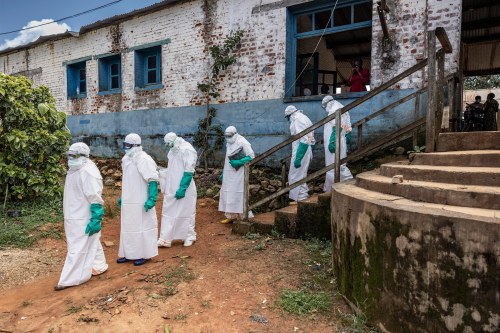
Let’s talk about Ebola. As you will hear later in this episode from our in-house expert, Dr. Céline Gounder, this is not likely to become the next covid or even a pandemic. But this administration, having hollowed out the Centers for Disease Control and Prevention and obliterated the U.S. Agency for International Development, is addressing this outbreak with many fewer arrows in its quiver. Lauren, you had quite the firsthand story this week about someone close to this outbreak. Tell us about it.
Weber: Yes, I was able to speak with an American missionary physician who was exposed to Ebola and actually evacuated to Prague and is sitting in basically like a bubble room waiting to see if he tests positive for Ebola. And what traumatizes him, as he was telling me, was that he’s sitting there, there’s all these people with endless gloves that are tending to him, he’s been evacuated, and stretchers with all this plastic and all these measures, and his colleagues that he worked alongside in the Congo are — you know, one died while we are in the middle of an interview, he learned of their death. And, in addition, they’re filling the hospitals themselves, that they say they don’t have enough gloves, they don’t have enough PPE [personal protective equipment]. There’s no vaccine to fight this current form of Ebola, and they’re in an environment in which people are very mistrustful. Ebola looks like malaria until it’s Ebola. And so you could send a family member into the hospital thinking it’s malaria, which is common in this part of the world, and then suddenly be told your relative has Ebola and died. A lot of people don’t believe it, and it’s leading to violence. And the usual public health measures and efforts by the international community to get in there are somewhat hampered. And Part Two, by the fact that this outbreak is happening in a really insecure region, where there’s roving militias and other violence. And there’s just a lot of concern that they caught this late, this could continue to explode, and case counts could really go up. But it was very humanizing to speak with this American missionary who obviously really put himself on the line to help these folks and is heartbroken to kind of be watching from afar as this continues to go poorly.
Rovner: Well, meanwhile, the U.S. is banning foreign nationals who’ve been in any of these countries from entering the U.S. and also U.S. green-card holders who’ve been in countries where the virus is spreading. Not only that, but they’re not allowing exposed U.S. citizens to return, even though the U.S. has multiple facilities to care for exactly these types of patients. We have seen this before, just in the last 15 years. What happened to the medical freedom that this administration has been touting so much?
Weber: It’s a real plot twist. I mean, these are the folks that said that they were the contrarians that oppose quarantine and mask mandates, and they are strictly having the hantavirus folks in Nebraska. They’re signing off on travel bans that go further than other administrations, and not allowing Americans back in and sending them to Kenya if they’re exposed. My colleague Lena Sun and I had a report a week ago about how the White House didn’t want exposed Americans back in the U.S., but the Kenya step is another step in that direction. Is really could have huge ramifications for the response as a whole, because it will likely limit the number of people that want to go. If you know that you’re not going to be able to be sent back, we saw, I think, yesterday the State Department union was like, look, our foreign service officers were sent here under the impression that they would be able to come back. I mean, this is somewhat completely uncharted territories in the vein of how they’re handling this. So we’ll see.
Goldman: I’m very curious to see what the MAGA [Make America Great Again] base and the MAHA [Make America Healthy Again] base that were so anti-mask mandates and things like that during covid, like, what are they going to say? Are they going to say anything? Is it partially our responsibility as the media to point out this contradiction?
Rovner: Yeah, and obviously there’s also so much else happening right now. It’s interesting that the hantavirus, which turned out to not be such a big deal, got so much play, and yet this, which could be a much bigger deal, is getting so much less attention.
Weber: Do we think there’s maybe a reason for that? Let’s all be honest. The hantavirus cruise was a lot of wealthy, some Americans on a cruise sailing around Argentina and Antarctica. And then this outbreak is happening in Africa, and I think there’s less interest from the general public, as they feel like hantavirus is novel, whereas Ebola, they’ve heard about it before, so a depressing reality of some of that.
Rovner: Yes, and also, you know, Americans and Europeans versus Africans.
Weber: Yes, yes, exactly.
Rovner: All right, moving on. I want to catch up on some drug price news, because there’s been a lot over the past few weeks. The Supreme Court earlier this month declined to hear a case challenging the Medicare drug price negotiation system that was implemented under the Biden administration, which ironically will probably redound to the credit of the Trump administration, even though it nominally opposed the Biden program. Also, earlier this month, the president announced a big expansion of his TrumpRx website, adding links to websites selling lower-cost generic drugs, including the site run by Mark Cuban, Cost Plus Drugs. But the most provocative drug price story I have seen this month came from my colleague Darius Tahir, noting that Trump himself was buying stock in drug companies just as he was negotiating with those companies to help bring drugs, particularly those GLP-1 medications that he likes to call “the fat drugs,” to more people. Now this isn’t technically illegal, although there are lots of efforts on Capitol Hill to outlaw individual stock trading by members. But I can’t help think if any other government official in any other administration ever did this, they would be out of a job instantly, if only for the appearance of the conflict of interest. This is just — Lauren, as you were saying — one in this whole long list of things that keeps happening, but every time I look at it, I’m like, he was doing what?!
Weber: Julie, when I saw Darius’ story, I was blown away. First off, I feel like this should have been front-page news on every outlet. But secondly, it was a lot of money, it was like over $600,000. And now I understand they say that Trump himself, they don’t know whether he directed this or not. And in fairness, Trump’s not the only one. I mean, we’ve seen plenty of members of Congress that have done also questionable stock trades. But it is a very conflict-of-interest-looking-like thing, considering that CMS recently expanded massive access to these drugs. And so I do think conflicts of interest like this, especially in HHS [Department of Health and Human Services], which has constantly decried conflicts of interest, despite having many of them, are very important to highlight. And so, thank you to Darius for surfacing this.
Rovner: Yes, we will never not have enough to do here as health reporters. Well, finally, this week I want to talk about the president’s health. President Trump this week had his third, quote, “annual” physical in the past 13 months — math does not math there — after which he said he checked out perfectly. But he is about to turn 80. He’s been caught on camera dozing off at public events in the Oval Office and has gone on hours-long social media rants in the wee hours of the night/morning. Now, much of this hasn’t been treated as news, because well, it’s pretty much par for the course for Trump, just more so. And therein lies the question: When does his increasingly aberrant behavior and obvious health issues, like visibly bruised hands and swollen ankles, become a public right-to-know issue? And is there a double standard for Trump compared to former President [Joe] Biden, when he began to show obvious signs of aging, and it was all over the news all of the time? I see raised eyebrows.
Luthra: No, it’s such a good question. On the one hand, there was obviously a lot more scrutiny on Joe Biden’s age than there appears to be on Donald Trump’s. But part of it, I think, is that a lot of what you just highlighted, Julie, is out in the open. Everyone has seen the president dozing off on camera, whereas under the last administration, there were things that were not public that then became public, and that was obviously very important. That said, there’s certainly a level of focus on this issue that perhaps is lacking. Maybe it would be useful or newsworthy to put some more attention, even something that we already know, highlighting why it is important, putting together the fact that having this many physicals at this point in the presidency is actually more than normal. What could that mean, contextualizing it with everything we have seen publicly about the president’s sleep patterns, risk factors as you age, bruising, etc. But I think this kind of thing is complicated in terms of how you cover it appropriately and fairly, also just because you don’t want to assume things that you don’t have the evidence for.
Rovner: And, in fair, I mean, Trump has not been transparent about his health, going back to when he was a candidate in 2016. He’s the only major presidential candidate, you know, he put out that, this famous letter from his personal doctor saying, you know, he’s the healthiest man I’ve ever seen. That’s pretty much what we get, having covered presidential health for a lot of administrations. We have much, much less information about Trump than we have had about previous presidents, which has been a continuing policy concern among doctors. I mean, this is not to single out Trump, who just happens to be president right now and turning 80. But this is, you know, an issue that goes back obviously to, you know, Dwight Eisenhower, to Woodrow Wilson, when he had a stroke, and they kept it a secret. Presidential health is a policy issue.
Goldman: Yeah, I think that’s an important caveat, or note, I guess. Presidential health is not always as transparent as it claims to be, even going back, as you said. And so it’s not totally out of the ordinary that Trump wouldn’t be transparent about his health, even though, maybe ethically … presidents in general should be.
Rovner: Obviously something else we will continue to watch. All right, that is this week’s news. Now we’ll play my interview with Céline Gounder. Then we’ll come back and do our extra credits.
I am pleased to welcome back to the podcast my colleague, Dr. Céline Gounder, KFF Health News’ editor-at-large for public health, a CBS News medical correspondent, and an internist, epidemiologist, and infectious disease doctor. I can’t think of anyone I trust more to explain what’s going on with Ebola than Céline. So, thank you very much for doing this.
Céline Gounder: Oh, it’s my pleasure to be here, Julie.
Rovner: So, when everybody was covering the hantavirus outbreak on that cruise ship a few weeks ago, experts like you were saying it was a cause for concern, but not likely to become a serious problem. All of those same experts seem much more concerned about this latest Ebola outbreak in Central Africa. How is this different from what we were just talking about with hantavirus, and how is it different from previous Ebola outbreaks? This is not the first one.
Gounder: Yeah, so to give you a sense of perspective, when I first heard the reports of a viral respiratory illness out of Wuhan in very late 2019, early 2020, I was terrified by what I was hearing. When I heard the reports of the hantavirus outbreak on the cruise ship, I was concerned for the other people on the cruise ship. I was not worried about a larger outbreak, and I would be very surprised, especially at this point, if we see any further cases. With respect to this Ebola outbreak, I am very concerned about a very large, huge, regional epidemic, where we may have some sporadic spread to other countries outside of the region. I am not worried about a pandemic. So, this is one difference: An epidemic is usually within a certain region. Pandemic is when it goes worldwide. So, I think this is going to be an epidemic in Central, possibly also East, Africa, but not going beyond that.
Rovner: So, how is this different from … you worked in one of the past Ebola outbreaks. This one people seem to think is more serious than the last couple that we’ve seen.
Gounder: Yeah, so I worked in Guinea during the 2014-2016 Ebola epidemic. I was there for two months. You have some of the same risk factors for a large epidemic, so you have urban areas affected, you have cross-border spread. There you had the epidemic start in Guinea, then move to Liberia, then Sierra Leone, then back to Guinea, and then you also had migrant workers that would go back and forth. And so you have those same, exact risk factors with this current outbreak, and then, secondly, you have large refugee populations in South Sudan. And so both of those issues also further complicate movement, both in and out of the area. Healthcare workers trying to get in to address issues. Healthcare workers being safe doing this kind of work, and also getting supplies, in particular, PPE — personal protective equipment — as well as tests into the area to help respond.
Rovner: What about the U.S. pullback in foreign aid? We’ve obviously, you know, seen sort of the demise of USAID and a hollowing out of the CDC here. I imagine that’s impacting how we’re responding to this.
Gounder: Yeah, so starting with USAID. So, USAID funded the people on the ground that would do the contact tracing, who might help set up Ebola triage, as well as treatment units. And that funding is gone. In fact, over the last week, I’ve been talking to some of the Congolese doctors who used to have jobs funded by USAID. And, in addition, USAID really supported the supply chain infrastructure for the area. So now you’ve seen a collapse of their ability to get personal protective equipment. There are shortages of this, which is also contributing to healthcare workers getting infected right now. And then also pharmaceutical supply chain. So, you know, even the most basic of medications is a challenge to get into the area. With respect to CDC, there have been tremendous layoffs related to the DOGE [Department of Government Efficiency] cuts from last year. We had the CDC shooting last August, and morale at the agency is … it’s horrible, it’s horrible. And just in the last day or so, Dr. [Jay] Bhattacharya, who’s the NIH [National Institutes of Health] director, and also, I guess he’s calling himself something else, because he can’t technically be acting CDC director anymore. But …
Rovner: He’s nominally in charge of CDC, without being the acting director.
Gounder: Right, exactly, whatever that means. But he has asked for CDC staff to volunteer to go over to Kenya, and staff a quarantine and, sounds like, treatment unit for any American healthcare workers who might get sick or be exposed while responding to the Ebola outbreak. And based on what we’re hearing, it sounds like they do not want anyone with Ebola coming back into the U.S., including the very people they’re asking right now to volunteer to go to this unit in Kenya. So I think that is also going to further complicate the response. You know, like, if you volunteer for the Marines, you enlist, and you get sent overseas, and you have an injury, you expect to be repatriated as quickly as is possible for treatment here in the United States, right? That is not the case. These are people who are similarly putting their lives on the line, who are responding to that call for help, and we are not seeing similar respect for that sacrifice.
Rovner: And yet, I mean, the U.S. is set up to take care of people with seriously contagious diseases, right?
Gounder: Oh, yeah, we have over a dozen units that were specifically created for this very purpose. Several of them have hands-on expertise, experience with this. So, in particular, Emory [University School of Medicine] in Atlanta, [NYC Health + Hospitals/] Bellevue in New York City, where I am, as well as University of Nebraska Medical Center. All three of those have experience with Ebola, not just having done preparations. And it’s really confounding why you would not want to make use of that. When somebody gets Ebola, particularly if you’re talking about an American, you know, who has put themselves in harm’s way — there are some real questions about fairness and equity of access to certain levels of care — but American aid workers, the expectation is that they would get the full-court press. And that might include being on a ventilator, that might include needing dialysis, for example, and to do those things when somebody has Ebola, and you need to do that in biosafety Level 4 conditions, I have a hard time seeing how they’re going to be able to put that together in Kenya on such short notice.
Rovner: So we learned a lot of lessons from covid, not all of them good, obviously. You have a really interesting piece on your personal Substack, which I will post a link to, about the psychology of pushback. Can you talk about that briefly? Because I think that has a lot to do with how the U.S. is responding to this.
Gounder: Yeah, and I think a lot of people may actually identify with their own experiences during covid. You had a lot of people who didn’t want to wear a mask. In fact, we saw masks being burned, right? People not wanting to get vaccinated. And what happens is, when you have somebody who, for whatever reason, people don’t trust telling them to do something, they feel like they’ve been backed into a corner and they lash out. And so you tell them to do something, very often they want to do the exact opposite. And I saw this exact same thing when I was in Guinea over 10 years ago now. It was related to the presidential elections at the time, and it was a way of expressing dissent towards the current, at that time current, president and ruling party. And so, you know, for Ebola, the measures are pretty basic, particularly at that time: It really came down to contact tracing, testing, safe burials. And people would refuse to do some of those really basic things, and it was their way, what we called in Guinea and French, La réticence c’est la résistance, so reticence and resistance. And you saw that whole spectrum manifest there, and I think we’re seeing the same thing all over again, predictably so, in the DRC [the Democratic Republic of Congo] right now.
Rovner: So, what could this administration be doing better, or be doing that they’re not doing that could maybe help us tamp this down, I mean, before it gets out of hand?
Gounder: Well, I am concerned it’s already out of hand. They’re only following up on one out of every five contacts, so that means four out of every five contacts could be seeding new chains of transmission. So I think this is going to get a lot worse before things start to turn around. In fact, I would predict this is going to be a year or two to control. I mean, based on prior experiences with the 2018-2019 outbreak in the same area, as well as the 2014-2016 outbreak in West Africa. This has the potential to be even worse. What could the U.S. be doing? Well, we are currently adopting a very isolationist stance with respect to our public health policy. The dismantling of USAID is a big part of that, but it’s not the only thing. And I think what is happening now, frankly, gives me flashbacks to the 2014 Ebola news and midterm elections, and the way in which Ebola was politicized at that time. At that time, President Trump was not president; he wasn’t even a candidate yet, but he spoke very loudly about having travel bans. He called for President [Barack] Obama to resign because he allowed, in fact, facilitated the transport of infected Americans back to the U.S. for treatment. And so he’s on the record as having said he never wanted anybody with Ebola in this country. And I think the current policy that you’re seeing is consistent with that. We’re headed into midterm elections again. We’re seeing travel bans being instituted for real this time, not just talked about. And one of the other concerns around travel bans at that time, and again now, was what would it mean for healthcare workers and other aid workers, their willingness to volunteer to respond? And I remember Craig Spencer, a very good friend of mine, he was hospitalized at Bellevue with Ebola, and it was right around that time as well, Kaci Hickox, a nurse who had responded, she came back to Newark Airport. Chris Christie, as I recall …
Rovner: Then the governor of New Jersey.
Gounder: Yeah, right, governor of New Jersey, Chris Christie, at that time mandated that she be quarantined. So she did not have symptoms, but that she be quarantined due to her work on, I think, it was the tarmac at Newark Airport with a Porta Potty and a tent, something along those lines. And I had a lot of friends at that time who pulled out of volunteering — between Craig getting sick and Kaci and the mandated quarantine really under inhuman[e] and humiliating conditions. And I think this time it’s going to be even worse because not only are you having to face potentially getting sick, but you may not get to come home. And it’s really unclear at what stage, if you get sick, would you be allowed home. Do you have to wait until you recover? And what if you die? What happens then? Does your body get repatriated? Does your family, right, get to receive the body? That’s a big deal for a lot of families to have that closure. So I know, even among my friends who, like me, are Ebola veterans, there’s a lot of hesitance about stepping up again.
Rovner: Well, I hope we can call on you as this continues, alas. Thank you so much.
Gounder: Oh, of course, Julie.
Rovner: OK, we’re back. It’s time for our extra-credit segment. That’s where we each recognize a story we read this week we think you should read, too. Don’t worry if you miss it. We will post the links in our show notes on your phone or other mobile device. Maya, why don’t you start us off this week?
Goldman: My extra credit this week is a story in The Texas Tribune by Terri Langford and Colleen DeGuzman titled “Texas Children’s Hospital Must Create Country’s First ‘Detransition Clinic’ Under Legal Settlement With State.” And you know, I think it’s obviously a very important political story in the fight over transgender rights, and specifically rights for transgender kids, and the medical practice around gender-affirming care. But one of the things that’s especially interesting to me about this settlement is that there’s not really demand for detransition services, at least at the level of having a dedicated clinic at a children’s hospital for them. And so this is basically a children’s hospital is going to put resources towards creating something that, or presumably put resources towards creating something that may not be used. And as hospitals are talking about how stressed they are for dollars, and just in general overextended, you know, I think this is a very interesting use of resources.
Rovner: That’s one way to put it. Lauren.
Weber: I have the New York Times investigation by Sarah Kliff and Margot Sanger-Katz — which, you know, as soon as you see those two names, you have to read it — titled “Short Naps, Long Hours: How Autism Clinics Squeeze Medicaid Dollars Out of Preschoolers.” And it’s a great look and also builds upon, you know, some great reporting by The Wall Street Journal, I’ll have to shout them out as well in this area. But it details how, amid this focus on autism clinic fraud how … what that looks like on the ground. And it’s pretty terrible on the ground. A lot of these autism treatment clinics, the science is questionable on whether it really works. They’re encouraging people to send their kids there instead of to school. … There’s this horrific anecdote in the lede about how a child is woken up from a nap that can only last almost seven minutes, so they can bill more. I mean, it’s pretty gut-wrenching and gets at the clear issue in a lot of healthcare, which is that a lot of this is done to maximize profit and not necessarily for the patient. So it’s very well done.
Rovner: Yeah, it is really scary. Shefali.
Luthra: Mine is in the New York Times opinion section by Dr. Sejal Hathi. The headline is “Nine Months of Medical Attention. Then Almost Nothing.” She herself is a new mom, in addition to running the Oregon Health Authority, and she writes about how our postpartum care system is terrible. We do not care about new moms. We only care about infant checkups. We have very little medical care for people when they are postpartum, and that is not good, because pregnancy is really hard. You can have complications. Most pregnancy-related deaths happen after giving birth, not during. Most of them are preventable, and yet we don’t treat this as something that could be addressed, even though it very well could be, because in other countries they actually do make an effort to care about new moms. I love that she wrote about this from a personal and professional standpoint. I think it’s great, and I hope that it inspires some states to think about ways to improve postpartum health.
Rovner: Yeah, that story made me so angry. Well, my extra credit this week is also about reproductive health. It’s from ProPublica by Pulitzer Prize-winning reporter Kavitha Surana. It’s called “She Faced a Life-Threatening Miscarriage. Under Arkansas’ Abortion Ban, Even Calls to the Governor’s Office Didn’t Help.” And it’s about yet another case of a mom pregnant with her second child, a college-educated healthcare worker, whose membranes ruptured early, putting her at high risk of sepsis, but who couldn’t get the pregnancy terminated at the hospital where she worked, because the doomed fetus still had a heartbeat. This was a well-connected family. The patient’s father is a doctor. She was in the same sorority at the same college as Arkansas Gov. Sarah Huckabee Sanders, and she enlisted one of the top reproductive health lawyers in the country to plead her case with hospital officials. I won’t spoil the end for you, because you really should read the entire piece, but it underscores yet again that abortion bans can endanger people who don’t think they will ever want or need an abortion.
All right, that is this week’s show. As always, thanks to our editor, Emmarie Huetteman, and our producer-engineer, Francis Ying. We also had production help this week from Taylor Cook. A reminder: What the Health? is now available on WAMU platforms, the NPR app, and wherever you get your podcasts — as well as, of course, kffhealthnews.org. Also, as always, you can email us your comments or questions. We’re at whatthehealth@kff.org. Or you can still find me on X @jrovner, and on Bluesky @julierovner. Where are you guys hanging these days? Maya.
Goldman: I am on LinkedIn under my name and on X @mayagoldman_.
Rovner: Shefali.
Luthra: On Bluesky @shefali.
Rovner: Lauren.
Weber: Still on X and Bluesky under @LaurenWeberHP. As I like to say, the HP is for health policy.
Rovner: We’ll be back in your feed next week. Until then, be healthy.
Credits
Francis Ying
Audio producer
Taylor Cook
Audio producer
Emmarie Huetteman
Editor
Click here to find all our podcasts.
And subscribe to “What the Health? From KFF Health News” on Apple Podcasts, Spotify, the NPR app, YouTube, Pocket Casts, or wherever you listen to podcasts.
Related Topics
More from KFF Health News