The Drip, Drip, Drip of Declining Coverage
The Host
Julie Rovner
KFF Health News
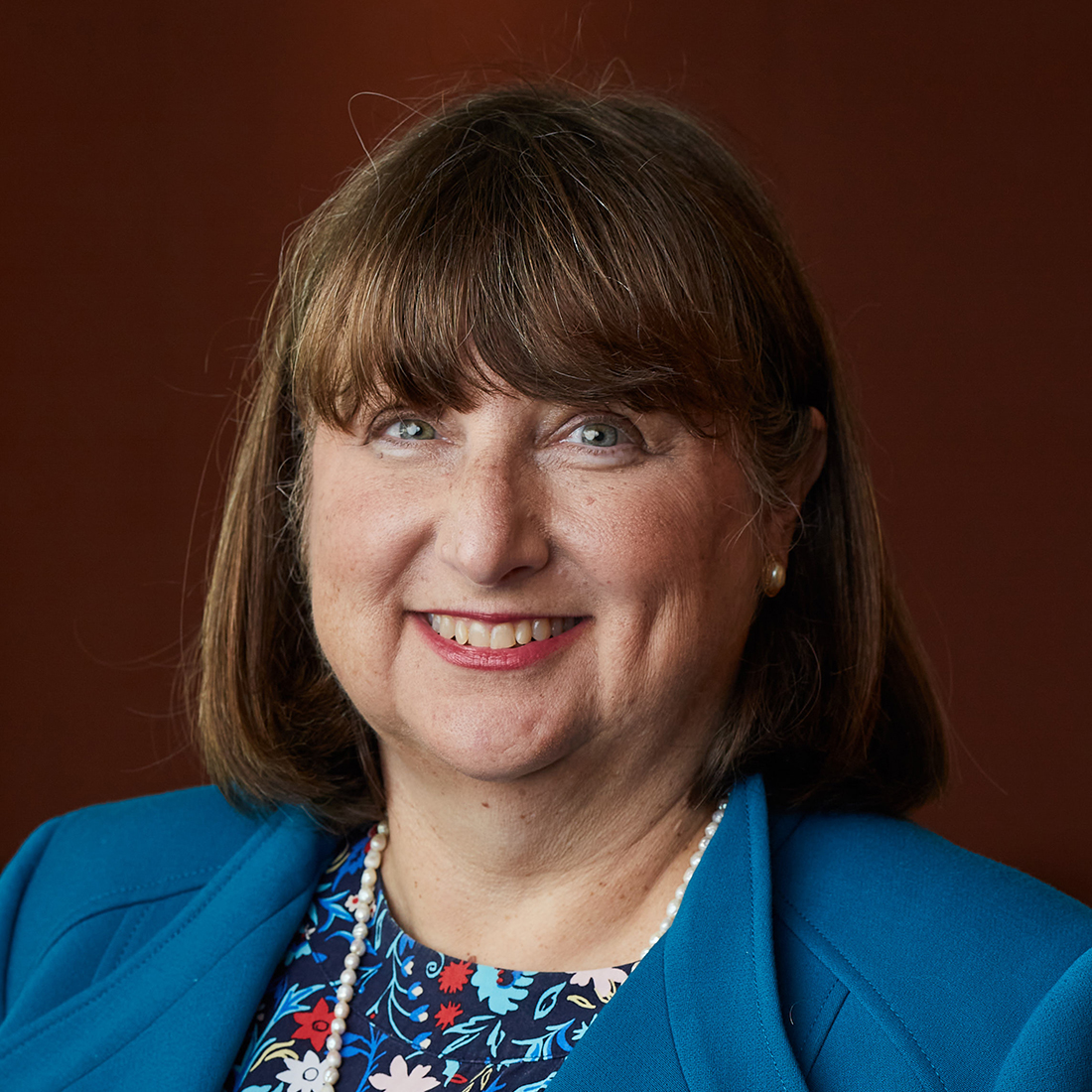
Julie Rovner is chief Washington correspondent and host of KFF Health News’ weekly health policy news podcast, "What the Health?" A noted expert on health policy issues, Julie is the author of the critically praised reference book "Health Care Politics and Policy A to Z," now in its third edition.
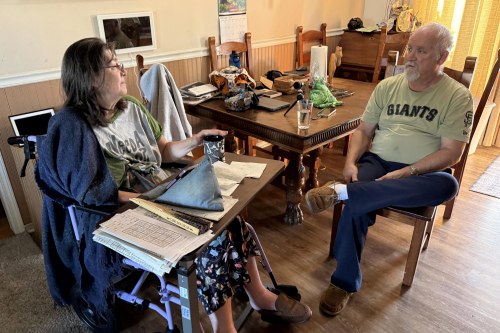
When Congress failed to extend the covid-era enhanced subsidies for the Affordable Care Act, many experts predicted millions of people would lose coverage because they would be unable to make payments toward the higher premiums. It has taken a few months, but that prediction seems to be coming true.
Meanwhile, controversy in the medical community about how — or whether — to work with the Trump administration burst into the open at the annual meeting of the American Diabetes Association, as members who were handing out an editorial criticizing the administration’s cuts to biomedical research were evicted from the event, prompting a backlash.
This week’s panelists are Julie Rovner of KFF Health News, Lizzy Lawrence of Stat, Sandhya Raman of Bloomberg Law, and Lauren Weber of The Washington Post.
Panelists


Among the takeaways from this week’s episode:
- A new report from The Commonwealth Fund highlights enrollment declines in Affordable Care Act marketplaces, a trend experts predicted when Congress did not renew the enhanced ACA tax credits at the end of 2025. As consumers continue to struggle with rising costs for groceries, gas, and other expenses, individuals who lost that additional financial assistance to purchase health insurance may be facing higher premium costs and more out-of-pocket expenses.
- Concerns over the difficulty of implementing the administration’s Medicaid work requirements, along with potential legal challenges, may mean the regulations could be delayed or even reversed. For example, doctor and patient groups contend that the requirement that physicians determine whether each individual can work the required 80 hours per month will create unintended consequences, such as paperwork and bureaucratic hassles, for patients and their doctors, rather than decrease fraud in the program.
- On Capitol Hill, fewer days in session and more days on the midterm campaign trail, plus a lack of bipartisanship, likely mean that lawmakers may be less willing to find a path forward to strengthen the financial solvency of the Medicare and Social Security trust funds. The programs’ annual trustees’ report released this week found that the two entitlement programs, which provide benefits to millions of people, will technically become insolvent in 2033. In recent years, lawmakers have been inclined to act only when facing an imminent deadline rather than taking action to avoid a future problem.
- Leaders of the American Diabetes Association apologized for having security escort several doctors and researchers, including the editor-in-chief of the association’s flagship medical journal and a past president of the ADA, from the group’s annual research meeting for distributing a journal editorial criticizing the administration’s cuts to biomedical research. The incident highlighted how fearful some nonprofit leaders are of taking on the Trump administration.
Also this week, Rovner interviews KFF’s Tricia Neuman, who is retiring this month as a senior vice president and the executive director of the Program on Medicare Policy.

Email Sign-Up
Subscribe to KFF Health News' free Morning Briefing.
Plus, for “extra credit,” the panelists suggest health policy stories they read this week they think you should read, too:
Julie Rovner: KFF Health News’ “Anguished Parents. Doctors in Tears. Utah’s Long Measles Outbreak Takes a Toll,” by Amy Maxmen.
Sandhya Raman: CIDRAP’s “Two Sisters, One Virus: A Family Devastated by HPV,” by Liz Szabo.
Lizzy Lawrence: The Chicago Tribune’s “One Plastic Surgeon. Eight Women Dead,” by Christy Gutowski and Gregory Royal Pratt.
Lauren Weber: ProPublica’s “The Milkman,” by Annie Waldman.
Also mentioned in this week’s podcast:
- Politico’s “How Sick Is Sick Enough? New Medicaid Work Rule Worries Patient Advocates, States,” by Alice Miranda Ollstein and Robert King.
- The New York Times’ “Kennedy Shows Minimal Engagement With Vast Health Portfolio,” by Sheryl Gay Stolberg.
- MedPage Today’s “Video: Police Tussle With Diabetes Experts at ADA Meeting,” by Kristina Fiore and Kristen Monaco.
- Stat’s “NIH Staffers Published a Letter of Dissent a Year Ago. They Feel It’s Been Ignored,” by Anil Oza.
- Fierce Healthcare’s “House Appropriations Committee Takes Aim at CMS’ WISeR Pilot,” by Paige Minemyer.
- Stat’s “Private Medicare Plans Erect Barriers To Rehab Care in Pursuit of Profit, Federal Investigators Find,” by Casey Ross and Bob Herman.
Click to open the transcript Transcript: The Drip, Drip, Drip of Declining Coverage
[Editor’s note: This transcript was generated using both transcription software and a human’s light touch. It has been edited for style and clarity.]
Julie Rovner: Hello, from KFF Health News and WAMU Public Radio in Washington, D.C. Welcome to What the Health? I’m Julie Rovner, chief Washington correspondent for KFF Health News. And, as always, I’m joined by some of the best and smartest health reporters covering Washington. We’re taping this week on Thursday, June 11, at 10 a.m. As always, news happens fast, and things might have changed by the time you hear this. So, here we go. Today, we are joined via video conference by Lauren Weber of The Washington Post.
Lauren Weber: Hello, hello.
Rovner: Lizzy Lawrence of Stat News.
Lizzy Lawrence: Hi there.
Rovner: And Sandhya Raman of Bloomberg Law.
Sandhya Raman: Hello, everyone.
Rovner: Later in this episode, we’ll have my interview with my colleague Tricia Neuman, who’s stepping down from her post here as KFF senior vice president and executive director of the Program on Medicare Policy, after a long and distinguished career shaping and analyzing the nation’s most prominent health insurance program. But first, this week’s news. I want to start this week with kind of a slow-motion news story that I want to make sure doesn’t get overlooked. It’s the continuing signals of declining health insurance coverage in the U.S. The Commonwealth Fund reports this week that state Affordable Care Act marketplaces are seeing the predicted shedding of policies by consumers who can’t make their premium payments. In Maryland, for example, 13% of enrollees fell off their plans between open enrollment and April of this year. That’s compared to just 3% last year. At the same time, more people are becoming underinsured because they, quote, “bought down” coverage from gold- or silver-level policies to bronze, leaving them with lower premiums but often multi-thousand-dollar deductibles. Meanwhile, three Democrat-led cities and a Democrat-led county have sued the Department of Health and Human Services over the regulation governing sign-ups for next year’s Affordable Care Act plans, charging that changes like allowing non-network plans and still higher out-of-pocket caps violate the terms of the ACA itself. So what is the outlook for the ACA, now that it’s June and it seems pretty clear that Congress is not going to extend those additional subsidies that expired at the end of last year?
Weber: I’d say it’s not looking good, Julie, the way you just laid it out. I mean, I think the bottom line is this is a train wreck we’ve been watching in slow motion for many, many months, in the sense that you’re going to see a lot of people lose coverage. This is not exactly happening during a booming economic time, so you’ve got people cutting back because of high grocery bills, high etc., and then they see their health care go up tremendously, and they can’t cut it. And then they end up in plans that could leave them with massive bills at the end of the day. I do think this will lead to more of a groundswell of outcry, because it’s hitting folks — most affected, as The Commonwealth Fund pointed out, are not those in the lowest category; it’s the folks … where the subsidies ran out kind of in the mid-tier. And so you’re getting some more middle-class or lower-middle-class folks that are seeing some very, very steep health care bills.
Rovner: Yeah, and as you point out, at the same time they’re seeing their gas bills go up, and their grocery bill’s up and basically prices for everything else. But I mean, I think there was a lot of like real sticker shock with the insurance, because you know, well, you know, gas is up $1 a gallon, and it hurts to go from paying, you know, $25 or $30 to fill your tank to $45 or $50, it’s not like saying, Hey, you’re going to go from paying $300 a month to paying $1,300 a month, which is what we saw from a lot of people.
Meanwhile, both doctor and patient groups are up in arms over the new Medicaid work rules issued by the Trump administration last week. Rather than allowing states to automatically exempt from the work requirement people with certain conditions that would qualify them as, quote, “medically frail,” the rules stipulate that beginning in 2028 Medicaid recipients will have to prove at least twice a year not just that they have a condition, but that that condition prevents them from working. Patient groups say that will result in people who most need health insurance losing it and possibly getting sicker. Doctors, including the American Medical Association, which was conveniently having one of its meetings this week, worry that the burden of making that determination is going to fall on them, and that doctors aren’t trained for these things. They also point out that many chronic conditions fluctuate, leaving people sometimes able to maintain daily activities, like working, and sometimes not. Might this get changed due to the outcry? I think the administration, so far, seems to be saying that not doing it this way lets too many people off the hook.
Lawrence: Yeah, I mean, I think that this is one of those things — again, it’s starting in January 2028. There’s sort of a year tail. I’m curious … there’s enough time that this could keep getting pushed down the road and possibly reversed, and you know, there’s also legal challenges. I know that my colleagues wrote about the Legal Action Center saying that CMS [the Centers for Medicare & Medicaid Services] is exceeding its authority here, so definitely we should be watching to see what happens with that.
Rovner: Like many people, I was surprised at the rules as they came out. But I’m also a little bit taken aback at how broad the backlash is, particularly to this part — to the really, you’re going to require people with cancer to prove that they can’t meet work requirements? And how are they going to do that? And are people on Medicaid really going to be able to get doctors to, like, write them notes to say this person should be exempted? I mean, it just, it seems like a huge bureaucratic morass.
Lawrence: Absolutely.
Raman: Oh, I was just gonna say, from all sides, you know, if you are on Medicaid, and maybe there’s the burden of just transportation to get to that appointment, and, you know, having the time and the energy if you have a chronic illness, but then also we’ve heard time and time again how workforce issues, doctors are already overworked and don’t have the time to do so many of the things they already have to do. This is another burden for them to be able to have to eventually do this with the limited time they do have.
Rovner: Lauren.
Weber: It also seems incredibly subjective. I mean, I know they said that they’re trying to get to it through the codes, but, as Politico pointed out in its great piece by Alice [Miranda Ollstein], I mean, how does one even really evaluate that? And people can work in different stretches. Also, with the flexibility many people have now to work from home, there is an opportunity for some folks maybe to be able to work, depending on what their job is. It’s just a minefield of unintended consequences, probably. So we’ll see how that goes.
Rovner: I’ll say, this has a long way to play out. Well, along similar lines, there are also concerns that the new crackdown on fraud that’s being spearheaded by the Trump administration is threatening people’s coverage as well. In Ohio, lawmakers rushing to address home healthcare fraud tried to speed through a bill that included a provision to ban family members from qualifying as care providers for people with disabilities. That was ultimately removed from the bill when it was pointed out that such a change could result in more people having to be institutionalized, costing the state far, far more than paying family members to help people. I’m sure we’re going to see similar efforts to crack down on fraud in more states, because the federal government is threatening to take away money. Although, as administration officials continue to claim widespread fraud throughout the home health and hospice care systems, I imagine that we’re going to see more give-and-take on this one too.
Weber: It seems like another example of shoot first, look later. I mean, in general, that clearly would have been a very bad provision to keep in the bill. If you know anything about home healthcare, you know that most of the time it is a family member giving up much of their time and effort to keep a loved one in the home. And so wild that that was even in there to start with. I think in general this goes to this long-running conversation around fraud. Again, there is a lot of healthcare fraud. I think we should all be very clear. There’s a lot of fraud that needs to be addressed. But you can say a lot of things about fraud obliquely, but then when you get to the brass tacks, you got to be careful about what you’re doing. So this is just another example of that, and how we’ve seen the Trump administration move on this that may or may not end up in problematic outcomes.
Rovner: Yeah, Dr. [Mehmet] Oz [the CMS administrator] keeps talking about, you know, family members who are helping carry in groceries or driving people to doctors’ appointments. That’s not what these paid caregivers are doing. These are people who are basically unable to work because they need to be with this person that they are caring for 24/7, 365. I mean, there’s a lot of work involved here that’s way more than I think a lot of people who are in Washington or, I guess in this case, in Baltimore writing these rules sometimes realize. And I think that was brought home rather vividly in Ohio when they tried to do this and then were suddenly given the facts on the ground and said, Oops, maybe we should try this another way. But Lauren, you’re right, it’s not to say that there isn’t plenty of fraud to be fought.
Well, moving on, this week we also got the annual report from the trustees of Social Security and Medicare. Not much has changed from last year as far as when the trust funds that support the programs will technically become insolvent. For Medicare’s Hospital Insurance Trust Fund, it’s still 2033, but a quarter earlier — so three months’ difference. Still, that’s only seven years away. In earlier times, I’ve been doing this a long time, seven years to insolvency would set off alarm bells in Congress and the administration, and would prompt action, or at least attempted action. Are we yawning our way into a very large financial crisis impacting one of the most popular health programs in the country?
Raman: I think it’s a combination of things. A) I feel like every year we are more loose with deadlines. We address them in Congress closer and closer to them. So something that several years ago would be a big conversation ahead of time, we push it closer. And I think also the appetite in Congress to get things done right now is low, to find bipartisan agreement. And so getting something done on this would be quite difficult right now with all the other competing priorities there.
Rovner: I think they were floating the idea of another budget reconciliation bill — “Reconciliation 3.0,” I guess they were calling it. And my reading of the consensus is that it is not happening. Whether there’s not enough appetite or not enough votes, or combination of those two, it doesn’t look like Congress is ready to take on something as big as Let’s make sure that Social Security and Medicare are there for the retiring baby boomers and Gen Xers, who are going to shortly follow.
Raman: Especially in a midterms year where they’re not in as much as they might be at other times.
Rovner: Yes, that’s right. They are definitely in and out. All right. Well, we’re going to take a quick break. We’ll be right back.
Meanwhile, over at the Department of Health and Human Services, our podcast colleague Sheryl [Gay] Stolberg had a pretty damning profile of Secretary RFK Jr. over last weekend, saying he has, quote, “shown little interest in managing the details of work in his department,” and that he, quote, “is single-mindedly focused on his top priorities, including food recommendations and pesticide exposures, and hunting for evidence to support his long-held beliefs that vaccines are harmful.” And, indeed, the big press event Kennedy had this week was to tout his effort to get medical schools to teach their students more about nutrition, something most medical schools had already been doing, I hasten to add. And, of course, there are still no confirmed, and in some cases even nominated, heads for some major HHS agencies, including the FDA, the Centers for Disease Control and Prevention, and the Administration for Strategic Preparedness and Response, which oversees things like the Ebola outbreaks. I would note that Kennedy responded to Sheryl’s story just Wednesday — so, like, five days after it appeared, basically saying he’s doing much more than she realizes. What are we to make of this whole thing?
Weber: I would encourage everyone to read Kennedy’s response, and then I would also be curious if Kennedy would like to show me where his public calendars are that he talks about in his tweet, because I would love to look at them, and I’m sure Sheryl would too. But I thought Sheryl’s framing of the story was very clear-headed and accurate. I mean, look, the bottom line is the secretary has not been publicly engaged on the Ebola response at all, which is somewhat surprising. He does not have any of these people in place. I mean, take your pick. I mean, it’s all these agencies are rudderless currently, and he has very clearly expressed serious interest in his pet projects, but has not been as engaged, according to Sheryl and all of our reporting, in some of these other issues. And I think it’s a fair look at what that means for his legacy going forward, and what that will mean in the months to come.
Rovner: Right. And you know what’s going on actually in health right now. Over at FDA, they’ve apparently begun the safety study of mifepristone, the abortion pill, that the administration has been promising anti-abortion groups for more than a year now. But it appears that study won’t be ready before the midterms, which is actually what Republican strategists had advised, so it wouldn’t further inflame the campaign season. This is up your alley. Is this FDA acting Commissioner Kyle Diamantas’ effort to win the permanent job, or is this the White House still trying to kind of placate both sides to the debate for as long as it can possibly get away with?
Lawrence: Yeah, so Kyle Diamantas has said to many different people that he doesn’t want the job, including to me via an HHS media spokesperson, so I tend to believe him. Although it seems likely that he will be in this role for a while, because of how many leadership positions the HHS needs to fill, and how few days there are of Congress. With the mifepristone study, it seems like, yeah, I mean, I think the timing is not lost on anyone. This seems to have worked out politically pretty well for the Trump administration, where it’s a six-month study, they can kind of see what happens in the midterms, and see, because you know, [Sen. Bill] Cassidy, this is a huge issue for him. Any FDA commissioner they’re going to put in front of him, he’s going to be hammering on mifepristone, pro-life issues. So, as long as they can pursue the strategy that they have been pursuing, of sort of just waiting and seeing and saying that they’re working and pushing it out. I think that’s what they’re going to keep doing.
Rovner: I guess there’s this continuing promise that the administration will try to sort of rein back in on the mail-order abortion drugs, which is, I guess, what’s really … I don’t think anybody thinks that they’re going to try to revoke the approval of mifepristone. I think what the anti-abortion folks are hoping now is that they’re going to revoke the mail-order ability of people to get mifepristone, which, of course, we’ve seen people using in abortion-ban states to basically evade those abortion bans. It’s obviously a big deal for both sides that the administration would like to keep under wraps as long as it possibly can. Is that a fair assessment?
Lawrence: Absolutely. Yeah, and I mean, there’s no safety reason to do that, so … there will be huge blowback from pro-choice advocates, but also within the agency, I would imagine, this would be a huge turning point.
Rovner: Well, that’s the FDA. Then there is the National Institutes of Health, which actually does have a Senate-confirmed leader, Jay Bhattacharya, although he’s currently doing double duty, also overseeing CDC. But apparently things aren’t so great over at NIH. Last June, 300 NIH staffers published something they called the “Bethesda Declaration,” named for the location of NIH’s main campus, in which they said that the new administration’s policies were undermining the agency’s mission, wasting public resources, and harming the health of Americans and people across the globe. Now, one year later, about 70 NIH’ers have issued an updated report complaining about some new policies, including one we talked about last week that would give political appointees far more say about who gets research grants and how those grantees can behave. And another policy that would strip civil service protections from many senior employees, so they could more easily be fired for not going along with the administration’s political priorities. I guess this is this week’s trend. What seemed kind of shocking last year is now kind of status quo, right? I saw very little attention to any of these stories that are enormous changes from how the nation’s science agencies have operated over Republican and Democratic administrations in the 40 years I’ve been doing this.
Raman: I think that one thing we’ve really seen is just how much some of these science-oriented groups have mobilized over some of these issues, just, you know, kind of stating that researchers that have been doing this kind of work for 20, 30, 40 years, that this is so out of the realm of anything they’ve seen before. This would, you know, jeopardize their research and their stability and just the way that they have been doing work for so many years. And I think even with both of the rules that we, that you mentioned, that has been something that has been really amplified by them. But I think it has been, given the number of other things happening, this space not really trickled down to the broader set of folks to really, you know, tap into. We have Ebola, we have so many other things that people, I think, are a little bit more top of mind, even though this is a huge change that under normal circumstances would have more attention paid to it.
Rovner: Yeah, I think that’s fair. This is sort of the continuing shock and awe that we see of the administration trying to make all of the changes that it wants at once, so nobody gets a chance to focus on any of them. In sort of what we would consider normal times, any one of these would be the overwhelming story of the day.
Well, all of this brings us to what I consider the wildest story of the week. There was plenty of drama at, of all places, the annual research meeting of the American Diabetes Association in New Orleans. And props, by the way, to the website MedPage Today for breaking this within hours of its happening last Friday. I will just read the original headline: “Video: Police Tussle With Diabetes Experts at ADA Meeting.” So the keynote address to open the conference was supposed to be given by NIH Director Bhattacharya, but he dropped out at the last minute. While the audience was inside listening to a talk instead from NIH senior adviser Richard Wojcik, five doctors and researchers, including the editor-in-chief of the association’s flagship medical journal, as well as a past president of the ADA, were outside handing out a thousand copies of an editorial from the journal criticizing the administration’s cuts to biomedical research. At the direction of the organization, those protesters — can you even really call them protesters? — were escorted out by security and told they could not return to the conference. And from there the backlash began. Sixty-five hundred people signed a letter of complaint to the association. Two top officials resigned, and, finally, five days later, the CEO apologized to the “editorial hander-outers” via a video. But I want to pose a larger question. This was a real-world playing out of the tensions that we were just talking about are boiling within science. Should they try to work with this administration, or should they try to fight it? It would appear that the answer to that is kind of still up for grabs. Isn’t that what this demonstrates?
Lawrence: Yeah, I mean, I think that it’s a clear tension between what the members of these major medical organizations want, which, like you said, 6,500 people signed that letter. There is a real appetite to try to fight back and push back, but there’s a real fear among leadership to do anything. … This was just mind-boggling, and my colleague Liz wrote about the backlash, and their decision to escalate the situation in this way brought so much more attention than, you know, five people handing out a journal editorial would initially. So fear can lead people to do things that ultimately don’t serve their purposes.
Rovner: Yeah, I left out the part about the ADA leaders sort of over the weekend trying to justify the expulsion of the “editorial hander-outers,” as I will call them, by saying, Oh, it could affect our 501(c)(3) status, or they were violating the code of conduct, for, you know, for the meeting. But not only did those things not fly, they did seem to make things worse. Lauren, you wanted to add something.
Weber: I just want to say that’s probably the most press an ADA meeting has ever gotten in its entire life. So, I mean, if they …
Rovner: Absolutely.
Weber: At the end of the day, I mean, these, as you point out, Lizzy, I mean, this editorial guy read a lot more and got a lot more attention because of it, so we’ll see what happens from here.
Rovner: Yeah, but I think it’s sort of a cautionary tale for leaders of these organizations who — do we want to fight or do we want to try to get along, and maybe you ought to ask your members first? We’ll see if this sort of comes out at other meetings. Now it’s the beginning of the summer, it’s when a lot of these scientific meetings happen. I’ll be watching more of them a little more closely.
Well, finally, this week, it’s June, and that means it’s the season for working on the spending bills on Capitol Hill. This week we actually got a lengthy public markup of the bill that funds the majority of the Department of Health and Human Services. A reminder: FDA is funded in the Agriculture bill because food. Sandhya, how is the Labor-HHS bill shaping up? It looks like Congress isn’t going to go along with the big cuts proposed by the Trump administration, but that’s not saying there won’t be fights about funding, right?
Raman: Yeah, so I would say you’re right. The big takeaway from this House markup is that it kind of bucked some of the White House’s suggestions on, you know, what to do with funding for this. They funded $111 billion for HHS, if this is made into law — so a much smaller cut … of what the White House was proposing. That included things like $100 million more for NIH, which has been something in the past worried about cuts; and funded some things that I think we’re interesting, you know, CDC’s office for smoking [Office on Smoking and Health], something that had been subject to the DOGE [Department of Government Efficiency] cuts last year; pushing back with an amendment on the WISeR model at CMS, something else that …
Rovner: Yeah, I want to address that separate, I want to get to the amendments in a second. But I mean, just sort of in terms of funding, I mean, and we should point out that $100 million for NIH — NIH has a budget of like $40-some billion, so yeah, it’s not a big increase. It’s a rounding error increase, but it’s not a cut.
Raman: Yes, not a cut. So the next step for this would be the House floor, but we might get kind of stalled there just because the issue on the Senate side is they’ve not agreed to top-line numbers for funding yet, and they need those in order to shape out the individual bills. So, without that, we’re kind of in a standstill, and it might be a little bit more like we’ve seen in some of the years past, where the House goes through, they make a bill, they vote on the bill, and then the Senate doesn’t publicly do theirs, but then we get to an agreement a little further down the line. But what Sen. Susan Collins, who heads the Senate Appropriations Committee, has been saying is that, you know, she wants more for NIH than what’s been presented here. But without those top lines, we don’t know. So, we’ll see, you know, in years past, we’ve really just, the funding year deadline has been pushed and pushed and pushed, so …
Rovner: Into the next funding year. Often.
Raman: Yes, and I think, especially like I said, when it’s a midterms year, they’re going to be in far less than normal. It’s not clear when there’s going to be the appetite to get all of that done.
Rovner: So, often these spending bills, when they move — and of course they haven’t moved when they were supposed to for the last however many years — but it does sometimes give a chance for lawmakers to express frustration or doubt or simply disapproval with things that the administration is doing. And one of the things that they seem to be expressing disapproval is the administration’s plan to use prior authorization, which is very controversial, in Medicare, and AI — in fact, an AI prior authorization in Medicare, and on a bipartisan basis. They voted to tell the administration, No, please don’t do this. I’m wondering, you know, it may not become law on this bill, but this does suggest that there is bipartisan concern in Congress about these efforts on behalf of Medicare, right?
Weber: Well, I think this goes back to our Medicare insolvency conversation earlier. Who votes? It’s the people that are on Medicare. So, and how unpopular would it be if they were to be limited in what they can access for their health care services? So, I think at the end of the day, the reason that’s bipartisan is these lawmakers know who’s keeping them in office, and prior authorization has a very bad name. I mean, it’s very interesting, because CMS has said that this will help cut down costs, but also has, out of the other side of its mouth, in hearings and so on, Oz has decried insurers using prior authorization. So there’s a lot of “for thee but not for me” vibes going on here. But at the end of the day, it doesn’t seem like this will advance because of the bipartisan opposition.
Rovner: And of course, Lizzy, your colleagues at Stat have talked about, you know, private companies using enhanced prior authorization, which nobody seems to think is a great idea, and now we have Medicare proposing it.
Lawrence: Yeah, I was going to say prior authorization, already unpopular, add AI to the mix. I mean, there’s not … yeah, Bob and Casey, my colleagues, wrote about AI denials, but just, in general, there is not a lot of goodwill for the AI industry with data centers and all kinds of unpopular initiatives. So, yeah, it makes sense we’re seeing strong bipartisan disapproval of this.
Rovner: If it doesn’t show up in this bill, I wouldn’t be surprised to see it show up in some other bill that’s more likely to make it to the finish line. All right, that is this week’s news. Now we’ll play my interview with KFF’s Tricia Neuman, and then we’ll come back and do our extra credits.
I am pleased to welcome back to the podcast my colleague and friend Tricia Neuman, who is retiring as KFF senior vice president and executive director of the Program on Medicare Policy, after a long and distinguished career here and on Capitol Hill, shaping, analyzing, and explaining Medicare policy to people like me, as well as to the nation’s decision-makers. Tricia, thanks for taking some time as you wrap things up.
Tricia Neuman: Julie, thank you for having me.
Rovner: So, let’s go back to the beginning, if you can remember that. What got you interested in pursuing Medicare as your health policy specialty?
Neuman: You know, I didn’t think about it as Medicare, but I thought about it in the context of my family. I was … I remember watching my grandfather and seeing him struggle. He had Alzheimer’s, and he was trying to tie his shoe, and he couldn’t remember, and I somehow got interested in aging. And I was interested in government, and so I came to Washington ready to do policy, and I ended up at the Senate Aging Committee, which was perfect. And I got into Medicare because I had an older colleague who said, Look, you got to choose a specialty; you can do Social Security, pensions, retirement income, or you can do health and long-term care. Figure it out and go there. And so I did.
Rovner: Yeah, and like me, you can stay forever if you want to.
Neuman: And I seem to have stayed forever.
Rovner: So, what’s the biggest misperception about Medicare as it exists today? People look at Medicare, and it’s like a chameleon. They see all these different things.
Neuman: Boy, I could give you a few answers to that. I mean, one answer is people think Medicare is going broke. Medicare cannot go broke, but Medicare faces financing challenges. Interesting, you know, we talk about that today. Today’s the day that the “Medicare Trustees Report” came out, and actually, there wasn’t much of a change, a notable change. It was a slight tweak, but it’s still 2033 for the year that Medicare will be insolvent. What that means is that there won’t be enough money to pay all benefits, but it doesn’t mean the program is going broke. To me what it means is it’s time to think about how to finance care for an aging population, and what are the policy options that can do that. It’s generally reducing spending or finding new revenues, but it’s easier to do it in advance than … to wait until we’re at the precipice of a crisis. So that’s really what it signals to me. But it cannot go broke.
Rovner: Over the years, Congress has dealt with these periodic, you know, predictions about Medicare insolvency in various ways that they have, you know, sometimes they’ve actually acted when insolvency has seemed relatively near, and sometimes they have acted to make insolvency closer. This Congress doesn’t seem to be as plugged into Medicare as many previous ones. Is that a fair way to put it?
Neuman: I think it’s fair. Julie, when you and I were working on the Hill, as your beat at the time at the Ways and Means Committee, Medicare was front and center. Medicare was part of budget conversations. Medicare was part of legislation that we dealt with every year. And that meant every year members of Congress worked hard to tweak the program, achieve some savings, also make some improvements. But Medicare was the big story. Really, of late, really, since the ACA, the ACA has been the story, Medicaid has been the story, but Medicare, oddly, has been sort of a stepchild off to the side.
Rovner: I like to describe Medicare as one of the biggest paradoxes in health policy. Simultaneously, it’s incredibly popular — I mean, one of the most popular programs ever created by the federal government — and yet it’s actually pretty lacking as a really comprehensive health coverage. I think if people actually had, quote-unquote, “Medicare for All” the way we have Medicare today, they wouldn’t be very happy with it.
Neuman: I think that’s right. I mean, people I know on Medicare, and soon that will be me, are very happy with the program. They like the fact that … it’s reliable, they can count on it. There are some issues between people in traditional Medicare and Medicare Advantage. But it’s, you know, people are pretty happy. At the same time, there’s relatively high cost sharing, premiums are going up, and Medicare doesn’t cover some of the most expensive things for people as they grow older, such as dental, which is a big one, hearing aids, vision, which is to a lesser extent not quite as expensive. And the big one that nobody really wants to address is long-term services and support, home care for people who need help at home, assisted living, nursing home coverage, all of that is super expensive, and Medicare really doesn’t cover it. And that is a big surprise to families when all of a sudden they have a family member who needs this help and Medicare won’t pay for it.
Rovner: Yeah, I feel like about every five years, another generation of health reporters discovers, Hey, Medicare doesn’t cover long-term care. I never knew that.
Neuman: And a lot of time they’re discovering it because a family member of theirs needs long-term care.
Rovner: So, I know you’re retiring, but I also know that you’re going to continue to stay engaged, because I know you. What do you think is the biggest challenge that you hope that lawmakers will address in Medicare in the next five, 10 years?
Neuman: Oh, I have a wish list. I do hope that they’ll continue to put affordability at the top of the list. That means looking at these expenses that are not covered by Medicare, keeping an eye on premiums. Right now, 7 million people on Medicare pay more than 10% of their income on Part B premiums. That’s a big deal. So, keeping an eye on affordability is really important. I also think there should be some attention to simplification. Medicare used to be this easy program, you turned 65, you got on Medicare. It’s not so easy anymore. The average Medicare beneficiary has a choice of dozens of plans, the Medicare Advantage, prescription drugs. It’s too complicated. And it’s not like it’s a one-and-done decision when you turn 65. You really need to think about this each year, and I think that’s a tall order. And simplifying the program would make it a lot easier for our aging population.
Rovner: Well, you may be retiring, but I’m still going to call on you as my Medicare expert.
Neuman: Always.
Rovner: Tricia Neuman, thank you so much.
Neuman: Thank you, Julie.
Rovner: OK, we’re back. Now it’s time for our extra-credit segment. That’s where we each recognize a story we read this week we think you should read, too. Don’t worry if you miss it. We will post the links in our show notes on your phone or other mobile device. Lauren, you snagged this week’s most popular story. Start us off.
Weber: Hats off to Annie Waldman’s “The Milkman,” which published in ProPublica. I was green with envy upon reading this story. It’s not only beautifully crafted, but it’s just an incredibly incisive takedown, really, of this raw milk farm and all of the people it’s harmed, and how the government has really not stepped in. It hits at so many themes in this MAHA [Make America Healthy Again] moment — of free speech and, you know, free medical access, but also the questions of: Do consumers know the amount of risks that they’re taking on? And what is regulators’ role when you have this farm led by this evangelist for raw milk that has been at least linked to over 220 people’s illnesses, some of which are very severe, and continues to produce not only raw milk but milk that it puts into raw cheese that makes people sick. And very sick. This is not just, like, slightly sick, I mean it’s likely that this has potentially sickened way more than the numbers that are captured. It’s a very well-done piece. I could not recommend reading it more.
Rovner: Lizzy.
Lawrence: My piece that I chose for this week was from the Chicago Tribune: “One Plastic Surgeon. Eight Women Dead,” by Christy Gutowski and Gregory Royal Pratt. Kind of similar to what Lauren was talking about, this is a story about regulatory failure, but in this case with a plastic surgeon operating in Chicago who has killed at least eight women during procedures like tummy tucks and liposuction … all women of color. He’s operating in a predominantly Latino neighborhood. And Chicago authorities started looking into him to try to revoke his license in 2020, but more than five years later nothing has happened. This was a truly horrifying story, and just major kudos to the reporters, for really, you know, they tracked down all of these women’s families. And in one case there was a complaint that the surgeon, you know, not only allegations that he killed people, but that he had carved his initials into someone. So it’s a really insane piece that I think, yeah, everyone should read.
Rovner: Yeah. Sandhya.
Raman: So I picked the story “Two Sisters, One Virus: A Family Devastated by HPV, and it’s in CIDRAP from Liz Szabo. And this piece is part of a larger series for the 20th anniversary of the HPV [human papillomavirus] vaccine. But Liz just does a beautiful job juxtaposing, you know, one sister who battles and eventually, you know, lost a heartbreaking battle with cervical cancer, and how her sister was in the first batch of folks to get the HPV vaccine 20 years ago. And then, you know, the sister is talking about the importance of wanting her sons to get it that are pretty young. And it just really does a good job of showing the trajectory of how effective the vaccine has been in reducing cervical cancer since its rollout.
Rovner: Yeah, this is one of the great medical miracles that’s suddenly become controversial again. It’s really good. You should read the whole series. I will post links to it. My extra credit this week is from my KFF Health News colleague Amy Maxman. It’s called “Anguished Parents. Doctors in Tears. Utah’s Long Measles Outbreak Takes a Toll.” Amy went to Utah and found that measles is taking a stronghold there for a whole variety of reasons, including the strength of the supplement industry that teaches residents to suspect mainstream medicine. It’s a really good read that shows the challenges public health still faces in things that we thought we had overcome years, if not decades, ago, like how to prevent childhood diseases like measles.
All right, that is this week’s show. Thanks to our editor this week, Mary Agnes Carey, and our producer-engineer, Francis Ying. A reminder: What the Health? is now available on WAMU platforms, the NPR app, and wherever you get your podcasts — as well as, of course, kffhealthnews.org. Also, as always, you can email us your comments or questions. We’re at whatthehealth@kff.org. Or you can still find me on X @jrovner, and on Bluesky @julierovner. Where are you guys hanging these days? Sandhya?
Raman: I’m at X and on Bluesky @SandhyaWrites.
Rovner: Lauren.
Weber: I’m on X and on Bluesky as @LaurenWeberHP. The HP is for health policy.
Rovner: Lizzy.
Lawrence: I’m on X as @LizzyLaw_ and on Bluesky and LinkedIn (Lizzy Lawrence).
Rovner: We will be back in your feed next week. Until then, be healthy.
Credits
Francis Ying
Audio producer
Mary Agnes Carey
Editor
Click here to find all our podcasts.
And subscribe to “What the Health? From KFF Health News” on Apple Podcasts, Spotify, the NPR app, YouTube, Pocket Casts, or wherever you listen to podcasts.
Related Topics
Healthcare CostsInsuranceMedicaidMedicarePublic HealthAbortoAffordable Care ActCaregivingChronic Disease CareCost of LivingDiabetesDoctor NetworksFDAHHSHome Health CareKFFMultimediaNIHPodcastsReproductive HealthState ExchangesTrump AdministrationU.S. CongressAgency WatchWhat the Health? From KFF Health News