Democrats Keep Healthcare at the Fore
The Host
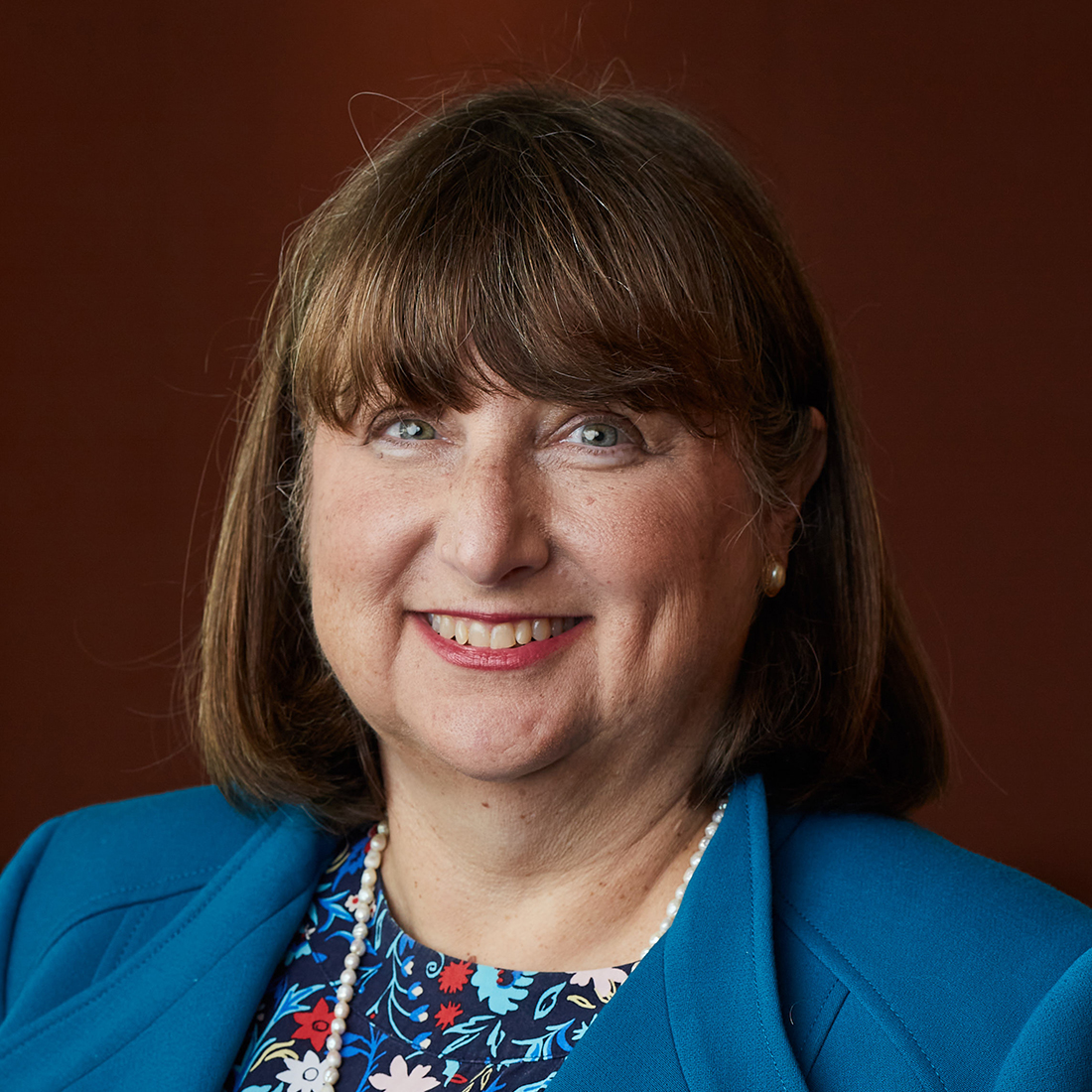
Julie Rovner
KFF Health News
Julie Rovner is chief Washington correspondent and host of KFF Health News’ weekly health policy news podcast, "What the Health?" A noted expert on health policy issues, Julie is the author of the critically praised reference book "Health Care Politics and Policy A to Z," now in its third edition.
Senate Democrats hope a little-used law from the 1990s will help draw attention to the healthcare cost issue by forcing a vote on the Trump administration’s recent changes to the Affordable Care Act.
Meanwhile, Health and Human Services Secretary Robert F. Kennedy Jr. is demanding information from a medical journal that retracted a study that backed Kennedy’s claims of vaccine harm.
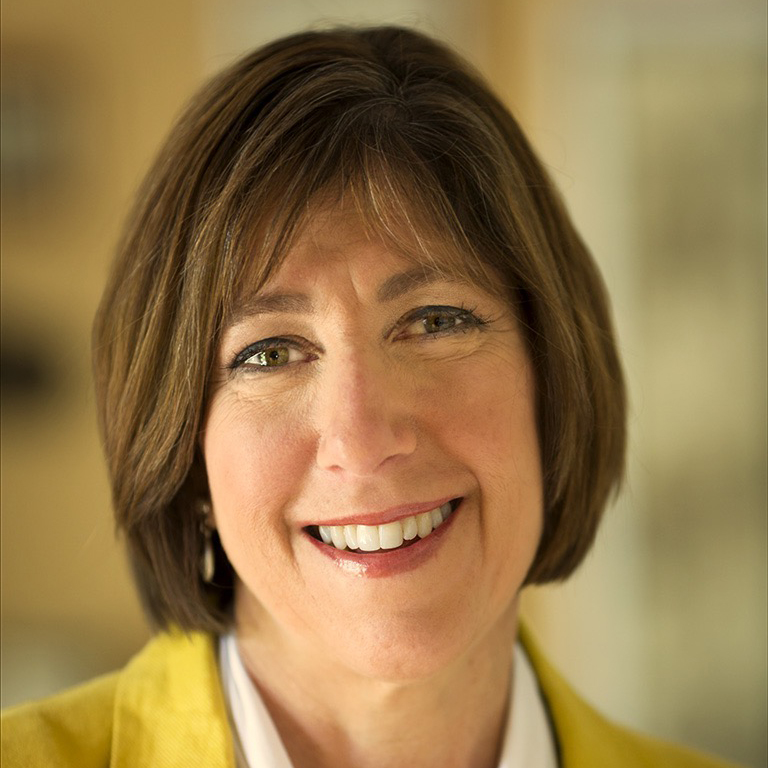
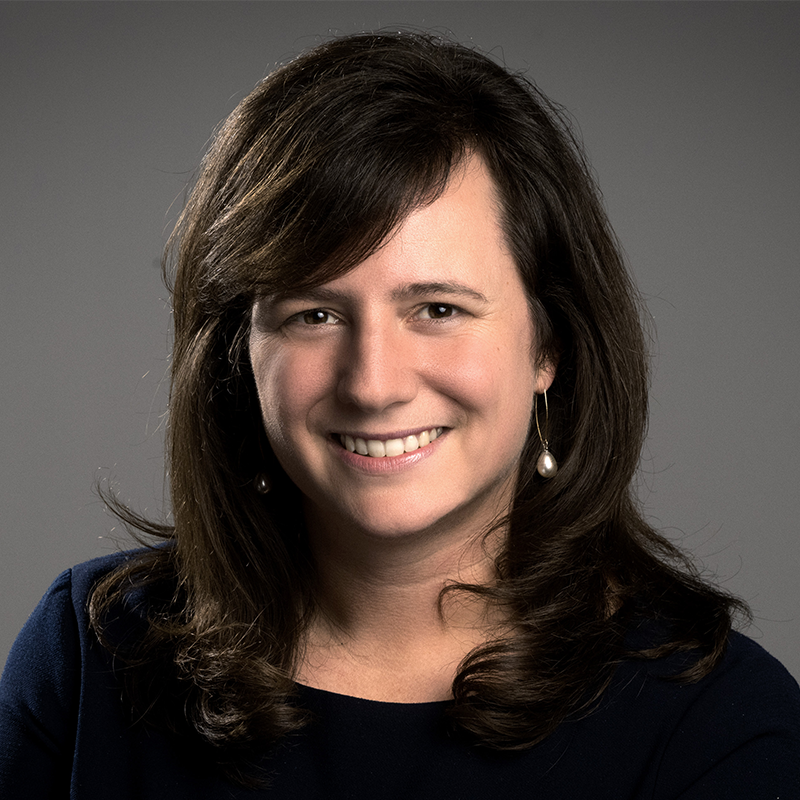
This week’s panelists are Julie Rovner of KFF Health News, Anna Edney of Bloomberg News, Sheryl Gay Stolberg of The New York Times, and Lauren Weber of The Washington Post.
Panelists

Among the takeaways from this week’s episode:
- As the midterm elections approach, congressional Democrats are pushing back on newly finalized guidelines from the Trump administration for ACA plans. The guidelines allow the sale of plans with fewer benefits and bigger deductibles next year, further eroding protections designed to keep healthcare affordable. With many voters concerned about the cost of care, Democrats’ push could prove a potent campaign message come November.
- State officials in Texas and Alabama are continuing to crack down on abortion access. And new reporting reveals a trend of women going to great lengths to seek abortion care only to learn that their home pregnancy test results were false positives and they’re not pregnant.
- Two medical journals recently retracted separate studies that linked vaccines to harmful health problems, with Kennedy pushing back. And legal action over Kennedy’s reconstituted vaccine panel and its decisions is leaving the nation without traditional outside expert input into seasonal vaccines as the flu season approaches — though the American Academy of Pediatrics has pointed out that Kennedy could resolve the legal issues by simply appointing experts to the panel with vaccine backgrounds, as statute dictates.
Also this week, Rovner interviews Michael Cannon of the Cato Institute and Liz Fowler of the Johns Hopkins Bloomberg School of Public Health about their joint effort pushing for the elimination of the employer health insurance tax exclusion. You can read their Washington Post op-ed here.

Email Sign-Up
Subscribe to KFF Health News' free Morning Briefing.
Plus, for “extra credit” the panelists suggest health policy stories they read this week that they think you should read, too:
Julie Rovner: KFF Health News’ “Trump Bought Tobacco Stocks and Raked In Industry Donations as FDA Eased Standards,” by Darius Tahir.
Sheryl Gay Stolberg: KFF Health News’ “Tennessee Pharmacies Sell Potent Ivermectin, Led by Anti-Vaccine Doctor Who’s Taken ‘Bucketloads,’” by Brett Kelman and Rachana Pradhan.
Anna Edney: Politico Magazine’s “Inside Trump’s Reversal on HIV,” by Alice Miranda Ollstein and Megan Messerly.
Lauren Weber: The Atlantic’s “AI Is Taking Over Hospitals,” by Benjamin Mazer.
Also mentioned in this week’s podcast:
- KFF Health News’ “Democrats Seek To Spotlight Rising Health Costs by Forcing Vote on Trump Regulation,” by Julie Appleby.
- The New York Times’ “Can’t Pay Medical Bills? Trump Officials Suggest Getting a Loan,” by Reed Abelson.
- MedPage Today’s “AAP Disputes Kennedy’s Claim That Vaccine Panel Can’t Meet Ahead of Flu Season,” by Jennifer Henderson.
- The Alabama Reflector’s “Alabama Attorney General Threatens Legal Action Against Six Abortion Pill Providers,” by Anna Barrett.
- HuffPost’s “They Had Positive Pregnancy Tests — Without Ever Being Pregnant. The Brand Was Always the Same,” by Alanna Vagianos.
- The Daily Signal’s “Pro-Life Win: Trump Admin Moves to Remedy Downfall of IVF,” by Elizabeth Troutman Mitchell.
- The New York Times’ “Some See New Route to Adoption in Clinics Full of Frozen Embryos,” by Sheryl Gay Stolberg.
- The New York Times’ “How an Addictive Gas Station Drug Found Allies in Trump’s Cabinet,” by Kenneth P. Vogel and Christina Jewett.
Click to open the transcript Transcript: Democrats Keep Healthcare at the Fore
[Editor’s note: This transcript was generated using transcription software. It has been edited for style and clarity.]
Julie Rovner: Julie, hello from KFF Health News and WAMU Public Radio in Washington, D.C. Welcome to What the Health? I’m Julie Rovner, chief Washington correspondent for KFF Health News. And, as always, I’m joined by some of the best and smartest health reporters covering Washington. We’re taping this week on Thursday, June 18, at 10 a.m. As always, news happens fast and things might have changed by the time you hear this. So, here we go.
Today, we are joined via videoconference by Lauren Weber of The Washington Post.
Lauren Weber: Hello, hello.
Rovner: Sheryl Gay Stolberg of The New York Times.
Sheryl Gay Stolberg: Hi, Julie.
Rovner: And Anna Edney of Bloomberg News.
Anna Edney: Hello.
Rovner: Later in this episode, we’ll have my interview with Michael Cannon of the libertarian Cato Institute and Liz Fowler of the Johns Hopkins Bloomberg School of Public Health. Michael and Liz, who are on opposite sides of most things in the health debate, are jointly promoting the idea of eliminating, or at least scaling back, the employer health insurance tax exclusion that underpins much of the U.S. healthcare system but also drives up health spending. But first, this week’s news.
Let’s start this week on Capitol Hill, where Democrats in the Senate say they plan to use the Congressional Review Act to force a vote to disapprove the Trump administration’s Affordable Care Act payment rule that was finalized in May. For those who haven’t been paying close attention, this is the rule for next year’s plans. It includes things like allowing non-network plans that could open policyholders to unlimited out-of-pocket spending, or else possibly no available providers of care in their area, as well as new catastrophic policies with lower premiums but deductibles well into the five figures.
The CRA is a handy tool for Congress. It allows the minority to force a vote on the floor and only requires a simple majority of both houses to pass. Few rules are actually canceled using this procedure, but it does allow members of Congress to highlight an issue, in this case playing into Democrats’ desire to keep one of their best midterm electoral issues, healthcare, front and center. So, will this succeed at getting attention, even if it ultimately doesn’t cancel the rule? Or is there just too much else going on right now? I have to say, I haven’t seen a lot of coverage of this other than from my colleague Julie Appleby. Bless her heart for bringing this story to everybody’s attention.
Stolberg: I think that by November this will resonate. We’re in a situation now where costs are rising, gas costs are going up, and they may go down if this Iran deal goes through, but healthcare and the cost of care is always an issue for Americans. It’s long been an issue that Democrats have led on. I actually find it interesting. What [President Donald] Trump is trying to do really kind of undercuts the very premise of Obamacare, which was to offer kind of a baseline level of care, to require that plans gave people a baseline level of care. You know, come November, it’s going to be just after the enrollment period of October, and I think Democrats are going to be talking about this. And then, it might not resonate or break through now, but they will point back to this vote in this moment.
Edney: Yeah. I was going to say that I do think it’s possible by then. I think you were right to say that right now it’s hard for things to break through, but by the midterms we may see, as a direct result of this, people losing coverage. And I think that coverage losses — or deciding not to have coverage any longer, because it’s too expensive. So, I do think that coverage losses, whether it’s in the ACA marketplace or Medicaid, are going to be a big campaign issue. And if Democrats can point to this vote as a direct line to We support you having your coverage and Republicans don’t, that could be something that breaks through to those potentially millions of people who no longer have care.
Rovner: Yeah, last week I described this as the drip, drip, drip of declining coverage, which is that we sort of keep seeing these things bit by bit. Rather than sort of one dramatic, Oh my goodness, I can’t afford my coverage and I’m going to drop it, we’re seeing people scrambling to try and keep coverage, or to buy down to have less expensive plans with bigger deductibles. And then, once they start to seek care, they’ll realize they can’t handle those deductibles. So it’s happening in pieces rather than all at once.
Well, speaking of that Affordable Care Act rule, props to the eagle-eyed Reed Abelson, your colleague at The New York Times, Sheryl, for spotting a little-noticed piece of the rule that allows insurers to offer loans to patients who can’t immediately come up with those multi-thousand-dollar deductibles should they need medical care. Now, this is not a new idea. Overall, veterinarians have long offered payment plans to pet owners, as have health practitioners, whose services are often not covered by insurance, like cosmetic surgeons. But for necessary medical care, it seems like loading patients with still more medical debt seems like a less-than-popular solution to high healthcare costs. Or is that just me? Lauren.
Weber: I mean, this Reed story was a blockbuster, and also just horrifying. And what kind of dystopian future are we all in? Instead of paying your premiums, you’re also paying your payment plan to the same people. It’s already been said enough that there’s some concern that health insurance plans are gobbling up so many parts of the healthcare market. You wonder what happens when they also become essentially your mortgage broker. And so I think the story deserves a lot more attention, because I think a lot of Americans would be quite terrified if they realized that is potentially the future.
Edney: And it seems like the point should be to make coverage more affordable, not to find new ways for you to pay the same really high amounts.
Stolberg: I just was going to say I thought it was interesting that Reed pointed out that roughly a third of Americans have some kind of medical debt, and she linked to an analysis, a 2025 analysis in HealthAffairs, about medical debt and collections being very common and large.
Rovner: Yeah, I’m just noting the irony of Republicans deciding to come out against Big Insurance, and yet this — talk about own goals, going against exactly what you’re saying. Let’s make Big Insurance less popular by having people owe money on a payment plan, have a credit card to pay their insurance company back for things that their insurance company basically isn’t covering anymore. Yes, presumably with interest, so Big Insurance will make even more money.
Well, moving on, it’s been a busy week on the reproductive health front. In Texas, the state’s Republican platform includes a plank calling for women who have abortions to be held criminally liable for murder after another Texas anti-abortion group fought unsuccessfully to have it removed. And in Alabama, the attorney general’s office is sending cease-and-desist letters to out-of-state organizations that offer abortion pills via telehealth. The letters say the companies, including some well-known ones like Plan C and Cambridge Reproductive Health Consultants, must stop all advertising, sale, and delivery of pills to Alabama residents or face potential legal action, including fines of $2,000 per violation. On the other hand, one former abortion provider in the state pointed out that the letters themselves act as an advertisement for the various services that otherwise people might not know anybody about, or where they are. Is this just performative? Or do we think there are going to be real efforts to reach distributors outside states with abortion bans, despite shield laws in the states where those distributors are actually located.
Weber: It’s probably a mix of both, right? I think that some of it is for press coverage. I did find the former abortion provider saying this is a giant billboard for all these products to be somewhat quite the comment to be made. But it’s true. If you live in Alabama and you went to this woman who is an abortion advocate, she could not tell you where to look these things up online, and now there’s a plethora of media coverage and attorney general’s letters that lead you right to the source.
Rovner: With their addresses.
Weber: With their addresses. With their web addresses. And so—
Rovner: That’s right.
Weber: It’s an interesting move on all counts. I think it’s just a one and another. I think I don’t think we’re going to just see this from Alabama.
Stolberg: Yeah, I was going to say this is part of a broader assault by the anti-abortion movement on abortion medication, and in particular mifepristone. And my colleague Pam Belluck and I wrote a few weeks ago about this lawsuit that was brought by the state of Louisiana, which instead of targeting the manufacturers of the pill, they want courts to bar a policy allowing abortion providers to provide or prescribe mifepristone and send it through the mail. This was the policy of the Biden administration’s FDA [Food and Drug Administration]. The Trump administration has said, We’re studying this issue. That study seems to be going on a very long time. Some people suggest it will go on past the midterms, so—
Rovner: That seems to be the strategy.
Stolberg: Right. But nonetheless, now that Roe [v. Wade] is gone and states regulate abortion, we are seeing this kind of clash between states about what can happen from one state to another, and I think this is part of that.
Rovner: Yeah, and as we’ve pointed out multiple times in multiple ways, anti-abortion groups are furious that the administration has not rolled back this ability to send these pills through the mail, because that is why I think we’re seeing less backlash to some of these bans than we would have otherwise, because a lot of these bans are fairly easily evadable by going, having a telehealth appointment with a doctor in another state and getting the pills in the mail. And there’s very little that the ban states, as we’ve discovered, can do to stop it. So they’re sort of trying everything, including these cease-and-desist letters. But this is clearly a fight that’s going to go on unless and until the administration steps in or the courts step in. And we’re, I guess, at this point waiting on both.
Meanwhile, the Huffington Post has a truly eye-opening story about women who get positive home pregnancy tests, arrange to travel or take time off from their jobs to get an abortion, only to discover once they get to the clinic that they weren’t actually pregnant at all. It seems most of the false positives are coming from the same brand, Clearblue. And it’s not that the tests are wrong as much as they appear to be too sensitive, likely picking up pregnancies that either end themselves before they’re fully established or picking up the hormone that the tests detect from sources other than an active pregnancy. The most chilling part of the story is at the very end, with one doctor wondering how many women are doing telehealth abortions with pills who were never actually pregnant to begin with. It seems that do-it-yourself healthcare maybe isn’t as foolproof as we’ve made it out to be?
Weber: I think the story, just — first off, everyone should read it, because it’s an incredible deep dive. She managed to uncover multiple complaints that physicians who provide abortion had made to the FDA, which appear to have been undealt with, and it speaks to the tragedy of some of these people that take time out of their day, raise money, travel across state borders to potentially try to end their pregnancy, and realize they don’t have a pregnancy at all, and the emotional trauma of that. But more than anything it speaks to the fact that as abortion rules have become more restrictive, you need to know if you are pregnant earlier than ever, so that’s why a lot of these people are taking these pregnancy tests. And the fact that this is so sensitive, the article does posit that it could be picking up pregnancies that are called chemical pregnancies, which don’t end up becoming actual pregnancies. But the point is that usually if you wanted to go check that, you would go to a doctor and they would check your blood levels and see if they were rising. But a lot of women are afraid to do that in this current environment. And so I feel like it’s a big story of unintended consequences and horror that has unfolded as some of these pregnancy tests are not accurate.
Rovner: Yeah, and in some cases there are multiple cases. Go ahead, Sheryl.
Stolberg: Lauren’s words, “unintended consequences,” were just what I was about to say. This is part of a whole panoply of things that were not foreseen by anyone, really, when Roe was overturned. A couple years ago I went to Idaho to report on how OB-GYNs, especially those who dealt with complicated pregnancies, were fleeing the state because of the restrictive abortion rules. And that was leading family practice doctors, like one I featured, without help in caring for patients with complicated pregnancies. And that, too, is sort of an unintended consequence. And when we were talking before about the abortion pill being sent across state lines, yes, you can evade the bans that way, but it still leaves women without medical care, without follow-up care should something go awry. So a lot of things happened, have flowed from the Dobbs [v. Jackson Women’s Health Organization] case that we didn’t think about at the beginning.
Rovner: Yeah, one of the things that I’ve written about is it’s not just OB-GYNs who are leaving states or not going to states in the first place, choosing not to do residencies there.
Stolberg: Right.
Rovner: But it’s other doctors who are not going to some of the states with bans, because doctors who finish their medical school and residencies tend to be of reproductive age. And they are women, or if they are men and have spouses and want to start families, they’re worried about being in states that don’t have enough doctors if there’s a difficult pregnancy. We’re talking about people who want to get pregnant being a little bit concerned about going to states with abortion bans, because so many of the doctors who would deal with difficult pregnancies have left. So it’s just, it spins out and out and out and out.
Well, finally, in something from the Trump administration that will please anti-abortion forces, a new grant announcement for a George W. Bush-era program promoting the adoption of frozen embryos left over from IVF [in vitro fertilization] refers to them as, quote, “children who already exist and are in need of a family.” Is this formal announcement the quiet beginning of this administration’s effort to establish fetal personhood in federal law? Or is it just another way to pacify pro-lifers who are still angry over the other administration policies we were just talking about that they don’t like so much?
Stolberg: Huh. That’s interesting.
Rovner: Sheryl, you probably remember the “snowflake babies” from the Bush administration.
Stolberg: OK, I’m actually the person who wrote about the snowflake babies on the front page of The New York Times, and then suddenly snowflake babies and their parents were appearing at the White House and on Capitol Hill, it was a group called—
Rovner: Remind younger people who these snowflake babies are.
Stolberg: So, there was a group called — this was at a time when we were talking about excess embryos left over from in vitro fertilization and what should happen with them, and—
Rovner: And whether they should be allowed to be used for stem cell research.
Stolberg: Right. That’s exactly right. And whether they should be allowed to be used for stem cell research. And there was a group called Nightlight Christian Adoptions. They’re a Christian adoption agency, and they had come up with another way, they said, in which infertile couples were literally adopting embryos that were left over from other people’s pregnancy effort attempts. And this was a solution for deeply religious people who did believe that life begins with the embryo and did not want to destroy their embryos and also did not want to have to pay in perpetuity for them to be housed in a lab somewhere. And they called them snowflake babies. And so this is something that George Bush talked about and became enshrined in, I guess, his administration. And, I don’t know. I guess Trump is looking back 20-some-odd years or so, reviving the past.
Rovner: Well, there has been, there — it’s a program that has continued.
Stolberg: Right.
Rovner: And there were some adopted embryos even during the Biden administration. But I guess the question that sort of comes up now is, by describing them as already children—
Stolberg: Yeah. Are they laying the groundwork for this?
Rovner: —are they setting — yes, are they laying the legal groundwork? Lauren, you wanted to add something.
Stolberg: Maybe.
Weber: I was just curious. Does this lay the legal groundwork that any leftover embryo would then qualify for this program? What if you didn’t want your leftover embryo to go through this? I’m curious. The regulation seems a little unclear.
Stolberg: I think parents retain the right. Parents retain the right to, they are in essence the property — I don’t like to use that word, but —
Rovner: I think legally, though, that’s what they are.
Stolberg: And legally, embryos created by an infertile couple belong to that couple. And in fact we’ve seen, and my colleague Caroline Kitchener just wrote about a lawsuit between a husband and wife who divorced and the woman wanted to implant the embryo and the man did not. And the question was, who quote-unquote “owned” the embryo. But I think that personhood question is really interesting, Julie, and maybe it does establish, in a way, a government recognition of embryos as people that is unprecedented.
Rovner: Yeah, that’s certainly the concern, that it’s sort of taking it one step further. All right, we’re going to take a quick break. We will be right back.
We are back. And speaking of issues the administration is trying to tiptoe around, let’s turn to vaccine policy. Last month, the Journal of Toxicology and Environmental Health announced it was retracting a 2010 study that linked the hepatitis B vaccine to an increased risk of autism, because, and I’m quoting here, “due to fundamental methodological flaws the study’s conclusions are unsound.” That was one of the studies cited by Secretary Robert F. Kennedy Jr.’s handpicked advisory committee to change the recommendations for the birth dose of the hep B vaccine. Separately, the journal Toxicology Reports retracted a 2021 study that claimed a link between vaccines and sudden infant death syndrome, also citing methodological errors — which is typical, by the way, for why studies are retracted. Yet that retraction led Secretary Kennedy to write a letter to the journal demanding to know why and giving the journal’s editor a deadline of June 26 to respond. What is Secretary Kennedy trying to accomplish here? And will it work or is it just coming off as bullying?
Edney: I think certainly it’s coming off a little bit as bullying in the sense that this was a decision that the journal made about something that — clearly this happens, because it happened with this other study. I think that in Secretary Kennedy — and Sheryl, you’ve written about this, and others — he does still have a vaccine agenda, whether he’s allowed, or an anti-vaccine agenda, whether he’s allowed to talk—
Rovner: We’ll get to that in a moment.
Edney: —or not. So I think when he makes these requests, he’s kind of trying to sow doubt into what these other doubts the journal is bringing out.
Rovner: Lauren, you want to say something.
Weber: Yeah, I just, I think in general, this is a pattern of actions by Kennedy that several experts have described to me as somewhat hypocritical. He’s attempting to bully a medical journal. He had a big thing about all information should be free during covid, no one should be silenced. And here he is using his platform to potentially change things on that front. And then he also recently issued a quarantine order for someone with hantavirus to stay in Nebraska, which flies in the face of a lot of his “medical freedom” rhetoric during covid. And so I think some of these moves are really interesting because they seem to strike at a contradiction in a lot of the rhetoric he espoused before coming into office. And even on top of the vaccine of it all, I just, I think that’s important context to consider.
Rovner: And Sheryl, we spent some time last week talking about your story about the secretary. But anything you would like to add, please do.
Stolberg: Yes. I think this is not at all out of character for the secretary. The secretary has long believed that the established medical journals are censoring what he views as legitimate research, i.e. research into the alleged harms of vaccines. And even before he became secretary, when he was running for president, he laid out a very clear agenda in which he said he was going to use government science to lay the groundwork for research that could be used in court against pharmaceutical makers, vaccine makers, and he was also going to take on the medical journals. And in the aftermath of covid, what we saw was also this sort of alternative ecosystem of medical journals growing up, published by these covid contrarian doctors, the Independent Medical Alliance, and other groups. So it wasn’t surprising to me at all that Kennedy went on the offensive against a journal that retracted a study, because he and his allies have long complained that these journals are censoring them. When journals find fault with research that Kennedy likes or supports his views, he doesn’t want to hear about that.
Rovner: Well, separately, or perhaps not so separately, the Justice Department, on Kennedy’s behalf, is asking for an expedited appeal of a lower-court ruling that found his changes to the childhood vaccine schedule to be, quote, “arbitrary and capricious” and his handpicked vaccine advisory committee members unqualified for their posts. The administration is arguing that because the ACIP [Advisory Committee on Immunization Practices] is currently frozen, the administration can’t act on new vaccines for this fall, including for things like flu, RSV [respiratory syncytial virus], and covid. The American Academy of Pediatrics, meanwhile, which brought the lawsuit that got the changes stayed, argues that Kennedy can reconstitute ACIP anytime he wants, as long as he follows the federal advisory committee rules and appoints members with vaccine expertise. How might this standoff get resolved? Or does this standoff need to be resolved? There are arguments the FDA has already approved a vaccine for this fall. Insurers have already said they’re going to cover it. So is this, speaking of things that are performative, also performative?
Stolberg: That’s — I think we’re in uncharted territory, Julie. In the past, the CDC’s [Centers for Disease Control and Prevention’s] vaccine advisory committee has met well in advance of every upcoming fall, the flu season, to discuss vaccines to protect the American public and kind of issue their recommendations, which guide what insurers cover. And as a result of this lawsuit, we’re in a place where kind of everything is going on without that central pillar that backs up these decisions. So insurance companies are saying, Yeah, we’ll cover, and the FDA is saying, Yeah, we’ll approve, but there are no experts, outside experts, really thinking through what the right policy is. So, I suppose—
Rovner: Technically there’s not even an acting director of the CDC, right? Because it went on too long?
Stolberg: That’s right.
Rovner: Or is that — so Jay Bhattacharya—
Stolberg: Well, Jay Bhattacharya is functioning as the acting director but technically he is not the acting director. He is acting in the capacity of director or something like that?
Rovner: I believe that is the phrase.
Weber: Who needs senior leadership?
Rovner: Yeah. It’s all very weird, so—
Weber: They’re all gone.
Stolberg: I think it’s a question of, can the government function without this? Yes. Is the government doing the best work for the American people without this system in place? You know, probably not.
Rovner: Well, meanwhile, more quietly, since the White House ordered Kennedy to back off his more public anti-vaccine efforts, it appears that things are still happening, just a bit more out of public view. Both The New York Times and now The Washington Post are reporting new efforts to study possible ill effects of vaccines at the CDC, the NIH [National institutes of Health], and elsewhere in the department. Quoting from the Washington Post story, by Lena Sun and our podcast panelist Rachel Roubein: “Kennedy’s allies are embedding his agenda in institutions that decide what gets studied, who does vaccine research and how these findings are translated into policy. This could keep the Trump administration’s questioning of vaccines’ safety alive for years to come,” close quote. Could these changes have an even longer-term impact than some of RFK Jr.’s sort of splashier actions that we were just talking about, that could be more easily overturned by an incoming administration?
Weber: I think absolutely, Julie. I think at the end of the day, too, some of what my colleagues Rachel and Lena found was that they are exploring adding new members to ACIP, that they’re also exploring adding a new Office of Science in the CDC. What does that mean? If is that an Office of Science that Kennedy agrees with? Or is that an Office of Science? These are the questions one has to ask. And then, what kind of long-term ramifications are there for that? Many public health experts say that this continued back-and-forth on vaccines just leaves a lot of people confused and will likely contribute to lower vaccination rates, which could contribute to the continuous rise of preventable, vaccine-preventable, disease. And so there’s a lot of concern that some of this groundwork that’s being laid to underpin some of Kennedy’s long-held beliefs could have a very, very long tail.
Rovner: Yeah, and of course we’re already seeing cases, not just measles spreading but whooping cough and the kinds of diseases that are preventable with vaccines that people are now not getting for their kids.
Well, finally this week, two amazing stories related to HHS but not of HHS. One is from The New York Times’ Christina Jewett and Kenneth Vogel, and it’s a deep dive into how lobbying has helped keep the potentially dangerous supplement kratom, if not on pharmacy shelves everywhere, then at least in gas stations and convenience stores around the country. This story has lots of twists and turns over several presidential administrations, but it does seem that Trump 2.0 has been welcoming, shall we say, to the kratom industry, which has in turn given lots of campaign contributions to the administration and its allies. Anna, I see you nodding.
Edney: Yeah, I loved the story. I thought it was really well done. And, like you said, lots of twists and turns. And there was a really great quote, and I’m not looking at it, but it was along the lines of this being kind of a coin-operated policymaking administration. So, like, you’re — if you give enough money. That’s why we’re seeing it’s not your typical, like, Big Pharma putting a lot of lobbying in, right? It’s kratom, it’s flavored vapes, things that kind of you might have considered on the fringes bubbling up to hit. Even the president’s talking about them, and at press conferences that are completely unrelated. So I think that it was a great look at how this industry really kind of got into the administration, and in their view, in the industry view, it’s like, Listen, we’re just paying to be at the table, and we’ve never really been at the table before. But pretty much anyone who can bend the presidency, or someone in his administration, seems to be able to make these inroads that we haven’t seen before, when the product is not proven safe and has been shown to harm people and cause, lead to death.
Rovner: Yeah. Sheryl, you wanted to add something.
Stolberg: Yeah. So I was going to say, I lived through this story by my colleagues Ken Vogel and Christina Jewett, and props to them. We’ve been talking about this for a while. I noticed a while back, when I wrote about the MAHA [Make America Health Again] movement and Trump, that this company called Botanic Tonics had kind of donated like a million dollars to the MAHA PAC: And I thought: “What is this? Why are these people donating a million dollars to this PAC? Who are they? What is kratom?” And it turned out that my colleague Ken Vogel and also Christina Jewett were kind of already onto this. And the thing that they found to me that was so amazing is that not only this company and the promoters of kratom, which is kind of like an addictive gas station drug — it supposedly boosts energy — not only were they cultivating Kennedy, but also Markwayne Mullin, who now leads the Homeland Security Department but formerly was a senator, had an investment worth as much as a million dollars in this company, the company of Botanic Tonics. The company’s founder was an energy executive in Mullin’s home state. He’s this odd guy who I think had some sort of brush with the law and changed his name, and it was just this kind of crazy story of influence, like Anna said, kind of, or maybe you said, Julie, on the fringes but coming to the fore.
Rovner: Yeah, and the original sin here, I think, and someday we’ll go into a deep dive on this, was the 1994 fight in Congress about dietary supplements and—
Stolberg: The DSHEA [the Dietary Supplement and Health Education Act]. Yes.
Rover: Right.
Stolberg: And I’ve thought a lot about this. That has created kind of the, what critics call, the wellness industrial complex, which allows these companies to sell things that are supplements as food, which means they are not regulated as stringently as drugs, can only be regulated after they come to market. And a lot of shady stuff is sold as a result.
Rovner: Yeah, as I say, it goes back a lot of administrations. All right. Well, finally this week, my other story, and this is my extra credit this week. It’s the second blockbuster in the last three weeks for my KFF Health News colleague Darius Tahir about President Trump’s stock trading. The previous one was about the prescription drug industry. This one is about tobacco. It seems that the teetotaling commander in chief is fine with other legal vices, that he holds more than $1.6 million in stock in tobacco giant Philip Morris, as well as positions in Altria and other tobacco companies. The tobacco industry has been good to him, too, giving millions to Trump-affiliated super PACs. And what has the administration given back? Quoting from the story: “It’s FDA piloted a fast-track program to approve nicotine pouches. It unveiled a program to allow vapes on the market more rapidly, despite resistance from career civil servants and leadership, culminating this year in guidance waving through flavored electronic cigarettes. It cut public health employees focusing on anti-tobacco policy. And it broadened enforcement against illicit e-cigarette, competitors to the big industry players with a financial relationship to Trump,” close quote. This is a big difference from the first Trump administration when it comes to tobacco, isn’t it? My recollection is that they were not quite this welcoming to tobacco from 2017 to 2020. Anna, I see you nodding.
Edney: Yeah.
Rovner: You did some work on this.
Edney: Yeah, well, this was when, the first Trump administration was when Scott Gottlieb was the FDA commissioner, and he was quite anti-tobacco. And we went through this whole scare about kids getting some strange lung disease from vaping. And there were a lot more restrictions that — and less approvals, or clearances, whatever you want to call the tobacco side of FDA. So, I think it’s been a complete turnaround, where this time around the Trump White House would prefer to run roughshod over the FDA and get what they want for the tobacco industry, because they’re getting a lot of money from them.
Rovner: Yeah, and props to Darius for connecting all of the dots. Lauren, you want to add something?
Weber: Yeah. Let’s go back to Liz Essley Whyte’s scoop with Josh Dawsey about Trump meeting over cheeseburgers with the tobacco guys at the White House. I think Darius’ piece lays out the money that maybe is hanging out there. But props to Darius for having two of these quite good stories looking at these conflicts of interest.
Stolberg: Yes, during the Trump administration, the first Trump administration, Alex Azar, his health secretary, pressed Trump to take some sort of action restricting vaping, and Trump got really mad at Azar about it, and he complained privately and yelled at Azar, saying to him, You’re costing me votes, because the MAGA crowd likes vaping. This was recounted in a book. I’m pretty sure it was Phil Rucker and Carol Leonnig’s book, the two Washington Post reporters. So, Trump was, maybe he wasn’t this aggressive in supporting the tobacco industry, but then there’s this added component to it, which is that he thinks MAGA [the Make America Great Again movement] likes vaping. And he was yelling at Azar, saying: You’re costing me votes. You’re going to cost me this election. I’m sorry I ever did this.
Rovner: Oh, we will see how this one plays out. All right, that’s this week’s news. Now, we’ll play my interview with Michael Cannon and Liz Fowler, and then we’ll come back and do our extra credits.
I am pleased to welcome to the podcast two people who have taught me a lot over my years covering health policy. And full disclosure, I consider both of them friends. Liz Fowler is a distinguished scholar at the Johns Hopkins School of Public Health. During the Biden administration, she ran the Center for Medicare and Medicaid Innovation, an agency created by the Affordable Care Act, which she helped write as the chief health counsel on the Senate Finance Committee and implement as a senior official in the Obama administration. Michael Cannon is the director of health policy studies at the Cato Institute, a libertarian think tank here in Washington, D.C., and has spent most of the past 16 years trying to get the Affordable Care Act repealed after vehemently and almost successfully blocking its passage. Yet this unlikely pair is on a new mission, pointing out why the first step in the next round of health reform should be to get rid of something called the employer health insurance tax exclusion, which we will explain in a minute. Liz and Michael, welcome. Thanks for doing this.
Liz Fowler: Thanks for having us.
Michael Cannon: Thanks for having me.
Rovner: So for most people this would be a hard question, but you guys have been on the circuit, so one of you give me the 30-second explanation of what the employer tax exclusion is and why it exists in the first place.
Cannon: So when Congress passed the income tax in 1913, there was no such thing as health insurance, really. So they gave no thought to the question of if an employer provides health insurance to its employees, should that be subject to the tax. The Treasury bureaucrats, when someone presented that idea, said: This is really hard. We don’t know. We’ll just say we’ll exclude that from the tax base, so we won’t tax compensation in the form of employee health insurance. That was in the 1920s. In the 1940s — so that gave employer health insurance a boost. In the 1940s there were wage and price controls that gave it a further boost, because employer health insurance was exempt from those wage controls, so it gave employers a way to compete. But it’s really that tax exclusion that is responsible for the fact that more than half of U.S. residents have health insurance through an employer, because it works like this: If your employer gives you a dollar of cash, you have to pay federal income and payroll taxes on that, and you’re left with, on average, at the margin, 66 cents. The federal government takes a third of it. But if the employer gives you that same dollar as health insurance, then you get a dollar’s worth of health insurance. So you can see how this sort of distorts the prices, the after-tax prices that people face, when they’re choosing between more cash wages and spending that money on other things versus spending money on health insurance, employer-sponsored health insurance. And so people more often buy employer-sponsored health insurance, they demand more of it than they would otherwise, and this also lets employers end up controlling about, for the average family with employer coverage, $20,000 of the worker’s earnings. And all of these effects end up increasing spending on employer-sponsored insurance and increasing prices for health insurance, and the fact that it’s encouraging a form of insurance that disappears when you change jobs means it’s creating gaps in health insurance coverage. So, for decades, economists have said: Hey, this is a real problem. We need to solve this. And I would argue that it is really the reason that Congress wanted to enact the Affordable Care Act in the first place, to fill some of the gaps that this exclusion created.
Rovner: So, Liz, originally this was considered a good idea. It’s like, Oh, we’re encouraging the creation of a new fringe benefit for workers: health insurance. When did it outlive its usefulness?
Fowler: That’s a great question. I think our workforce is very different. Employment is very different than it was back in the 1940s and ’50s, when my parents or grandparents had the same job for decades and they all got health insurance through their workplace. That has eroded over time. I don’t know exactly, Michael probably knows exactly, what the trajectory has been. We’re now down to about 50% of employees receiving healthcare through their workplace. But people are employed in different ways than they used to. I’ve had several jobs throughout the course of my career. People don’t stay in the same job for decades anymore. And people piece together work in ways that they didn’t. Maybe they have more than one job. Maybe they have a part-time job over here and a part-time job over there. This tying health coverage to employment, I think, has become, is starting to become, anachronistic. And I think for me, in particular, watching the debate over HR1 [congressional Republicans’ One Big Beautiful Bill Act] and trying to tie Medicaid coverage to employment or community engagement brought up this whole question of: Why do we tie health benefits to work in 2026?
And so that’s part of why I wanted to revisit this policy question, which we tried to tackle in the Affordable Care Act and didn’t get very far. And the sort of the distorted version that we included in the law, the “Cadillac tax,” was repealed with a bipartisan — what, almost unanimous — vote. So I think it’s time to sort of ask these questions again. It’s a very expensive part of the tax code. It’s one of the largest if not the largest tax expenditure in the U.S. tax code, to — what — close to upwards of $300 billion a year that this benefit provides to a group of workers who are more likely to get health coverage and more likely to get generous health coverage, and at the higher end of the income scale more likely to see a larger benefit. So all of these questions, I think, are ripe for revisiting.
Rovner: So one of my most vivid memories from covering the Affordable Care Act was a roundtable hearing that the Senate Finance Committee had with all of these economists from across the spectrum talking about how to pay for the Affordable Care Act. And I remember — I actually went and looked this back up — one of the senators asked what would be the best way to pay for it And one by one by one, these witnesses, eminent health economists from literally every part of the political spectrum, says you need to do something about the employer tax exclusion, literally every one. And obviously, as you said, Liz, they tried. There was sort of the beginnings of this that we called the Cadillac tax, and it was ultimately repealed. Why is this so hard if it, as you guys point out, it doesn’t make very much sense anymore?
Cannon: Well, it creates a lot of benefits for a lot of very powerful groups. It benefits the health industry because the government is effectively penalizing workers for every dollar of their earnings that they don’t spend on health insurance and medical care. It benefits large employers because they can spread the administrative costs of providing health insurance over a larger number of workers, which means they can take the savings and offer higher salaries than their smaller competitors do, which gives them an advantage in the labor market. So between those two groups right there, you have a very powerful coalition that has blocked, defanged, repealed every effort to try to limit or reform the exclusion, and there have been a lot. Presidents [Ronald] Reagan, [Bill] Clinton, Bush the younger, [Barack] Obama. Presidential candidate John McCain famously tried to reform the tax exclusion, and Barack Obama really, I would say, demagogued that that proposal. I didn’t favor that proposal either, but McCain’s policy director says he still has nightmares about the attack ads that Obama ran. And it’s because of the fear those — it’s not just that people have a financial interest in preserving this huge tax break for employer-sponsored insurance. It’s the fear that those special interest groups are able to demagogue, to play upon that people with employer-sponsored health insurance who have expensive medical conditions will lose their coverage and be left with nothing.
Now I am not a fan of the Affordable Care Act, or what I now call Obamacare. We’ve discussed this. Liz and I do not see eye to eye on that one. I would repeal it tomorrow if I could. But if it is in place, then it actually helps with that problem. It helps with this fear that people would, if we reform the tax exclusion for employer-sponsored health insurance, that people will lose their coverage. There’s a lot of evidence to suggest that employer coverage will stick around for the vast majority of workers, but for those for whom it does not, the Obamacare exchanges are there as a sort of safety net, so that should make the politics a little bit easier.
Rovner: So, obviously, the Cadillac tax didn’t work. What would be a step that would, that possibly could happen, that we could take to start to move away from this?
Fowler: Well, one of the things that we initially tried to do in the Senate Finance Committee, in an early version of the Affordable Care Act, was to cap the exclusion. So you can say above the 80th percentile, or the 85th percentile, or something lower — below that will still exclude it from income. But if you get very generous coverage, very expensive coverage, we’ll start to—
Rovner: Like Cadillac-type coverage?
Fowler: Well, but the difference is we’ll include that as income for the worker. I think that’s where we ran into problems and political challenges. I think there was some reluctance to tax individuals, and Oh, that looks like a new tax increase. So the Cadillac tax was, OK, let’s instead put that tax on employers and insurers instead of the workers, and that became very unpopular with, as you can imagine, the employers and the insurers. So it makes sense why it’s been a tortured history and it’s been hard to get done. I think one of the reasons, and Michael talked about this, why it was a little bit scary to go down this road in the past, because you didn’t know where people would get their health coverage if you tried to change the employer structure we have now. But now there is a place. There are marketplaces. And the bigger that risk pool, and the more people are part of it, I think the more affordable and the more stable it becomes over the long run.
Additionally, I’m not sure employers want to stay in this business. I think it’s becoming very unsustainable to continue to provide very costly insurance that, where the cost is rising at quite a rapid pace, certainly higher than wages, and is eating more and more of a household’s income over time. And so I think if we really lift up the hood and start looking at the potential impacts, the opportunities, the options, the policy options on the table, and have an honest debate about what this could look like, I think there would be more openness perhaps now than there was back in 2010.
Rovner: Well, thank you both for kicking this off. Michael Cannon. Liz Fowler. This was great.
OK, we’re back. It’s time for our extra credit segment. That’s where we each recognize a story we read this week we think you should read, too. Don’t worry if you miss it. We will post the links in our show notes on your phone or other mobile device. I’ve already done mine this week. Anna, why don’t you go next?
Edney: Sure. Mine is in Politico Magazine. One of the co-authors is our podcast colleague Alice Miranda Olstein. It’s “Inside Trump’s Reversal on HIV.” And I thought it was a really smart look at something Trump had said, again talking about things he did in his first administration, that we could end the HIV epidemic in the U.S. by 2030 and put policies in place to try to get there. And Alice and her colleague talked to a lot of top former administration people to look at what happened, and it seems to be not one single lightning bolt but sort of that there were all these other policies around Trump 2.0 that —DOGE [the Department of Government Efficiency] and other things that cut a lot of this type of funding — that created this situation we’re in now, where no one, except maybe Trump himself, thinks we’re going to meet that 2030 goal.
Rovner: Yeah, a lot of differences between Trump 1.0 and Trump 2.0, as we’ve been discussing. Sheryl.
Stolberg: So my extra credit is “Tennessee Pharmacies Sell Potent Ivermectin, Led by Anti-Vaccine Doctor Who’s Taken ‘Bucketloads.’” And this appears in KFF Health News. It’s by Brett Kelman and Rachana Pradhan. And what I love about this story is it talks about how ivermectin, this drug that actually is a Nobel Prize-winning, generally safe drug approved for treating parasitic diseases in humans, has become kind of this ideological touchstone in our society. And it started during the covid pandemic. And now we’re seeing where people on the right and other influencers were pushing it as a treatment for covid without evidence that it worked, and in fact despite FDA warnings that taking too much of it could cause harm. And now it’s sold over the counter in Tennessee, and Marjorie Taylor Greene was promoting it as a treatment for hantavirus, and—
Rovner: Which it’s not.
Stolberg: Which it’s not. Exactly. And it’s just sort of taken on this life in our culture, and I guess I just feel like this story sort of reflects something about this cultural moment and how we are addressing medicine and healthcare as a society,
Rovner: Indeed. Lauren.
Weber: So I chose a story titled “AI Is Taking Over Hospitals,” by Benjamin Mazer in The Atlantic. And it posits this basically interesting thesis, which is that a lot of these chatbots that people use, and even doctors use, are not really regulated by the FDA, and so you kind of are interacting with AI in any sort of healthcare setting, whether you know it or like it or not, and whether those tools are up to snuff or not. And the ending of the article is really the most alarming, because it basically is like: Is this like Uber and Lyft, where Uber and Lyft just disrupted the market so much that we all had to get on board without regulating it more, and that that’s what could happen to hospitals? And I think it’s a really interesting and fascinating question of: What is the role of government regulation when it comes to these AI tools being used in a hospital setting? And are they anywhere near equipped to catch up with what’s going on right now?
Rovner: Yeah, it’s a really thoughtful piece. All right. That is this week’s show. Thanks to our editor, Emmarie Huetteman, and our producer-engineer, Francis Ying. We also had production help this week from Taylor Cook. A reminder: What the Health? is available on WAMU platforms, the NPR app, and wherever you get your podcasts, as well as, of course, kffhealthnews.org. Also, as always, you can email us your questions or comments. We’re at whatthehealth@kff.org, or you can find me still on X, @jrovner, and on Bluesky, @julierovner. Sheryl, where are you on social media these days?
Stolberg: I am @SherylNYT on X and Bluesky.
Rovner: Anna.
Edney: @annaedney on X and Bluesky.
Rovner: Lauren.
Weber: @LaurenWeberHP — the HP is for “health policy” — at X and Bluesky.
Rovner: We’ll be back in your feed next week. Until then, be healthy.
Credits
Francis Ying
Audio producer
Taylor Cook
Audio producer
Emmarie Huetteman
Editor
Click here to find all our podcasts.
And subscribe to “What the Health? From KFF Health News” on Apple Podcasts, Spotify, the NPR app, YouTube, Pocket Casts, or wherever you listen to podcasts.
Related Topics
More from KFF Health News