Dubious Buys Raise Alarm Over Local Control of Opioid Cash
State and local governments spent about $3.7 billion in opioid settlement funds last year. That’s more than the median annual income of 42,000 American families combined.
The money comes from companies that were sued for aggressively pushing painkillers and fueling the opioid crisis.
Large amounts went to addiction treatment, recovery housing, and other initiatives that many public health researchers and families affected by the crisis agree fit the spirit of the settlements — to save lives and remediate the problem.
But other expenditures had tenuous ties to addiction, including:
- $150,000 for street lighting in Camden, New Jersey.
- $130,000 for Flock cameras in Carmel, Indiana.
- At least $84,000 for city insurance, building utilities, vehicle repairs, and other standard city expenses in Mullens, West Virginia.
- $36,200 for a pickleball court in Gilmer County, West Virginia.
KFF Health News uncovered these expenditures among about 17,500 examined through a yearlong investigation with the Johns Hopkins Bloomberg School of Public Health and Shatterproof, a national nonprofit focused on addiction. The team filed public records requests, scoured government websites, and extracted expenditures, which were then sorted into categories such as treatment or prevention. The result is the most comprehensive national database documenting how opioid settlement money was used (or left unspent) in 2025.
The pot of settlement cash, which many addiction survivors and their advocates consider “blood money,” is expected to total about $60 billion over nearly two decades. It is split among state governments, counties, cities, and specially created opioid settlement councils in some places.
Although there are some spending guidelines within the settlement agreements, there is considerable flexibility, a vacuum of leadership and oversight, and significant gaps in how the public can track the dollars.
Much of the questionable spending — ranging from law enforcement gadgets to mundane municipal needs — happens at the county and city level, where local leaders often have no background in addiction policy and sometimes award the money to the first people who ask for it.
Nationwide, local decision-makers control nearly half the money, according to OpioidSettlementTracker.com, a site dedicated to following this cash. Proponents of local control say these officials know their communities best and are closest to the problem. But as dubious expenditures mount, some recovery advocates question if county and city officials are equipped to handle this once-in-a-generation opportunity.
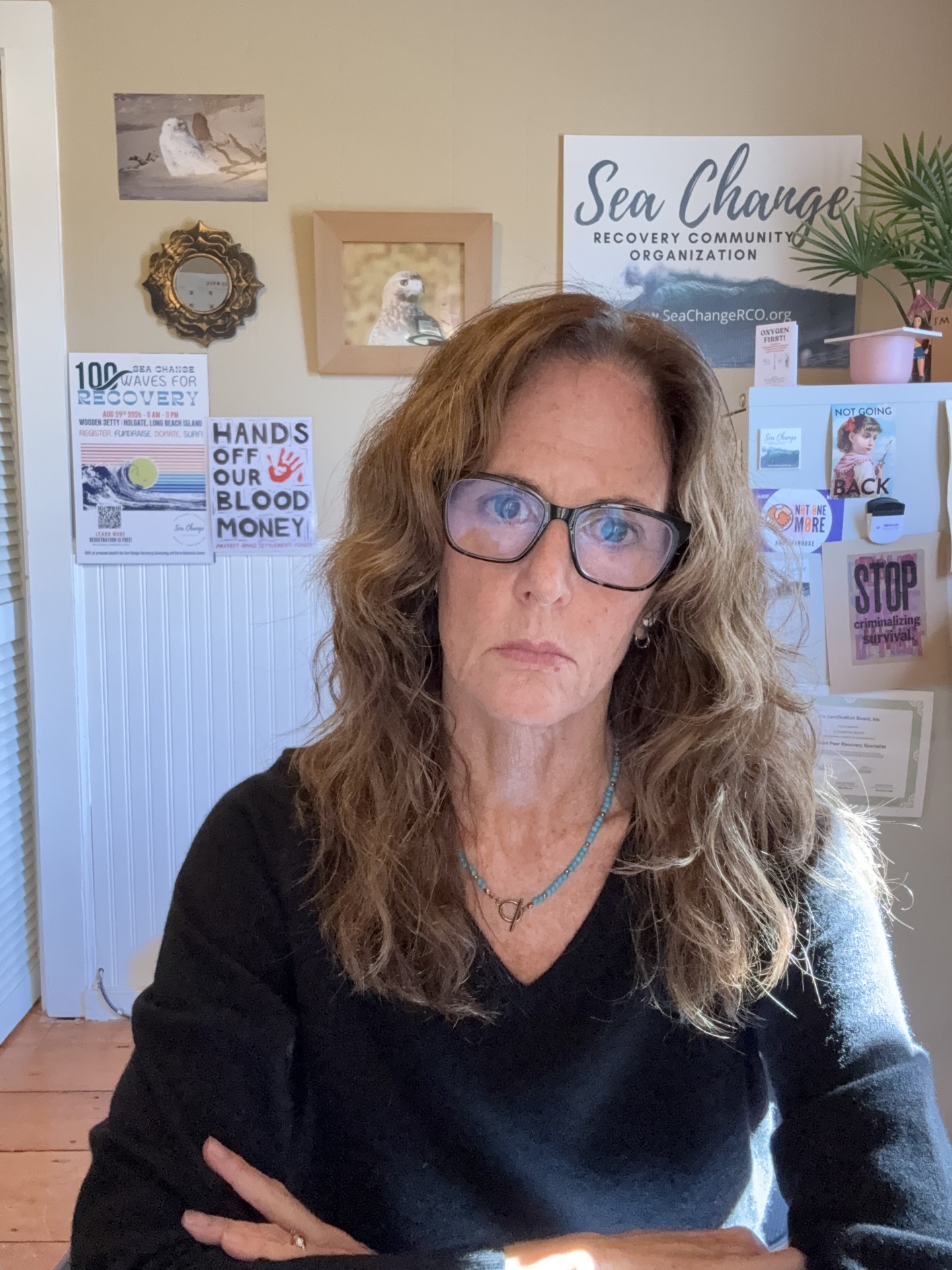
“It shouldn’t be run by these politicians,” said Elizabeth Burke Beaty, a person in recovery and a New Jersey-based advocate who’s been following the opioid cash for years.
She said people directly affected by the crisis understand gaps in their local community care systems best and have the most insight into how funds can be used effectively. “This whole opioid settlement should be run by the people who’ve lost everything,” she said.
As executive director of the Sea Change Recovery Community and Harm Reduction Center in Ocean County, Burke Beaty sees those people daily. A woman who lost her brother and father to addiction and later landed in the hospital herself. An 11-year-old boy, holding his grandfather’s hand at an overdose awareness event, as they mourned a family member.
“This is money from dead people and people left behind,” Burke Beaty said.
Of course, many local officials have lost friends and family to the crisis as well, and many care deeply about putting the money to good use.
Unlike state officials, who have access to health departments with specific expertise and staff whose entire job is writing policy, local decision-makers often work with bare-bones support. They may juggle other jobs alongside their official duties and can be bombarded by aggressive sales tactics from companies that view the settlements as a gold rush. They must determine how to make an impact with opioid settlement cash while facing the sober reality of needing to balance a government budget, keep public schools running, and ensure roads are maintained.
Burke Beaty acknowledges these challenges and offers to work with many local leaders in her area, often writing letters, showing up at public meetings, and creating reports with detailed feedback on how localities spent the money.
But when these efforts go ignored, she wonders if it’s because of a lack of resources or “a lack of willingness to do the right thing,” she said. “Did this come from a place of ignorance or an ‘I don’t care’ place?”
Who Should Control the Money?
It can be tempting to suggest state governments should oversee all the cash, especially as some debatable spending patterns emerge at the local level.
But that’s been tried before.
In the Tobacco Master Settlement of 1998, cigarette companies paid hundreds of billions of dollars to states, typically without county or city involvement. Ultimately, much of the money went to plugging budget gaps, and, over 20 years, less than 3% of tobacco settlement and tax-related revenue was directed to anti-smoking programs.
“It is not likely that whatever model we pick is going to work flawlessly,” said Philip Rutherford, who leads substance use strategy at the National Council for Mental Wellbeing, a nonprofit representing community mental health and addiction treatment organizations.
Splitting the opioid money with local governments offers some advantages, he added. They spend less on administrative costs, can pivot more quickly as the drug landscape changes, and can test innovations.
It’s also not unusual for local officials to involve themselves in areas in which they lack personal expertise, said Annie Qing, who oversees health and human services work at the National Association of Counties.
“There are a lot of county commissioners that are making decisions on roads that may not be construction experts,” Qing said. Their role is to seek out subject matter experts, combine their knowledge with what they know their community needs, and identify investments “that make the most sense for their county.”
For support in allocating opioid settlement cash, they can turn to universities, county associations, and national public health and policy groups.
Saving Lives — But From Overdose or Cardiac Arrest?
Still, it can be tricky to apply academic research and high-level principles to the messy, on-the-ground realities of settlement spending.
Take the case of automated external defibrillators, or AEDs. These portable electronic devices can save lives in the event of sudden cardiac arrest.
Last year, about 100 localities across 20 states committed $3.7 million in opioid funds to expenditures that included AEDs, cardiac monitors, and related accessories.