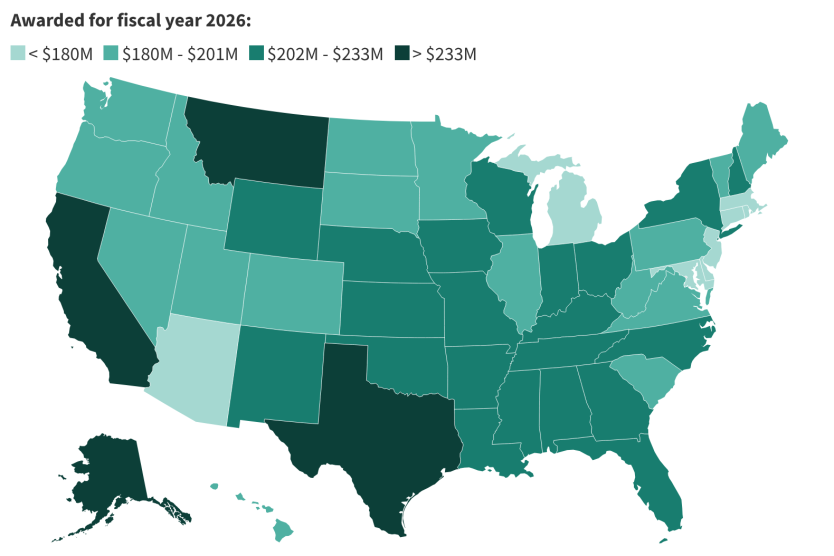
Tracking State Rural Health Transformation Plans
KFF Health News is working to collect and post approved plans as more states respond to emails and public records requests for their documents.
The independent source for health policy research, polling, and news.
KFF Health News covers the health issues facing people who live in America’s rural reaches.
KFF Health News is working to collect and post approved plans as more states respond to emails and public records requests for their documents.
321-340 of 829 results
Amid what has been called the fourth wave of the opioid epidemic, doctors and researchers are walking back medication-heavy methods of treating babies born experiencing opioid withdrawal symptoms, replacing the regimen with the simplest care: parenting.
KFF Health News Midwest correspondent Cara Anthony talks about how racism affects health on Nine PBS’ “Listen, St. Louis with Carol Daniel,” stemming from her reporting for the “Silence in Sikeston” multimedia project, on the impact of a 1942 lynching and a 2020 police killing on a rural Missouri community.
Every year, Medicare officials encourage beneficiaries to shop around for their drug coverage. Few take the time. This year, it might be more important than ever.
Flooding wrought by Hurricane Helene devastated communities around Asheville, North Carolina. A host of government programs are helping restore water, food, and medicine.
This legislative cycle, Gov. Gavin Newsom signed bills affirming reproductive rights and mandating insurance coverage of in vitro fertilization, but the Democrat was reluctant to impose new regulations and frequently cited costs for vetoing bills.
Uber and Lyft have become a critical part of the nation’s infrastructure for transporting ailing people from their homes — even in rural areas — to medical care sites in major cities such as Atlanta.
Small-town doctors may not offer IUDs and hormonal implants because the devices require training to administer and are expensive to stock.
California legislators for years have granted extensions on a 1994 law requiring hospitals to retrofit their buildings to withstand earthquakes. Gov. Gavin Newsom in September vetoed an extension for all hospitals but signed a bill granting relief to rural and “distressed” hospitals and some others.
Since Colorado created a pool of money to pay for naloxone in 2019, it has distributed more than half a million doses of the opioid reversal drug to hundreds of organizations throughout the state. Now, its main funding stream is drying up.
KFF Health News Midwest correspondent Cara Anthony discusses her reporting for the “Silence in Sikeston” multimedia project, which explores the impact of a 1942 lynching and a 2020 police killing on a rural Missouri community — and what it led her to learn about her own family’s past.
In the finale of “Silence in Sikeston,” Black residents organize a Juneteenth barbecue. The Department of Public Safety chief encourages officers to attend to build trust. But improving relations between Sikeston’s Black community and the police won’t be easy. Host Cara Anthony discusses the possibility of institutional change in Sikeston.
In California, where abortion rights are guaranteed, there’s a loophole. The growth of Catholic hospital systems, which restrict reproductive health care, has left patients with no other option for care. That will be the case for pregnant women in Northern California, with a hospital set to close its birth center.
Adults with disabilities and their caregivers are pressing governments and private businesses across the U.S. to help them avoid undignified public bathroom experiences.
Polls are showing renewed support from Black women voters for the Democratic ticket. Vice President Kamala Harris has backed key health priorities for Black women.
Denzel Taylor, a young Black father, moved from Chicago to Sikeston, Missouri, for a fresh start in life. There, he proposed to his girlfriend, started a family, and then, in April 2020, was fatally shot by police officers. Taylor had two young daughters and another on the way when he was killed. Pediatrician Rhea Boyd talks about how children process such loss.
A remote Wyoming community hoped for years to have more access to health care. Now, after receiving federal funding, it is bucking dismal closure trends throughout the rural U.S. and building its own hospital. And it’s not the only one.
KFF Health News Midwest correspondent Cara Anthony sat down with WORLD executive producer Chris Hastings to discuss the origins of the “Silence in Sikeston” project, which explores the impact of a 1942 lynching and a 2020 police killing in the same rural Missouri community.
More pregnant women are being diagnosed with dangerously high blood pressure, which risks the life of the parent and child. Montana is one of the states improving screening and treatment as health facilities work to match care with best practices.
State officials threatened to withhold public money from hospitals, pioneering a strategy that could become a national model.
© 2026 KFF