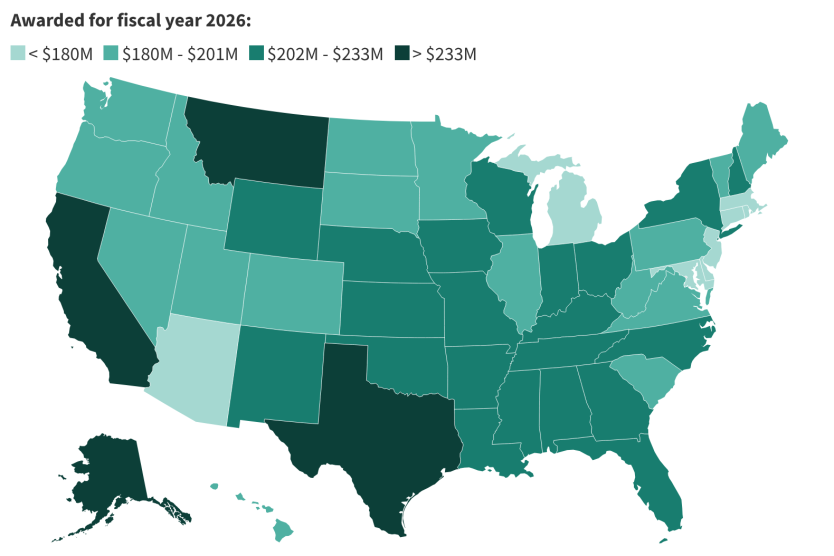
Tracking State Rural Health Transformation Plans
KFF Health News is working to collect and post approved plans as more states respond to emails and public records requests for their documents.
The independent source for health policy research, polling, and news.
KFF Health News covers the health issues facing people who live in America’s rural reaches.
KFF Health News is working to collect and post approved plans as more states respond to emails and public records requests for their documents.
341-360 of 829 results
Amari Marsh, now 23, was a student at South Carolina State University when she lost her pregnancy in 2023. She was charged with murder and faced at least 20 years in prison. A grand jury cleared her in August. Now she’s sharing her story.
One rural North Carolina county is on track to be among the first where a hospital reopens owing to a new federal hospital classification meant to help save small, struggling facilities.
A new bill would create a scholarship program for students who agree to work with specialized courts in California to get patients into treatment, but some people argue the state shouldn’t restrict scholarship aid to a new, untested program given broader behavioral health workforce shortages.
Ballad Health, a 20-hospital system with the nation's largest state-sanctioned hospital monopoly, serves patients in Tennessee, Virginia, Kentucky, and North Carolina.
The “Silence in Sikeston” documentary film explores how the nation’s first federally investigated lynching and a police killing 78 years apart haunt the same rural Missouri community. The film from KFF Health News and Retro Report explores the lasting impact of such trauma — and what it means to speak out about it.
In Episode 2 of the “Silence in Sikeston” podcast, host Cara Anthony speaks with Sikeston, Missouri, resident Larry McClellon, who grew up being told not to talk about the 1942 lynching of Cleo Wright. He is determined to break the cycle of silence in his community. Anthony also unearths a secret in her own family and grapples with the possible effects of intergenerational trauma.
Despite years of national strategies to address the suicide crisis in the U.S., rates continue to rise. A chorus of researchers and experts say the interventions will work — but that they’re simply not being adopted by state and local governments.
Every family has secrets. I spent the past few years reporting about racial violence in Sikeston, Missouri. Interviewing Black families there helped me uncover my family's traumatic past, too.
State and local governments are struggling to keep up with the increasing burden of heat-related illness as summers get hotter because of climate change. In Missoula County, Montana, officials are working with researchers to understand trends in heat-related 911 calls.
Many Catholic health systems, which are tax-exempt, pay their executives millions and can charge some of the highest prices around — while critics say they scrimp on commitments to their communities.
The "Silence in Sikeston" podcast explores what it means to live with racism and violence, then charts the toll on health — from hives and high blood pressure to struggles with mental health. The deaths of two Black men killed nearly 80 years apart in the same Missouri community anchor a conversation about the public health consequences of systemic bias.
Health and Human Services Secretary Xavier Becerra has a plan to protect farmworkers from extreme heat and wildfire smoke, but farmworkers who pick California grapes say they need more, as climate change brings more extreme weather.
An increasing number of Americans struggle with energy poverty, the inability to adequately heat or cool one’s dwelling. Health officials and climate experts are sounding the alarm as record-breaking heat sweeps the nation.
State leaders are cutting public health spending and laying off workers hired during a pandemic-era grant boom. Public health officials say the bust will erode important advancements in the public health safety net, particularly in rural areas.
The Indian Health Service has a program that can pay for outside appointments when patients need care not offered at agency-funded sites. Critics say money shortages, complex rules, and administrative fumbles often block access, however.
UC-San Francisco is pausing its long-running master’s program in nurse-midwifery and plans to shift to a lengthier, costlier doctoral program. Midwives criticized the move and questioned the university’s motivations at a time of serious shortages of maternal care workers.
A Colorado picnic celebrated Farmworker Appreciation Day. But some dairy workers there said they aren’t feeling appreciated: They don’t have basic protective gear, even as bird flu spreads through area farms.
A collection agency sought court authority to garnish a patient’s wages to pay a disputed surgery bill. But after the patient showed up in court to argue the bill was bogus, the judge declined to let the bill collector seize her money.
Medical aid in death is legal in 10 states and the District of Columbia. But only Oregon and Vermont explicitly allow out-of-state people who are terminally ill to die with assistance there. So far, at least 49 people have made the trek while state legislation stalls elsewhere.
© 2026 KFF