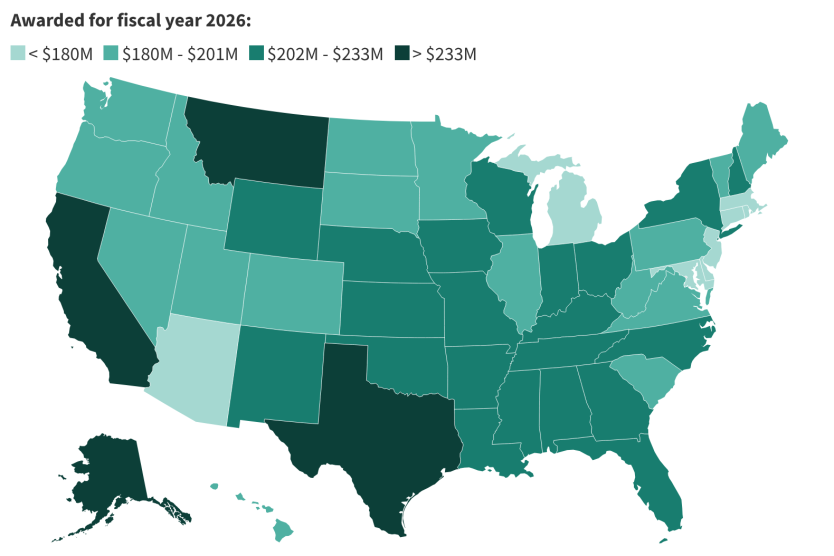
Tracking State Rural Health Transformation Plans
KFF Health News is working to collect and post approved plans as more states respond to emails and public records requests for their documents.
The independent source for health policy research, polling, and news.
KFF Health News covers the health issues facing people who live in America’s rural reaches.
KFF Health News is working to collect and post approved plans as more states respond to emails and public records requests for their documents.
301-320 of 829 results
A Biden administration rule that imposed minimum rules on nursing levels may not survive, even though many homes lack enough workers to maintain residents’ care.
Two Indiana hospital rivals withdrew their application to merge after facing pushback from the Federal Trade Commission and the public.
Thousands of people with disabilities lived and died in state institutions. Now, decades after the facilities began closing, the cemeteries left behind are at risk of falling into disrepair.
The state Office of Health Care Affordability has set a goal for insurers to direct 15% of their spending to primary care by 2034, part of a push to expand preventive care services. Health plans say it’s unclear how the policy will mesh with the state’s overarching goal to slow spending growth.
KFF Health News senior correspondents Fred Clasen-Kelly and Renuka Rayasam discuss how government decisions undermine Black health.
The child tax credit passed by Congress at the height of covid has expired, but states and localities are trying to fill the gap with their own programs and funding. In Michigan, Rx Kids already covers every family with a new baby in Flint. Now, other communities aim to follow.
California health officials began providing protective clothing to farmworkers months before the state’s first bird flu transmission to humans was announced in October. It’s a reminder of the state’s struggle to remain prepared for health threats amid multibillion-dollar deficits.
After the fall of “Roe v. Wade,” thousands of out-of-state patients traveled to Maryland for abortion care. The state is trying to diversify who can offer that care. Providers in the first training class say their new skills are especially needed in rural areas.
With the arrival in California of dengue, a dangerous mosquito-borne disease present mainly in more tropical climates, public health authorities are deploying a range of strategies to beat back the Aedes mosquitoes that spread the virus.
California this year completed its Medi-Cal expansion to include income-eligible residents regardless of their immigration status. This final installment of the “Faces of Medi-Cal” series profiles three of those newly eligible patients and how coverage has affected their health.
The National Indian Health Board has urged the U.S. Department of Health and Human Services to declare a public health emergency as an alarming syphilis outbreak, which disproportionately affects Native Americans, continues. This is the latest plea for more resources from tribal leaders after previous requests went unanswered.
Community health workers are increasingly common in rural areas, where they help patients overcome barriers to accessing care and staying healthy.
Vermont has one of the lowest uninsured rates in the U.S., even though its residents pay some of the highest health insurance costs. Still, most of its hospitals are losing money and patients often face long waits for care.
California voters will decide in November whether to approve a $10 billion climate bond that supporters say is needed to jump-start water system repairs for residents without safe drinking water. Opponents say those repairs should be prioritized in the state budget, not put on a credit card.
In this episode of “An Arm and a Leg,” host Dan Weissmann sits down with KFF Health News’ Cara Anthony to talk about the documentary and podcast series she produced about the impact of a 1942 lynching and a 2020 police killing on a rural Missouri community. The project is called “Silence in Sikeston.”
Experts disputed the claim by Republican vice presidential candidate JD Vance, noting that a range of other issues — from low reimbursement rates to declining patient use — combine to cause these facilities to shutter.
The United States has made almost no progress in closing racial health disparities despite promises, research shows. The government, some critics argue, is often the underlying culprit.
Laborers have suffered in extreme heat triggered by climate change. Deaths aren’t inevitable, researchers say: Employers can save lives by providing ample water and breaks.
Emails show how health officials struggle to track the bird flu, partly in deference to the agricultural industry. As a result, researchers don’t know how often farmworkers are being infected — and could miss alarming signals.
Criticism of prescription drug middlemen has intensified recently in the wake of a federal agency’s actions and legislative reform attempts. Georgia Republican Gov. Brian Kemp, though, vetoed a related bill that would have helped independent pharmacies, citing the unfunded cost of the move.
© 2026 KFF