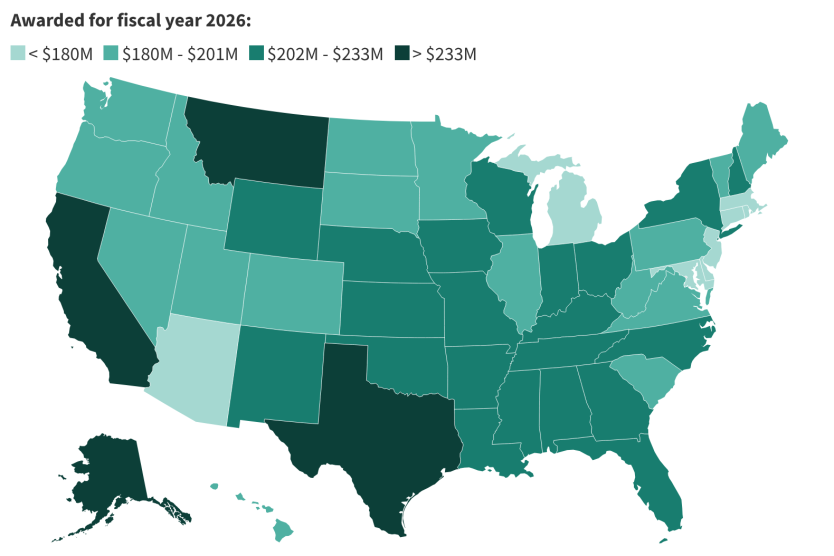
Tracking State Rural Health Transformation Plans
KFF Health News is working to collect and post approved plans as more states respond to emails and public records requests for their documents.
The independent source for health policy research, polling, and news.
KFF Health News covers the health issues facing people who live in America’s rural reaches.
KFF Health News is working to collect and post approved plans as more states respond to emails and public records requests for their documents.
181-200 of 829 results
Some doctors and the groups that represent them say physicians’ extensive training leads to better emergency care, and that some hospitals are trying to save money by not hiring them. They support new laws in Indiana, Virginia, and South Carolina that require physicians to be on-site 24/7.
Fired-then-reinstated workers at the Centers for Disease Control and Prevention worry about the future of public health amid proposed agency downsizing.
GOP lawmakers in 10 states have refused for a decade to expand Medicaid under the Affordable Care Act. But when President Donald Trump got another whack at Obamacare, these holdout states went unrewarded.
In this video report, InvestigateTV and KFF Health News take viewers to Alabama, Idaho, and West Virginia to explore how gaps in internet connectivity and telehealth access cause residents to live sicker and die younger on average than their peers in well-connected regions.
California has put a greater focus on behavioral health workers, but a huge spike in demand, an aging workforce, and employee burnout continue to hamper mental health and substance use treatment. The state is tapping Medicaid funds to train, recruit, and retain workers, but it will be a long time before the impacts are evident.
Veterans often face hurdles when they want the Department of Veterans Affairs to pay for care from clinics and hospitals outside the federal system. A bill in Congress, coupled with a major funding request from the Trump administration, could help clear the path for many rural veterans.
KFF Health News journalists made the rounds on national and local media recently to discuss topical stories. Here’s a collection of their appearances.
The workforce of a federal agency that oversees billions in grants for primary health care, HIV/AIDS, maternal and child health services, and workforce training has been slashed, sparking fears of what’s to come.
Health insurance generally doesn’t cover treatment for injuries sustained shortly before a customer buys a policy. A Massachusetts woman found that out the hard way.
Native American groups declare that tribal sovereignty trumps state and federal efforts to restrict or ban gender-affirming care for two-spirit and LGBTQ+ tribal citizens. Tribes are analyzing the risk of opposing Trump’s policies, advocates say.
Medicaid may have monopolized Washington’s attention lately, but big changes are coming to the Affordable Care Act as well. Meanwhile, Americans are learning more about what’s in Trump’s big budget law, and polls suggest many don’t like what they see. Julie Appleby of KFF Health News, Jessie Hellmann of CQ Roll Call, and Alice Miranda Ollstein of Politico join KFF Health News’ Julie Rovner to discuss these stories and more. Also this week, Rovner interviews historian Jonathan Oberlander to mark Medicare’s 60th anniversary.
Native American tribes and health organizations are hosting clinics and calling patients to counteract low measles vaccination rates and limited access to health care as the disease spreads across the country.
A doctor doing environmental health research in rural Maine is working to establish the best practices to treat patients exposed to “forever chemicals,” potentially leading the way for practitioners across the nation.
The Trump administration has said improving American nutrition is a priority, but deep cuts to federal food assistance could lead people to forgo healthy food in favor of cheaper alternatives.
Lawmakers added a $50 billion program for rural health to President Donald Trump’s massive tax and spending package with promises it would help plug the hole left by Medicaid cuts. Rural hospital and clinic leaders worry the infusion won’t reach the right places.
KFF Health News journalists made the rounds on national and local media recently to discuss topical stories. Here’s a collection of their appearances.
The health industry couldn’t persuade GOP lawmakers to oppose big Medicaid cuts in President Donald Trump’s tax and spending bill for many reasons. A big one: Congressional Republicans were more worried about angering Trump than a backlash from hospitals and low-income constituents back home.
KFF Health News journalists made the rounds on national and local media recently to discuss topical stories. Here’s a collection of their appearances.
Children and young adults in the U.S. foster care system suffer from mental health disorders and die by suicide at far higher rates than the general population, yet the system doesn’t uniformly screen and treat children who are at risk.
Even as states brace for significant reductions in federal Medicaid funding over the next decade, conservative legislatures across the country are passing laws that grant doula access to Medicaid beneficiaries.
© 2026 KFF