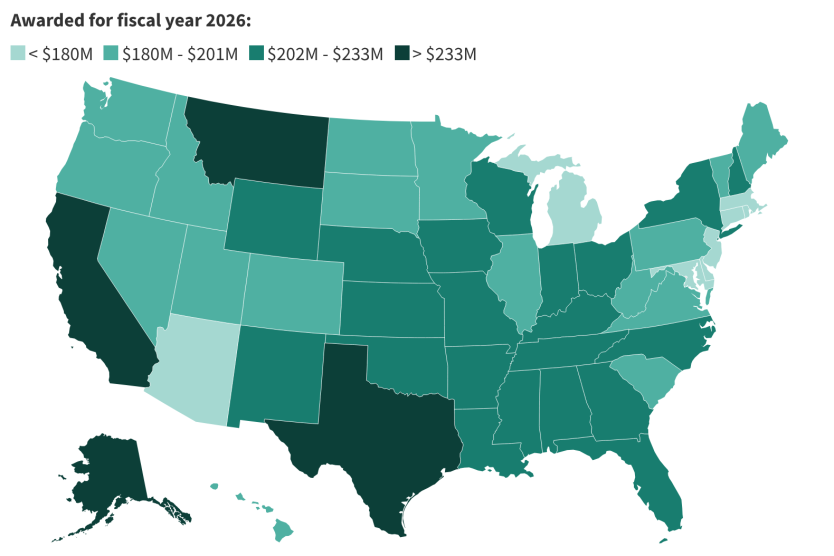
Tracking State Rural Health Transformation Plans
KFF Health News is working to collect and post approved plans as more states respond to emails and public records requests for their documents.
The independent source for health policy research, polling, and news.
KFF Health News covers the health issues facing people who live in America’s rural reaches.
KFF Health News is working to collect and post approved plans as more states respond to emails and public records requests for their documents.
201-220 of 829 results
A Colorado bill banning surprise billing for ambulance rides passed unanimously in both legislative chambers, only to be met with a veto from the governor. As more states pass such legislation, some are hitting the same snag — concerns about raising premiums.
KFF Health News journalists made the rounds on national and regional media this week to discuss topical stories. Here’s a collection of their appearances.
Spending cuts hitting medical providers, Medicaid and Affordable Care Act enrollees, and lawfully present immigrants are just some of the biggest changes the GOP has in store for health care — with ramifications that could touch all Americans.
Fewer Americans will likely have health insurance, compromising their physical and financial health, as the Trump administration and GOP-controlled Congress weigh major changes to the Affordable Care Act and Medicaid. “The effects could be catastrophic,” one policy analyst predicts.
While Congress fails to stave off cuts to HIV care, community leaders in Mississippi and beyond race to limit the damage.
The Supreme Court this week said Tennessee may continue to enforce its law banning most types of gender-affirming care for minors. The ruling is likely to greenlight similar laws in two dozen states. And the Senate is preparing to vote on a budget reconciliation bill that includes even deeper Medicaid cuts than the House version. Victoria Knight of Axios, Alice Miranda Ollstein of Politico, and Sandhya Raman of CQ Roll Call join KFF Health News’ Julie Rovner to discuss these stories and more.
The Center for Asbestos Related Disease in Libby, Montana, closed in May after a court judgment allowing BNSF Railway to seize its assets. Now, the clinic’s federal funding is in jeopardy, too.
A Trump administration reworking of a $42 billion broadband expansion program will trigger delays as millions of rural Americans wait for promised connections and the telehealth services they bring.
An estimated 4 million Americans will lose health insurance over the next decade if Congress doesn’t extend enhanced subsidies for Affordable Care Act marketplace coverage, which expire at the end of the year. Florida and Texas would see the biggest losses, in part because they have not expanded Medicaid eligibility.
Rural hospitals would take an outsize hit from Republicans’ proposed cuts to Medicaid and other federal health programs. Researchers say the financial erosion would trigger hospital closures and service cuts, especially in communities where large shares of patients are enrolled in Medicaid.
The Trump administration wants to shutter the CDC’s National Asthma Control Program, which provides millions in funding to state-administered initiatives aimed at fighting the disease. The program’s closure, combined with massive cuts to environmental programs, could put the 28 million Americans with asthma at increased risk.
Chief rural health correspondent Sarah Jane Tribble explains how millions of rural Americans live in counties with doctor shortages and where high-speed internet connections aren’t adequate to access advanced telehealth services.
The Indian Health Service was mostly spared in the federal government’s widespread staffing cuts, but tribal governments and organizations have lost funding elsewhere in the melee of federal health agency cuts.
Ballad Health, a state-sanctioned hospital monopoly in Tennessee and Virginia, can now be deemed a “clear and convincing” benefit to the public with performance that would earn a “D” on most grading scales, according to Tennessee state documents.
KFF Health News journalists made the rounds on national or local media recently to discuss topical stories. Here’s a collection of their appearances.
Federal law says Medicaid must cover out-of-state emergency care. But a Florida man got a five-figure bill after a South Dakota hospital declined to charge his state’s Medicaid program.
The Trump administration has paused implementation of a rule limiting miners’ exposure to airborne silica dust days after a federal court agreed to put it on hold to hear an industry challenge. The protections are meant to head off a surge in cases of black lung disease. Meanwhile, any enforcement of new standards might be meager due to workforce cuts.
Medicaid plays a vital role in many rural communities that favored President Donald Trump in the 2024 election. But residents still seem open to Republican proposals to cut perceived waste in the program.
The National Institutes of Health’s Rocky Mountain Laboratories in Hamilton, Montana, is one of only a few dozen research facilities of its type. The threat of staffing and grant cuts has town leaders worried and has added to long-standing tension around the lab’s presence in this politically conservative region.
One thing experts agree on: The damage from the funding cuts will be varied and immense.
© 2026 KFF