Tracking State Rural Health Transformation Plans
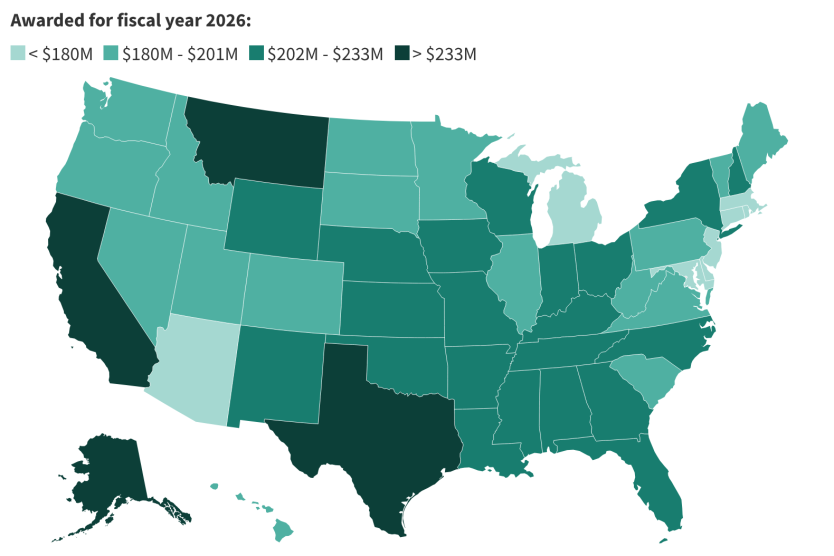
KFF Health News is working to collect and post approved plans as more states respond to emails and public records requests for their documents.
The independent source for health policy research, polling, and news.
KFF Health News covers the health issues facing people who live in America’s rural reaches.
KFF Health News is working to collect and post approved plans as more states respond to emails and public records requests for their documents.
561-580 of 830 results
Montana and other states are trying to increase the number of nurses specially trained to treat survivors of sexual assault.
The recently ended legislative session was marked by Medicaid reimbursement hikes, abortion restrictions, anti-LGBTQ+ statutes, behavioral health spending, and workforce and insurance measures.
At least two Idaho hospitals are ending labor and delivery services, with one citing the state’s “legal and political climate” and noting that “recruiting replacements will be extraordinarily difficult” as doctors leave.
Community paramedicine is expanding nationwide, including in rural areas, as health care providers, insurers, and state governments recognize its potential to improve health and save money.
Vulnerable and marginalized communities are getting left behind in dental deserts, where patient volume exceeds provider capacity or too few dentists are willing to serve the uninsured or those on Medicaid.
In Wesley Chapel, Fla., near Tampa, residents will soon have three general hospitals within a five-minute drive. The new construction is part of a hospital-building boom across Florida unleashed almost four years ago, when the state dropped a requirement that companies obtain government approval to open new hospitals.
Researchers found that, while a University of California medical training program has diversified the system’s pool of medical students, there’s not enough long-term data to know whether graduates return to practice where they’re needed most.
A growing body of research is finding links between air quality and mental health, as therapists report seeing patients with symptoms linked to pollution.
Advocates for improving rural health pushed for the CDC to extend its rural health focus by creating an Office of Rural Health. They hope the agency will commit to rural health research and provide analyses that lead to good public health policies for rural communities.
The median life expectancy for a U.S. baby born with Down syndrome jumped from about four years in 1950 to 58 years in the 2010s. That’s largely because they no longer can be denied lifesaving care, including surgeries for heart defects. But now, aging adults with Down syndrome face a health system unprepared to care for them.
One of Montana’s largest mental health providers has ratcheted back services amid financial troubles, leaving a vacuum. State policymakers have promised more money to aid behavioral health care, but lasting change could be years out.
Patients in rural northeastern Nevada soon will have fewer providers and resources, after a local hospital decided to close its medical residency program. Nationally, the number of rural residency slots has grown during the past few years but still makes up just 2% of programs and residents nationwide.
Since the U.S. Supreme Court reversed federal protections for abortions, medical providers in conservative-led states have been fighting legal and political battles — as well as escalating threats from the anti-abortion movement.
Georgia is among 35-plus states that have used an under-the-radar federal funding mechanism to boost payments for hospitals and other providers under Medicaid. But a government watchdog and a congressional advisory commission say sparse oversight makes it hard to tell if the “directed payments” program is meeting its goals.
KHN and California Healthline staff made the rounds on national and local media this week to discuss their stories. Here’s a collection of their appearances.
A recent policy change in Minnesota promotes quick evaluations and care for people with substance use disorders. But because of gaps riddling rural treatment systems nationwide, the promise of swift care isn’t reaching rural Minnesotans.
At least eight states have implemented or are considering limits on what patients can be billed for the use of a hospital’s facilities even without having stepped foot in the building.
A federal lawmaker has introduced a House bill that would close one of a laundry list of oversight gaps revealed in a recent KHN investigation of the system regulators use to ban fraudsters from billing government health programs, including Medicare and Medicaid.
Doctors have no national standards on when to order urine tests to check whether adult ADHD patients are properly taking their prescription stimulants. Some patients are subjected to much more frequent testing than others.
The study analyzed Colorado kids’ responses to how quickly they could get their hands on a loaded gun without their parents’ knowledge. More than 1 in 10 said they could do so within 10 minutes.
© 2026 KFF