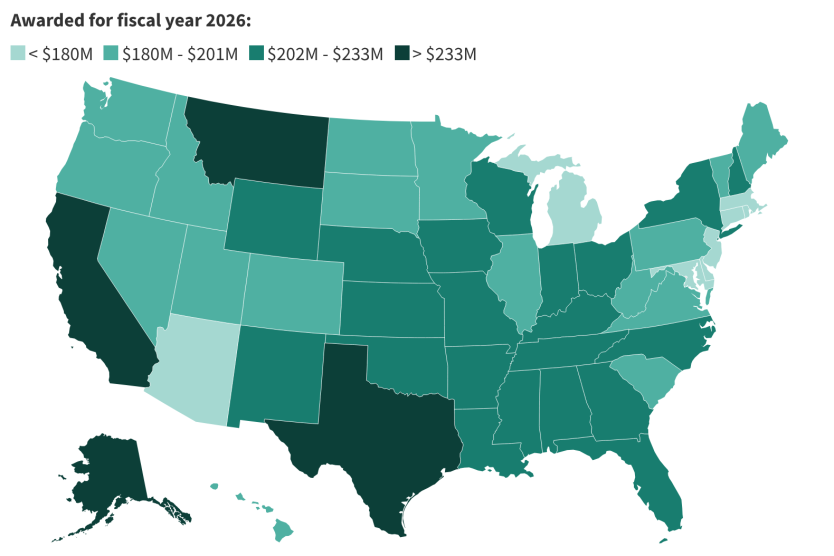
Tracking State Rural Health Transformation Plans
KFF Health News is working to collect and post approved plans as more states respond to emails and public records requests for their documents.
The independent source for health policy research, polling, and news.
KFF Health News covers the health issues facing people who live in America’s rural reaches.
KFF Health News is working to collect and post approved plans as more states respond to emails and public records requests for their documents.
541-560 of 830 results
Richard Coble issued vaccine waivers to patients in at least three states without examining them. He was exposed by a Nashville TV station that bought a waiver for a Labrador retriever named Charlie.
KFF Health News obtained documents showing the exact dollar amounts — down to the cent — that local governments have been allocated in 2022 and 2023 to battle the ongoing opioid crisis.
As the number of refugees entering the U.S. grows, those arriving in Montana and other rural areas find limited dental care options.
A nationwide decline in foster home spots has led to dire situations in some rural areas, including northeastern Nevada, where a state social worker has been pleading with community leaders to help address a shortage that left officials housing children in casino hotels.
Secretary of Health and Human Services Xavier Becerra is asking states to make more of an effort to keep eligible Medicaid recipients enrolled. He particularly fears children losing health insurance coverage.
Dental therapists are licensed providers who offer basic care traditionally provided by dentists, including fillings and simple tooth extractions. But opposition from interest groups and the profession’s relative newness mean more than two-thirds of states don’t yet have them.
The number of DOs is surging, and more than half of them practice in primary care, including in rural areas hit hard by doctor shortages.
In what’s known as the Medicaid “unwinding,” states are combing through rolls to decide who stays and who goes. But the overwhelming majority of people who have lost coverage so far were dropped because of technicalities, not because officials determined they are no longer eligible.
Montana, Alaska, Mississippi, Missouri, South Dakota, Texas, Utah, and Wyoming are among the latest states moving to provide health coverage for up to a year after pregnancy through the federal-state health insurance program for low-income people.
Family planning clinics are getting caught between state abortion bans and a federal requirement to refer patients for abortion care on request.
As hospitals squeeze Democratic leaders in Sacramento for more money, health care finance experts and former state officials warn against falling for the industry’s fear tactics. They point to healthy profits and a recession-era financing scheme that allows rich hospitals to take tax money from poorer ones.
As the West grapples with a megadrought, its driest spell in at least 1,200 years, rising levels of arsenic — a known carcinogen — in Colorado’s San Luis Valley offer clues to what the future may hold.
A new domestic violence shelter in Bozeman, Montana, reflects efforts nationwide to rethink the model that keeps survivors of abuse in hiding. But there are no guidelines for bringing shelters out into the open, leaving each to make it up as they go.
After local leaders in rural Nevada reached an impasse over a proposed Planned Parenthood clinic, an anti-abortion activist pitching local abortion bans across the U.S. arrived at their remote City Hall.
Infant mortality rates across the South are by far the worst in the U.S. A look at South Carolina — where multimillion-dollar programs aimed at improving rates over the past 10 years have failed to move the needle — drives home the challenge of finding solutions, especially in rural communities.
Thousands of South Dakotans are being knocked off Medicaid, only to be eligible to requalify several months later. Even more enrollees are likely to experience a temporary loss of coverage in North Carolina.
Greene County, Tennessee, so far has received more than $2.7 million from regional and national settlements with opioid manufacturers and distributors. But most of the money is not going to help people and families harmed by addiction.
A federally funded program in remote New Mexico has helped hundreds of pregnant mothers stay healthy, but it’s running out of time and money despite a growing national maternity care crisis. The four-year, nearly $3 million grant has provided telehealth, coordinated care, and social services to mothers in need.
A new state law aims to keep the doors open at schools that accept students with intensive needs. One preteen in rural Colorado shows how the current system leaves some students bouncing between institutions far from home.
Under the nation’s first law of its kind, teens must have parental consent to travel for medical care, including in cases of sexual assault or rape. Any adult, including an aunt, grandparent, or sibling, convicted of violating the criminal statute faces up to five years in prison — and could be sued for financial damages.
© 2026 KFF