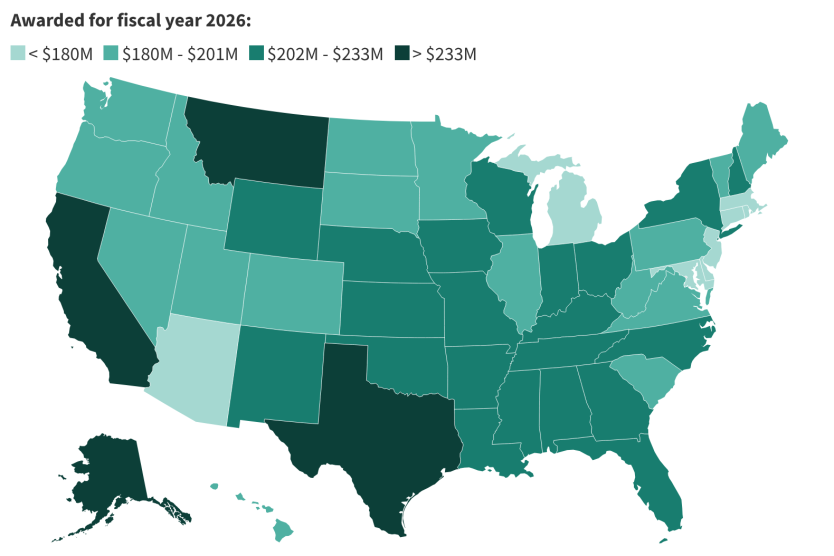
Tracking State Rural Health Transformation Plans
KFF Health News is working to collect and post approved plans as more states respond to emails and public records requests for their documents.
The independent source for health policy research, polling, and news.
KFF Health News covers the health issues facing people who live in America’s rural reaches.
KFF Health News is working to collect and post approved plans as more states respond to emails and public records requests for their documents.
1-20 of 833 results
The Trump administration has tied billions in rural health funding for states partly to the policy commitments they make, including ending their certificate of need, or CON, laws governing the construction of new hospitals.
Oregon passed a law to require hospitals to proactively screen patients to see if they qualify for financial aid. Patients got immediate relief. Hospitals pushed to roll back the law following federal cuts to Medicaid and Affordable Care Act subsidies.
Most of Georgia’s counties are without a labor and delivery unit. To fill the gap, the state is looking to equip emergency rooms to handle obstetric emergencies. Advocates and doctors worry, however, that the ER is being used as a stopgap.
The anti-fraud efforts highlight a broader political fight ahead of the midterms. Republicans say they’re protecting taxpayer dollars by going after bad actors. Democrats contend the administration is — with insufficient evidence — targeting blue states to cut programs the GOP has long sought to shrink.
KFF Health News journalists made the rounds on national and local media recently to discuss topical stories. Here’s a collection of their appearances.
Research shows natural gas pipelines — and the public health risks they carry — are concentrated in low-income and minority areas where people suffer higher rates of poverty and physical disabilities and have fewer means to respond to crises.
The idea of scrapping the U.S. health insurance system for a massive expansion of government-funded healthcare isn’t new. But voters hit by ballooning private health insurance costs are rallying behind midterm candidates calling for universal coverage.
Many rural voters say immigrants are a key part of their local economy, but views on whether President Donald Trump’s immigration crackdown has had positive or negative effects on their communities are split.
KFF Health News journalists made the rounds on national and local media recently to discuss topical stories. Here’s a collection of their appearances.
While Democratic congressional candidates are floating the restoration of federal Affordable Care Act subsidies and Medicaid funding, Oregon officials are crafting a more ambitious plan to implement universal coverage in their state.
Getting financial assistance from hospitals often involves filling out cumbersome forms. Some states now require hospitals to identify and automatically enroll patients eligible for charity care.
President Donald Trump has championed sprawling health policy changes under the Make America Healthy Again movement, but a KFF-Associated Press survey of rural voters found people aren’t seeing the initiatives reach their communities.
Staff raced against rising floodwater to evacuate 36 residents from a nursing home in New Richland, Minnesota. It’s one of 100 facilities KFF Health News identified as facing some of the nation’s worst flood risk.
In most states, people with Medicaid coverage will have to prove they’re working, volunteering, or studying starting Jan. 1. But Montana put the rules into effect early, and they’re sowing uncertainty and anxiety.
Healthcare in general, and health costs in particular, are a top issue for voters in 2026. But it remains unclear exactly how voters want lawmakers to fix the problem. Meanwhile, the Trump administration doubled down on its fraud-fighting efforts. Tami Luhby of CNN, Joanne Kenen of the Johns Hopkins Bloomberg School of Public Health and Politico Magazine, and Sarah Jane Tribble of KFF Health News join KFF Health News’ Julie Rovner to discuss these stories and more.
The disease has long been a risk of coal mining, an industry the Trump administration is trying to reinvigorate.
Rural voters rank the cost of living and cost of healthcare as top issues they want to hear about from midterm candidates as they face a tightening pocketbook pinch.
As the oldest baby boomers turn 80, researchers worry there won’t be enough room in nursing facilities for a rapidly graying nation.
California is crafting weaker heat protections for prisons than other workplaces, citing billions in costs to cool aging institutions as climate and health risks increase. It’s a second-class standard, health and safety advocates say, and would leave correctional workers more susceptible to heat illness.
States are spending rural health dollars on tech startups, betting that untested companies will succeed where doctors have vanished and hospitals have collapsed. Louisiana’s call for innovative technology drew more than 200 pitches, seeking from $250,000 to $3 million in seed money.
© 2026 KFF