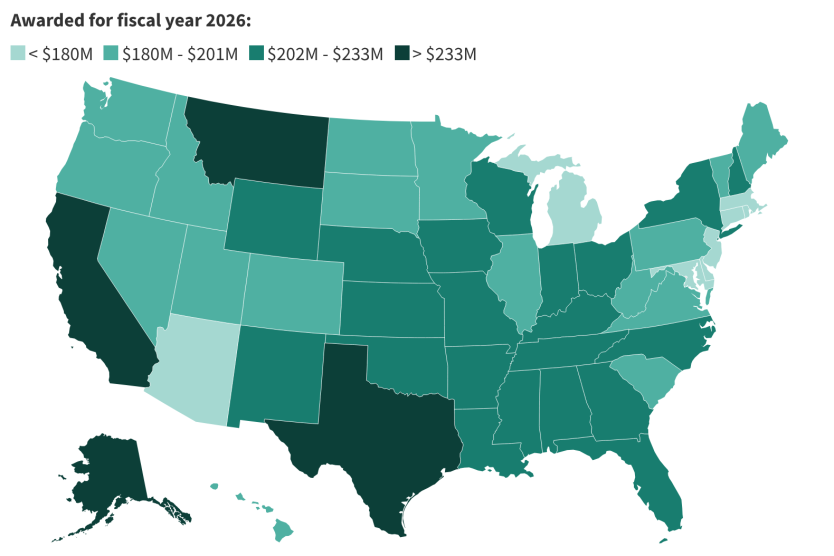
Tracking State Rural Health Transformation Plans
KFF Health News is working to collect and post approved plans as more states respond to emails and public records requests for their documents.
The independent source for health policy research, polling, and news.
KFF Health News covers the health issues facing people who live in America’s rural reaches.
KFF Health News is working to collect and post approved plans as more states respond to emails and public records requests for their documents.
361-380 of 829 results
Political drama involving a rural Georgia county reflects how state regulations that govern when and where hospitals can be built or expanded are evolving.
“Certificate of need” laws, largely supported by the hospital industry, limit health facility construction in 35 states and Washington, D.C. Georgia lawmakers decided its law was complicating the reviving of two hospitals critical to their communities.
Taborian Hospital in Mound Bayou, Mississippi, was established to exclusively admit Black patients during a time when Jim Crow laws barred them from accessing the same health care facilities as white patients. Its closure underscores how hundreds of Black hospitals in the U.S. fell casualty to social progress.
KFF Health News and California Healthline staff took to the airwaves in the last couple of weeks to discuss maternal health care challenges in rural areas. Here’s a collection of their appearances.
Ten states have not expanded Medicaid, leaving 1.5 million people ineligible for the state and federal insurance program and also unable to afford private insurance. Seven of those states are in the South, where expansion efforts may have momentum but where lawmakers say political polarization is holding them back.
For rural patients, getting cancer treatment close to home has always been difficult. And now chemotherapy deserts are expanding across the United States as hospitals winnow services to save money, creating financial and logistical hurdles for people seeking lifesaving care.
For decades, state and federal agencies have restricted or delayed tribes and tribal epidemiology centers from accessing public health data, a blackout that leaves health workers in Native American communities cobbling together information to guide their work, including tracking devastating disease outbreaks.
Proposed regulations would require clinics providing abortions in the state to meet sweeping new health standards, despite a likely vote in November on a constitutional amendment to protect abortion access.
Dairy workers in Texas show signs of prior, uncounted bird flu infections in a new study. Without labor protection and better health care, cases are bound to quietly rise as the outbreak among livestock blazes in the United States.
KFF Health News gives readers a chance to comment on a recent batch of stories.
Rural communities are losing access to maternity care, raising the risk of pregnancy complications, especially for Black women, who face higher rates of maternal mortality. Now, a Georgia medical school is trying to help by training doulas, practitioners who offer patients extra support before, during, and after childbirth.
The Centers for Disease Control and Prevention promises better tests are being developed, but the episode points to vulnerabilities in the country’s defense against emerging outbreaks.
Even as part of a popular South Dakota tourist attraction, an independent pharmacy serving locals, remote ranchers, and sightseers struggles with staffing and insurer payments.
Public safety and health care organizations are using drones to speed up lifesaving treatment during medical emergencies in which every second counts.
Details about where the machines would go — and how they would help those most at risk — are sparse. The state has proposed using them to distribute naloxone and fentanyl testing strips.
So far, all 10 cases reported nationally this year at dairy and poultry farms have been mild, consisting of respiratory symptoms and eye irritation. Scientists have warned that the virus could mutate to spread from person to person, like the seasonal flu, and spark a pandemic.
Fewer than half of rural U.S. hospitals offer labor and delivery services. In some areas, births have dropped by three-quarters since the baby boom’s peak.
Colorado defended its high disenrollment rates following the covid crisis by saying that what goes up must come down. Advocates and researchers disagree.
Idaho’s law criminalizing abortion drove a high-profile exodus of OB-GYNs from the state more than a year ago. Now, two years after the U.S. Supreme Court rolled back abortion protections enshrined by Roe v. Wade, patients in rural Idaho are forced to leave their community for gynecological care.
© 2026 KFF